
Unbiased headlines. Facts, not spin.
Every story is an unbiased news briefing written from 110+ sources across the spectrum — sources linked so you can verify it yourself.
 defense
Major Story (8/10)
July 24, 2026 at 01:37 PM
defense
Major Story (8/10)
July 24, 2026 at 01:37 PM
Satellite Images Show Iran Rebuilding Bombed Missile Bases Faster Than Israel Expected
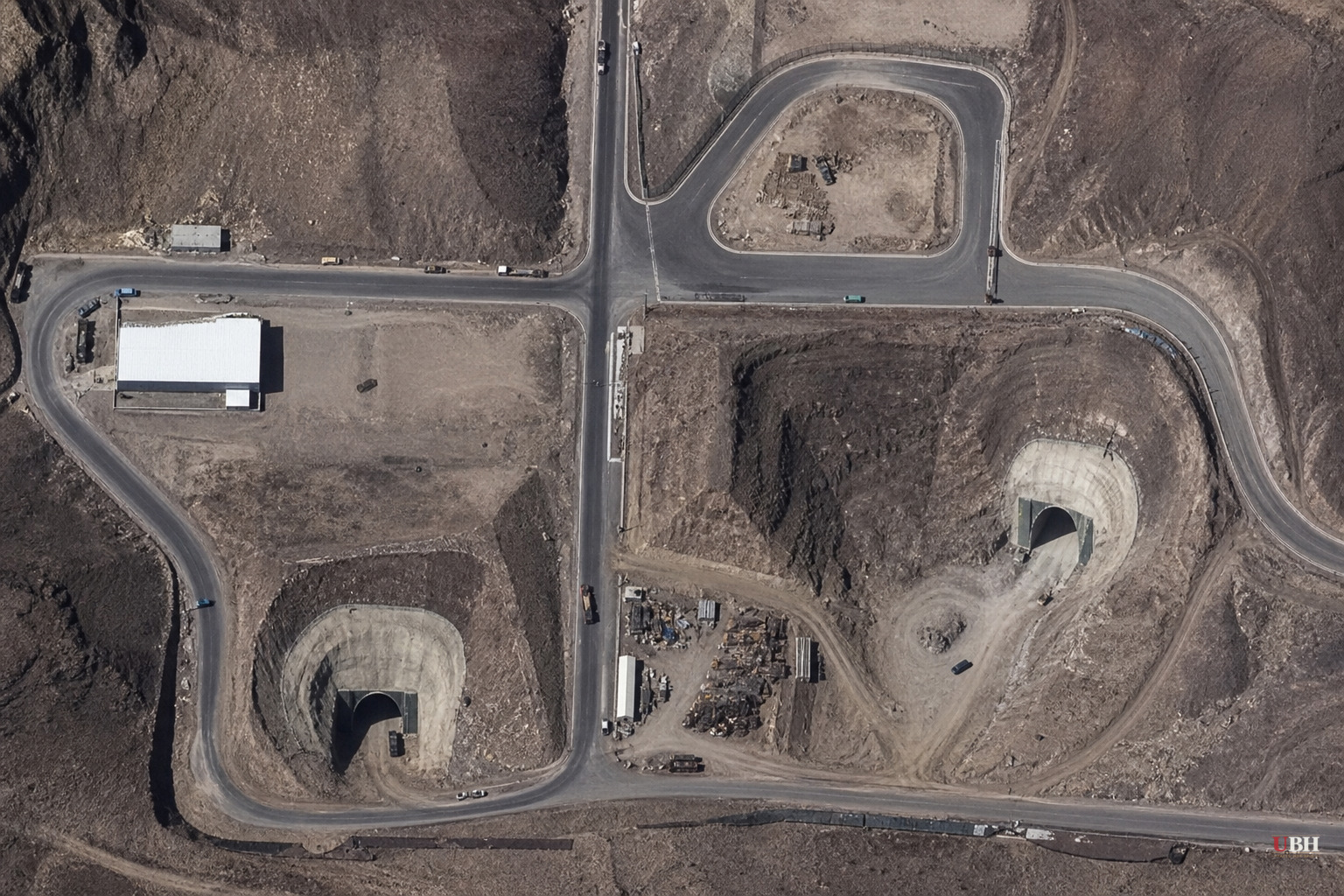
Iran has rebuilt significant portions of the military infrastructure that U.S. and Israeli strikes damaged over the past year, according to satellite imagery reviewed by the Wall Street Journal and reported on by the Jerusalem Post, Kurdistan24, and the Daily Wire.
The imagery, captured by Planet Labs and Airbus, covers missile bases, a shipyard, a bridge, and a suspected missile-component plant. In several cases, reconstruction appears to have started within weeks of the strikes and, in one instance involving a bridge, within days.
What The Images Show
Near Kangavar in western Iran, Planet Labs images from March documented two tunnel entrances and an access road damaged in strikes aimed at sealing off a missile base. Weeks later, Airbus imagery showed a freshly paved road leading to newly excavated entrances, according to the Wall Street Journal.
North of Kermanshah, satellite photos from the start of the war showed heavy damage to another missile base. By the first week of June, imagery showed crews clearing dirt and reopening collapsed tunnels, the Journal reported.
A missile base in Dezful was struck by Israel in June 2025 and again in early March 2026, burying its entrances both times. Three months after the March strike, Airbus images showed Iran digging out multiple tunnel entrances at the site, according to the Journal and Kurdistan24.
An Israeli military official told the Journal that Iran repaired a bridge, which Israel had hit with three bombs, within days.
At Bandar Anzali, a Caspian Sea shipyard tied to the Islamic Revolutionary Guard Corps, Planet Labs images from early July showed partial reconstruction. The IDF said it struck dozens of targets there in March, including warships, a command center, and the shipyard itself, destroying four missile ships and a corvette, according to the Jerusalem Post.
Near Tehran, imagery shows partial reconstruction in recent weeks at Raja Shimi Industries, a plant assessed to be involved in missile component production. Several new structures appear rebuilt, according to King's College London research cited by the Journal.
Why The Strikes Didn't Finish The Job
Israeli military officials told the Journal that strikes frequently collapsed the surface entrances to mountain-based missile facilities rather than destroying what was stored inside. That distinction matters: weapons and equipment buried deeper in the mountains reportedly survived intact, meaning Iranian crews mainly had to clear rubble and re-dig access points rather than rebuild from scratch.
"Iran is rebuilding everything," one Israeli official told the Journal. A second official said Iran retains the technical know-how to reconstruct nearly all of its missile and weapons systems.
Brig.-Gen. Ran Kochav, Israel's former air and missile defense chief, said the recovery mirrors what Iran did after the 12-day Israel-Iran war in June 2025. "They refilled their stockpiles," Kochav said. "They have very impressive industrialization and reconstruction capabilities."
Israeli intelligence assessments cited by the Daily Wire suggest Iran may have moved thousands of centrifuges into tunnels inside a mountain facility, though that assessment has not been independently verified in the reporting.
The Harder Rebuild
Not everything comes back quickly. Jim Lamson, a visiting research fellow at King's College London and a former CIA analyst, told the Journal that facilities producing advanced components like carbon fiber could take months or years to fully restore.
But Lamson also noted Iran may have stockpiled those components at underground sites before the strikes, meaning it could still assemble dozens or hundreds of new missiles and drones in the near term even without rebuilding the advanced production lines from zero.
The Fair Counter-Argument
The White House has defended the military campaign as a major success, telling the Journal it severely weakened Iran's missile production, naval capacity, and broader military capability, and set back the country's nuclear-linked programs. Destroying dozens of ships, damaging production plants, and forcing months of reconstruction work is not nothing, even if Iran is now digging its way back to where it started. A campaign doesn't have to permanently eliminate a capability to meaningfully degrade it for a period of time, and slowing Iran down by months or years still has strategic value.
Still, the imagery reviewed by the Journal complicates any claim that the strikes delivered a lasting knockout. Kurdistan24 reported that some Israeli officials have privately voiced concern that Iran's recovery has outpaced what they expected, particularly at sites where the strikes only sealed entrances instead of destroying what was inside them.
None of the outlets reviewed here reported new airstrikes, an Israeli or U.S. response to the rebuilding, or a formal Pentagon assessment of the reconstruction's military significance. Whether Washington and Jerusalem view this reconstruction as grounds for renewed strikes, sanctions escalation, or diplomatic pressure remains an open question heading into the fall.
Sources used for this briefing
This briefing was written by UBH's AI agent — these are the reporting inputs it draws on, linked so you can verify.


