
Unbiased headlines. Facts, not spin.
Unbiased Headlines is an independently owned news organization. We bring you the facts, not opinions, written fresh from 110+ named sources. Sources linked so you can verify it yourself.
 energy
Notable (5/10)
San Onofre Domes Come Down Soon, but 1,600 Tons of Spent Fuel Still Sit 100 Feet From the Pacific
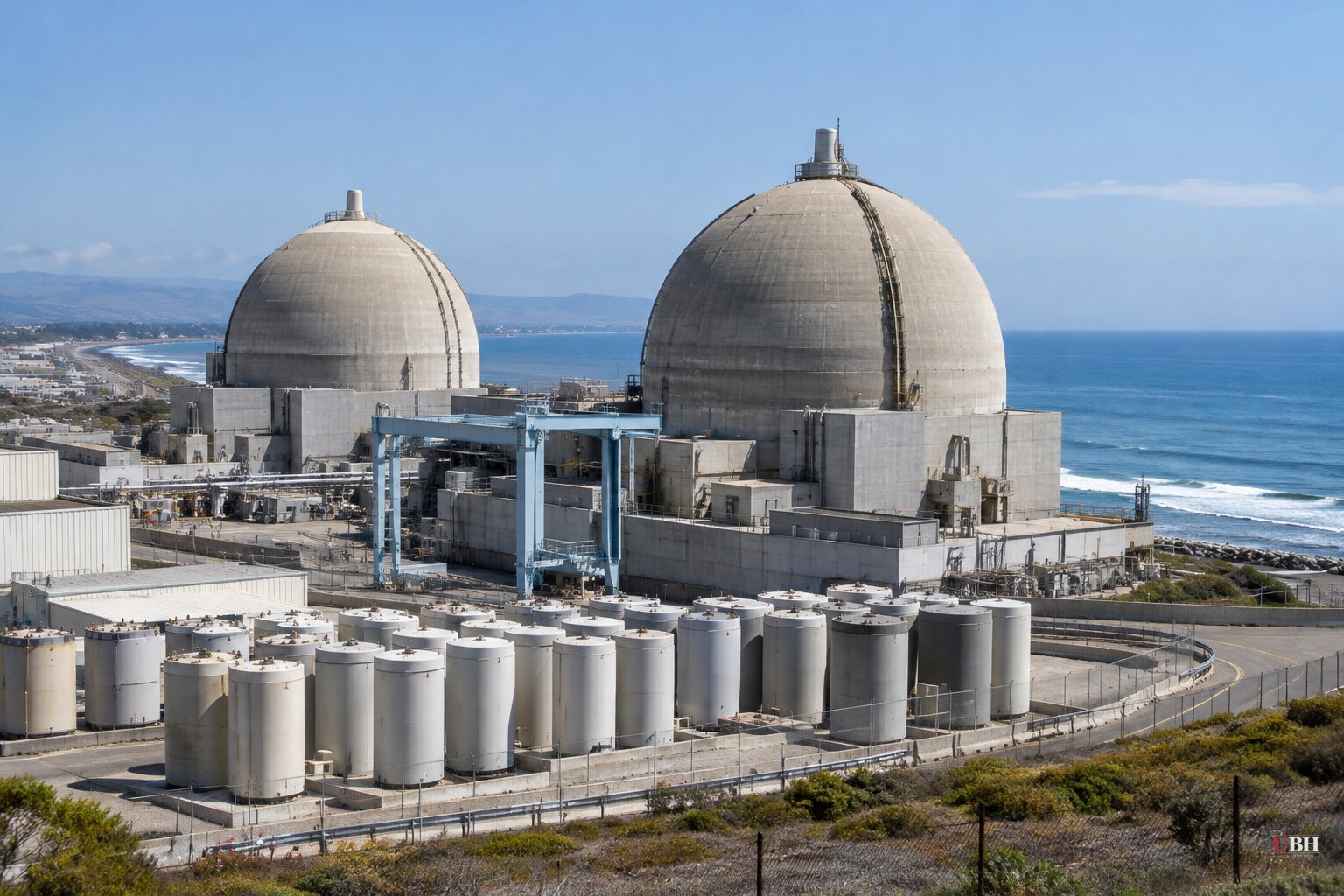
The most recognizable landmarks on Interstate 5 between Orange and San Diego Counties are about to disappear. The twin domes at the San Onofre Nuclear Generating Station, built in 1983 and 1984 and long nicknamed the "nuclear boobs" by drivers, are scheduled for demolition.
The fuel they once served is not going anywhere.
"In the coming months, crews are going to begin taking down the containment domes behind us," Rep. Mike Levin, a Democrat who represents parts of San Diego and Orange Counties, said at a press event at the site. One account of the schedule has the domes fully gone by the end of 2027. Major decommissioning work across the site is expected to wrap up by the end of 2028.
Demolition progress
According to Levin's office, 52 of the plant's 62 structures are already down. More than 700 million pounds of radioactive material has been removed from the site, with about 3.6 million pounds to go. The plant stopped operating in 2013 after a newly installed steam generator failed, leaving it inoperable.
Levin said the spent fuel rods were moved from cooling pools to dry storage on the beach, in steel and concrete canisters. More than 1,600 tons of spent fuel still sits roughly 100 feet from the Pacific Ocean, according to Levin.
No permanent home for the fuel
"The federal government still hasn't done what it pledged to do all the way back in 1998, and so communities like ours have been left holding the fuel," Levin said.
He has been working on the issue for eight years and convened a SONGS Task Force in 2019. "We cannot mistake progress for a permanent solution," he said, adding that he will "keep working across party lines" for funding, reforms and storage and disposal options.
Levin's office has released a new report on federal funding, demolition progress and possible paths for relocating the fuel. It leans on a July announcement by the Department of Energy naming five states as potential hosts for Nuclear Lifecycle Innovation Campuses: Utah, Tennessee, Oklahoma, Louisiana and Idaho. The DOE says the campuses would support the full fuel cycle, including fabrication, enrichment, reprocessing used fuel and final disposition.
Levin says similar sites could begin operating by the late 2030s. His office's report points to Finland and Canada, which are pursuing waste facilities with local consent. Finland expects to begin permanent disposal as soon as next year. Levin also cited the Atlas railcar system, which he described as the first of its kind built to move spent fuel safely over existing commercial rail lines.
Safety and sea level
The urgency, officials say, is the coastline. Recent winter storms, high tides and erosion are eating at the shore. "With rising sea levels, coastal erosion and seismic risks, we cannot afford to let this issue languish," Orange County Supervisor Katrina Foley said in October.
Levin said there is "no immediate danger to the community," but that the site "was never designed to hold spent nuclear fuel indefinitely."
Southern California Edison CEO Steve Powell said the plant was built with hazards in mind. "We understood the hazards that would exist, whether those are earthquakes, sea-level rising, tsunamis, and all those things," Powell said. He said the canisters are engineered to withstand extreme conditions well into the future. Even so, officials agree that permanent removal is the goal.
No community has yet agreed to host the fuel, and the DOE campuses are so far only proposals from five states.
The power that left
A California Post opinion column argues the demolition draws attention to what has not replaced the plant. It says San Onofre's closure cost Southern California nearly a fifth of its generating capacity, that nothing has filled the gap, and that Diablo Canyon is now the state's only nuclear plant. The column ties the question to rising demand from AI data centers and vehicle electrification.
The column also says California's environmental lobby insists that only renewables like solar and wind are acceptable alternatives to fossil fuels, and that newer reactor designs reduce the waste problem without changing that debate. It places the blame on state leaders, saying they are planning for "managed decline" amid high energy prices. Those are the column's claims, not findings from the officials involved in the cleanup. The column also credits the 2011 Fukushima disaster for the plant's end. Levin's account is that the steam generator failure left the plant inoperable.
The column does concede "there is certainly room for debate about the positives and negatives of nuclear power."
What comes next
The domes will come down well before the fuel leaves. Under the timeline Levin lays out, similar sites could begin operating by the late 2030s, and the site's canisters will stay on the coast until a destination is found. Whether Utah, Tennessee, Oklahoma, Louisiana or Idaho will take California's fuel, and on what terms, remains undecided.
Sources used for this briefing
5 links from 4 independent newsrooms (syndicated copies of the same report count once)
These are the sources it draws on, linked so you can verify.


