
Unbiased headlines. Facts, not spin.
Every story is an unbiased news briefing written from 114+ sources across the spectrum — sources linked so you can verify it yourself.
 tech
Major Story (8/10)
October 8, 2026 at 04:14 PM
tech
Major Story (8/10)
October 8, 2026 at 04:14 PM
Samsung Projects Record 107.4 Trillion Won Q3 Operating Profit, About $80 Billion, as TSMC Posts Record Quarter
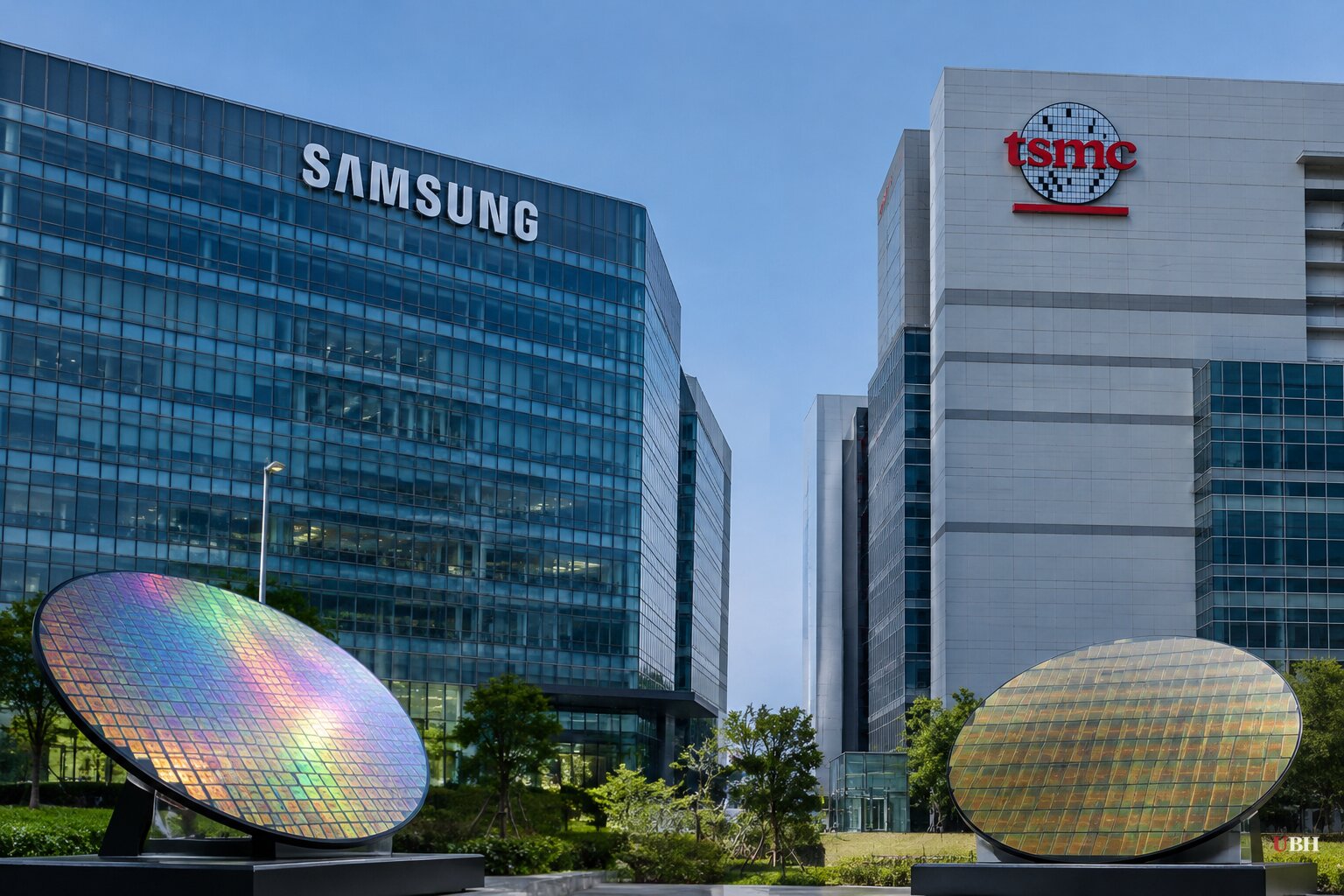
Samsung Electronics has now posted four straight record quarters, and the fourth is the biggest yet. In a regulatory filing on Thursday, Oct. 8, the company estimated July-September operating profit at 107.4 trillion won, about $80.2 billion. That is up from 89.49 trillion won in the prior quarter and 12.17 trillion won a year earlier, an increase of 782.5%.
The number is preliminary. Samsung will publish full results, including a breakdown by division, on Oct. 29.
Bigger than anything a tech company has booked
If confirmed, it is the largest quarterly operating profit ever reported by a technology company. It tops the $63.7 billion in operating income Nvidia booked in its latest quarter. It is also the first time a South Korean company has cleared 100 trillion won in a quarter.
Samsung estimated revenue at 195 trillion won, about $145.6 billion, up 127% from a year earlier. That implies an operating margin of roughly 55%.
Analysts had expected 106.1 trillion won, according to an LSEG SmartEstimate. Samsung beat it, though not by much.
The driver is AI. Data centers are absorbing high-bandwidth memory, the stacked chips that feed data to AI processors. Supply of conventional DRAM and NAND chips is also tight, which has pushed prices sharply higher.
Memory is expected to account for the bulk of the improvement. Douglas Kim of Douglas Research Advisory estimated that Samsung's HBM bit shipments grew close to 50% from the previous quarter, with Samsung trying to close the gap with rival SK Hynix.
TSMC also set a record
Taiwan Semiconductor Manufacturing Co. said Thursday that September revenue rose 54.6% from a year earlier to NT$511.86 billion, roughly $16 billion. That was just 0.6% below August's all-time monthly high.
Third-quarter revenue, calculated from the monthly figures, came to a record NT$1.49 trillion, or about $46.8 billion. That is up 51% year on year and 17.6% from the prior quarter. It also beat the top of TSMC's own guidance of $44.6 billion to $45.8 billion.
Revenue for the first nine months of the year rose 41.1% to NT$3.9 trillion, about $122.1 billion.
The stock fell anyway
Samsung shares closed 2.42% lower at 262,000 won in Seoul on Thursday, while the KOSPI index dropped 2.62%. The stock has almost quadrupled since last September. It is still down more than 25% from its record high in June, amid concerns about how durable the AI boom is.
Those concerns come from analysts, not from the company. "The market's focus has shifted to whether the sharp earnings growth that started a year ago would be sustainable," said Kim Seok-hwan, a market analyst at Mirae Asset Securities.
The growth numbers back up the worry. Analysts expect fourth-quarter profit to rise 8.2% from the third quarter, down from 20% sequential growth in the third. TrendForce expects conventional DRAM contract prices to rise 10% to 15% in the fourth quarter. The second quarter saw a surge of roughly 60%.
Lee Jae-won, an analyst at Yuanta Securities, read the results more favorably. He said uncertainty had built up as analysts cut estimates, but the results "turned out to be better than expected." He said investors will watch for details of Samsung's shareholder return policy at the late-October earnings call.
Risks inside the boom
Samsung and Micron expect the supply-demand imbalance to last into 2028. Chinese competition and a potential slowdown in AI spending are risks to that outlook. Potential U.S. semiconductor tariffs are another.
The won is a smaller, more immediate problem. A stronger won reduces the value of dollar-denominated overseas sales when converted into local currency, and analysts have trimmed forecasts because of it. Reuters' conversion used 1,339.57 won to the dollar.
Higher memory prices also cut against Samsung's own consumer businesses. The same price increases that fatten the chip arm's margins raise component costs for Samsung's smartphones and other electronics, squeezing those divisions.
The broader spending backdrop is large. The BBC reported that Google, Amazon and Meta have pledged more than $650 billion toward AI projects this year. Samsung's market valuation crossed $1 trillion earlier in 2026. In June, South Korea unveiled plans for at least $880 billion in chip-manufacturing projects led by Samsung and SK Hynix.
Samsung has not disclosed how much of the profit came from memory versus phones, displays or its foundry business. That split, along with any shareholder return plan, is due Oct. 29.
Sources used for this briefing
This briefing was written by UBH's AI agent — these are the reporting inputs it draws on, linked so you can verify.


