
Unbiased headlines. Facts, not spin.
Unbiased Headlines is an independently owned news organization. We bring you the facts, not opinions, written fresh from 110+ named sources. Sources linked so you can verify it yourself.
 energy
Major Story (8/10)
Event date: October 17, 2026 ·
energy
Major Story (8/10)
Event date: October 17, 2026 ·
Russia Says It Downed 1,015 Ukrainian Drones as St. Petersburg Oil Terminal Burns, Two Days After Trump Waived Sanctions Law
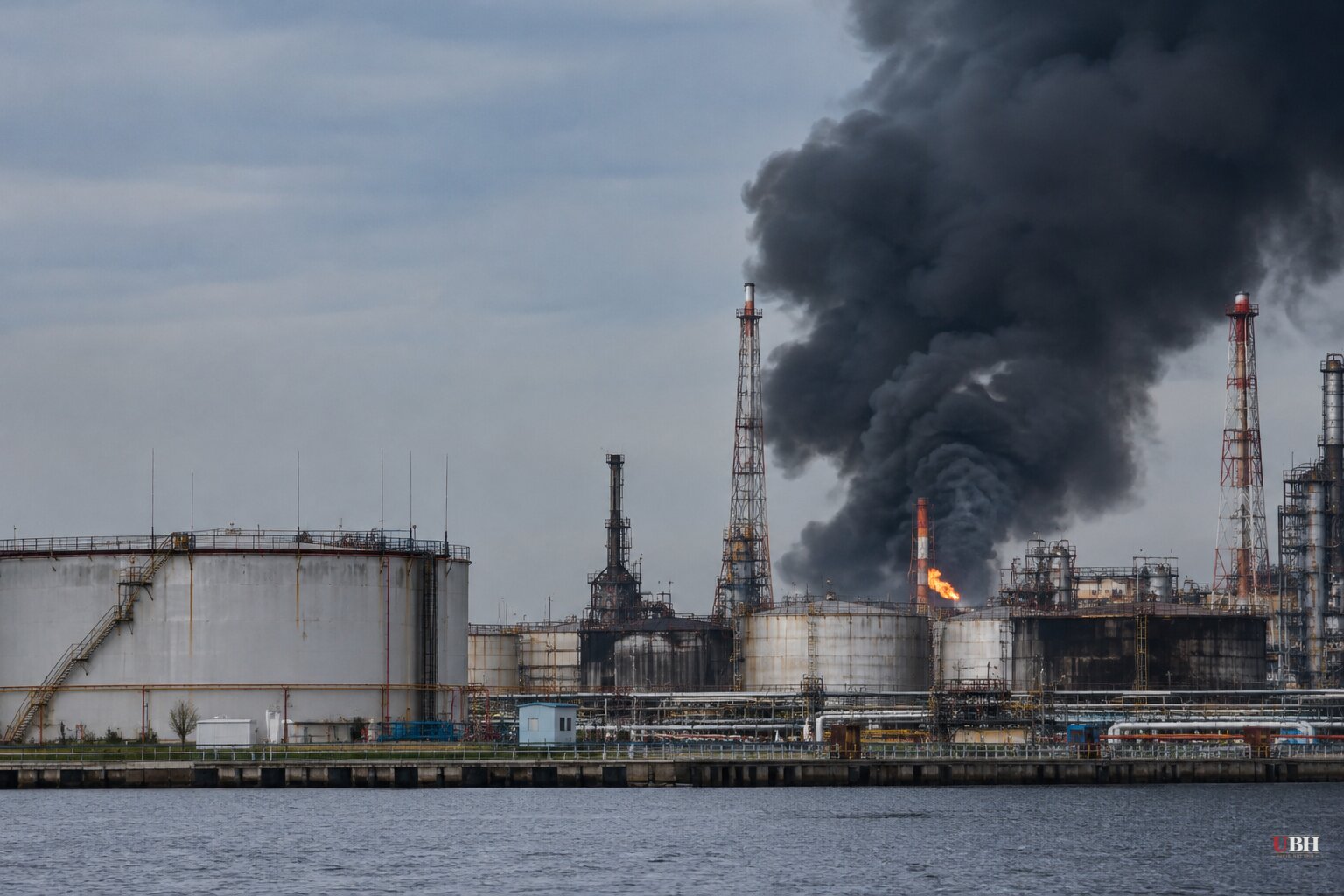
Since Trump announced a diesel deal with Vladimir Putin on Oct. 9, the argument over Russian fuel has moved from Washington's sanctions policy to the battlefield. Overnight into Sunday, Oct. 18, Ukraine launched one of the largest drone barrages of the war at Russia.
Russia's Defense Ministry said it destroyed 1,015 Ukrainian drones over 15 Russian regions, Crimea and the Black Sea. The ministry's figure is Moscow's own count and has not been independently confirmed.
St. Petersburg burns
St. Petersburg Gov. Alexander Beglov said one person was killed and five wounded. Fires broke out at the Petersburg Oil Terminal, the Ruchi oil depot and industrial warehouses in the Kolpino district. Apartment buildings and houses were also damaged, he said.
Ozon confirmed a fire at its logistics hub in the city. VK said drones hit its data center in the Leningrad region, though it said services were running normally.
Leningrad region Gov. Alexander Drozdenko said 145 drones were shot down there and that two transformer substations were hit in Yanino. About 20,000 people lost power. Beglov said operations at the city's main airport were restricted "for safety reasons."
Russian state news agency TASS called it the largest attack on the region in four years. Kremlin spokesman Dmitry Peskov said Kyiv was "resisting" but could not change the course of events.
Russia keeps hitting Ukraine too
Russia struck Zaporizhzhia, where a woman was killed and at least two people wounded, including a 6-year-old girl, according to regional military chief Mykhailo Semikin. Two apartment buildings, 18 cars and an educational institution were damaged.
President Volodymyr Zelensky said overnight Russian strikes killed two people and injured 12, including two children. He said Russia launched almost 2,700 attack drones, 1,700 aerial bombs and 66 missiles at Ukraine in the past week.
Zelensky also said Russia hit Ukrainian energy, oil and gas sites 76 times in the week after Trump announced the "energy ceasefire" on Oct. 11. Tens of thousands of families were still without power, he said.
The diesel deal and the waiver
Trump said Putin agreed to supply more than 300,000 tons of diesel to U.S. and global markets right away, another 500,000 tons in November and 1 million tons "immediately thereafter." The Treasury Department then issued a temporary license suspending U.S. sanctions on Russian diesel deliveries until April 2027.
On Friday, Trump signed an executive order waiving parts of the Lindsey O. Graham Sanctioning Russia and Iran Act of 2026, citing the national interest. Congress passed that law 86-11 in the Senate and 262-159 in the House, and Trump signed it Sept. 18. It allows tariffs of up to 100 percent on major buyers of Russian oil and gas. Newsweek reported the new order leaves sanctions from earlier executive orders in place.
Zelensky said on X Saturday that undoing the sanctions "definitely helps only the Russians." Earlier he called the diesel deal a "weak decision by a strong partner." He told the Financial Times this week that Kyiv was "done" with the energy ceasefire, and Ukraine confirmed Thursday it had resumed strikes on Russian oil after a three-day pause.
What the money is worth
The fuel volumes are small. Economist Sergey Aleksashenko of the NEST Centre estimates the first phase, 1.8 million metric tons, could bring Russia up to $1.25 billion in extra export revenue over three months, about 1% of its commodity export income. The benefit to the federal budget, he said, would be under $30 million a month.
Former IEA oil markets chief Neil Atkinson said the full 4.8 million tons "does not even touch the sides." That is about ten days of U.S. diesel demand, or one day globally.
Aleksashenko argues the main gain for Moscow is political. Easing sanctions, he said, undermines Western unity without requiring Putin to concede anything on Ukraine. Matthias Matthijs of the Council on Foreign Relations said Washington's Russia policy is now driven by pump prices before the Nov. 3 midterms, not by a shared transatlantic strategy.
Trump's position and the pushback
Trump's stated rationale is price relief. "Lower prices for Americans, especially our Great Farmers, Ranchers, and Truckers, is my Greatest Priority," he wrote. Asked about Republican critics, he said Monday: "It's not really a deal with me. It's a deal for the rest of the world. Anything that could help our farmers, our ranchers, I like."
He also said Ukraine should not hit Russian refineries because "that's a world problem," and called for a new Ukrainian leader. Zelensky has said he has no intention of stepping aside.
Critics come from both parties. Six Republican and six Democratic senators wrote Trump on Tuesday that the extra diesel would have a negligible effect on prices while Russia's revenue would "undoubtedly finance its desired war of attrition." They also warned it could endanger U.S. servicemembers supporting Operation Epic Fury.
Rep. Gregory Meeks, the top Democrat on the House Foreign Affairs Committee, introduced the "Prohibit Corrupt Russia Oil Deals Act" to revoke the Russian energy licenses. Rep. Don Bacon of Nebraska is its only Republican co-sponsor. Canadian Prime Minister Mark Carney told Zelensky the agreement is "in direct opposition to the efforts of Ukraine, Canada, and our allies."
Energy analysts cited by the AP say U.S. diesel prices have climbed mainly because of disruptions from the war with Iran, not Ukrainian strikes alone.
The next test is November, when the second diesel tranche is due and voters decide the midterms on Nov. 3. The Treasury license runs to April 2027, and the Meeks bill has not yet moved.
Sources used for this briefing
8 links from 8 independent newsrooms (syndicated copies of the same report count once)
These are the sources it draws on, linked so you can verify.


