
Unbiased headlines. Facts, not spin.
Unbiased Headlines is an independently owned news organization. We bring you the facts, not opinions, written fresh from 110+ named sources. Sources linked so you can verify it yourself.
 energy
Major Story (7/10)
energy
Major Story (7/10)
Refiners in India, Turkiye and Brunei Sent €1 Billion in Fuel to Sanctioning Countries in September, CREA Says
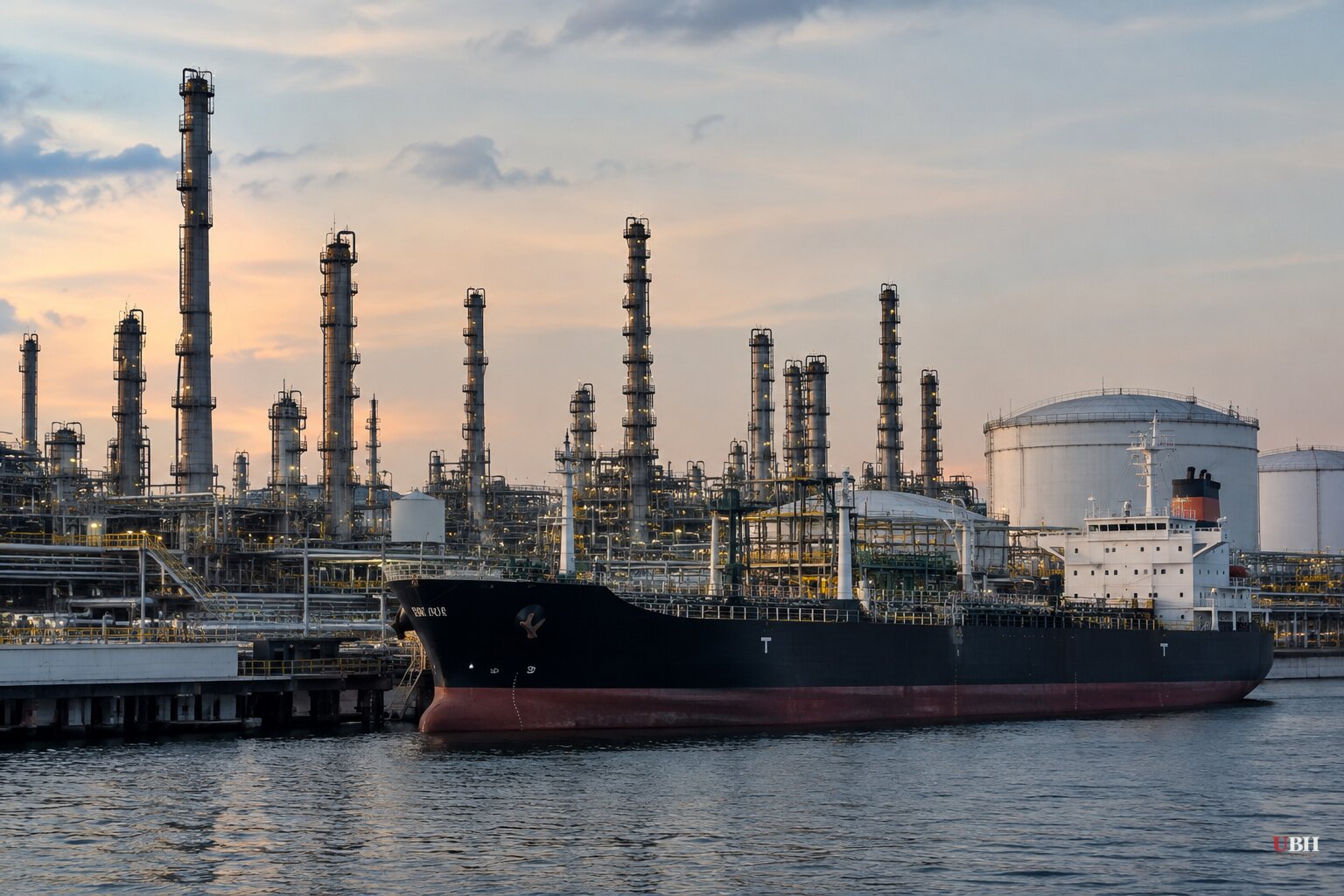
Refineries in India, Turkiye and Brunei that process Russian crude shipped €1 billion ($1.2 billion) of oil products to sanctioning countries in September. That is up 43% from August, according to the Centre for Research on Energy and Clean Air (CREA), a research group that advocates tighter sanctions on Russia.
The €1 billion is the total for those refineries. CREA estimates only €295 million of it was refined from Russian crude.
Who bought what
The EU took €667 million of the products. Australia took €168 million, the US €154 million and New Zealand €19 million.
Exports reported as bound for EU ports from refineries running on Russian crude rose 80% in value, CREA said. One of them is a 104,000-tonne cargo of gasoil, or diesel, from Reliance Industries' Jamnagar refinery in Gujarat that was still headed to Rotterdam.
CREA says Jamnagar supplied six of the seven cargoes unloaded at EU ports in September. Italy received three, Romania two, and Spain and Cyprus one each. Jamnagar also accounted for €122 million of the US-bound shipments, the largest share. Russian crude made up 32% of the refinery's imports from July to September, CREA said.
The EU banned imports of oil products refined from Russian crude in January 2026. The ban exempts net crude exporters. CREA argues that exemption is a gap, because a country's net-export status does not stop its refineries from processing Russian-origin crude and selling the products abroad.
CREA's fix is to apply the ban at the refinery level. Any plant that processed Russian crude in the previous six months would be barred, whatever the declared origin of the product. That is a recommendation from an advocacy group. It is not policy.
CREA's report does not trace the €295 million figure to particular cargoes. It is an estimate for the three-country total, and the Jamnagar cargo count describes where products came from, not which barrels went into them.
India's buying is falling, not rising
The export jump came while India bought less Russian crude. CREA said India's Russian crude imports fell 13% in September, the second straight monthly decline and the lowest since April.
Intake dropped at all three of the biggest importing refineries: Jamnagar by 27%, Indian Oil Corporation's Paradip by 21% and Nayara Energy's Vadinar by 8%. Vadinar still overtook Jamnagar as India's largest importer of Russian crude. The HMEL Mundra Oil Terminal cut intake by 74% and the Kochi refinery by 32%. The IOC Mundra Oil Terminal took 570,000 tonnes after receiving none in August.
India was still Russia's second-largest fossil fuel customer in September, spending €4.1 billion. Crude was 88% of that, at €3.6 billion. Coal came to €309 million and oil products to €161 million. Only China bought more. Since December 2022, India has taken 37% of Russia's crude exports and China 50%.
Urals crude averaged $90.7 a barrel in September. CREA says the oil price cap, cut to $44.10 on Feb. 1, 2026 and frozen there under the EU's 21st sanctions package, has failed to put a durable limit on Russian crude earnings. CREA ties the current policy rethink to the spike in oil prices after reduced shipments through the Strait of Hormuz.
Trump waives his own law's penalties
On Friday, Oct. 16, Trump signed an executive order waiving the "sanctions, restrictions, and duties" under the Lindsey O. Graham Sanctioning Russia and Iran Act. He had signed that law on Sept. 18. The waiver came a day before a 30-day enforcement deadline expired.
The law authorized tariffs of up to 100% on goods from the five largest importers of Russian crude and gas. It also authorized sanctions on Russia's shadow fleet of tankers. The waiver is not specific to India and could also benefit China. The order lets the administration reconsider it later.
India averaged 1.8 million barrels a day of Russian seaborne crude this year, ahead of China at 1.2 million, according to ship-tracking data. The top five importers are India, China, Italy, Turkiye and the Netherlands. Kpler data shows India took about 1.82 million barrels a day in September against 1.49 million for China.
Those volumes are well below mid-year highs. Indian imports peaked at 2.6 million barrels a day in June and 2.57 million in July.
Analysts tracking the market say the waiver means Indian refiners are likely to keep buying. They point to how the trade began: Western buyers shunned Russian oil after the February 2022 invasion of Ukraine, and Urals sold at discounts approaching $40 a barrel in early 2023. Russian oil went from about 2% or less of India's imports before the war to 40-50% at times. Analysts say Russia also made up volumes lost when the Iran war disrupted supplies earlier this year.
The EU ban, as written, has no refinery-level test, and CREA's proposal for one is only a proposal. In Washington, the waiver can be reversed at the administration's discretion. Kpler expects India's October Russian crude imports to hold around 1.8 to 1.9 million barrels a day, which would leave the intake roughly flat against September.
Sources used for this briefing
8 links from 8 independent newsrooms (syndicated copies of the same report count once)
These are the sources it draws on, linked so you can verify.


