
Unbiased headlines. Facts, not spin.
Unbiased Headlines is an independently owned news organization. We bring you the facts, not opinions, written fresh from 110+ named sources. Sources linked so you can verify it yourself.
 energy
Notable (6/10)
energy
Notable (6/10)
NRC Headcount Fell 16% in Two Years, GAO Finds, as Agency Rewrites Reactor Rules
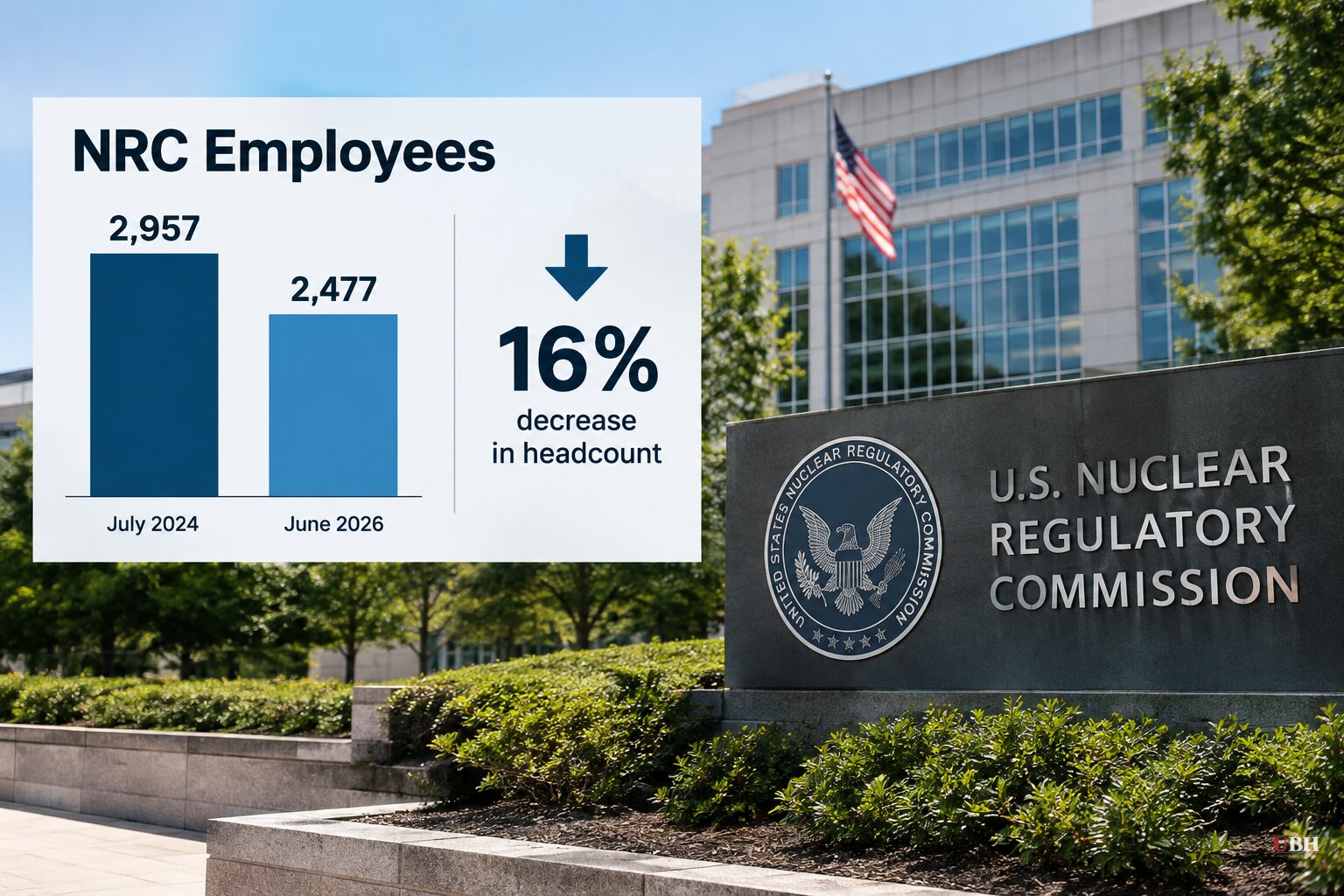
The Nuclear Regulatory Commission lost more than 16% of its workforce in two years. That is the finding of a Government Accountability Office report, which puts NRC headcount at 2,957 in July 2024 and 2,477 in June 2026.
About 740 people left. Only about 270 were hired. Attrition hit 12.4% in fiscal 2025, up from 7.6% a year earlier.
What the GAO did and did not find
The GAO did not declare the agency broken. Its report says "most stakeholders and NRC officials told us they were not concerned about NRC's ability to ensure safety or the timely review of applications."
The numbers also cut against the idea that the NRC was purged. According to the GAO figures, the agency let go of just four people. Nine in ten departures were retirements or resignations.
Hiring stalled under a federal freeze. By this spring, new hires again outnumbered departures.
Commissioner David Wright chaired the agency through the exodus. "The NRC did not lose its way or the ability to perform its mission," he said in March. "Instead, everyone stepped up."
The critics' warning
The alarm was loud when the cuts began. Josh Freed wrote on July 30, 2025: "If the president really wants to kickstart the 'nuclear renaissance,' gutting the NRC of its expertise and rubber-stamping projects isn't the way to go. It will only slow processes down, increase the potential for accidents, and erode public trust."
The GAO's stakeholder interviews do not bear that out so far. But the report does not settle it either. Reviewers and officials saying they are unworried is a statement about today, not a test of the system under load.
The GAO says it is "too soon to assess" whether the agency's streamlining has made up for the people it lost. NRC officials told the GAO that new efficiency measures could cut the agency's staffing needs by about 300 full-time positions.
The last nuclear revival
The agency has been here before. When the GAO raised a similar alarm in 2007, the NRC was bracing for at least 20 applications covering 29 new reactors. It staffed up to about 4,000 employees by 2010.
It still took nearly four years to license Vogtle units 3 and 4. Most of the other applications fizzled.
NRC Chairman Ho Nieh pointed to that history when he spoke to House lawmakers in April. "In the last renaissance, the NRC hired a lot of people for what they anticipated in new reactor licensing applications," he said. This time, "instead of just hiring people to handle the work, we are fundamentally looking at how we make these decisions."
The lesson cuts two ways. Headcount did not guarantee speed in 2010. A smaller agency also has less slack if applications do arrive in bulk.
A rulebook under revision
Staffing is only half the story. The NRC is also rewriting its own regulations.
Since President Donald Trump signed an executive order last May directing the commission to implement sweeping regulatory reforms by the end of 2026, the NRC has started several dozen rulemakings. The newest is a 339-page proposed rule.
It would reduce reporting requirements for nonemergency events. It would eliminate the expiration date for standard design approvals for reactors. It would increase staffing flexibility in reactor control rooms. And it would modify seismic risk requirements, among other changes.
Canary Media's Brian Martucci, who reviewed the proposal, quotes Patrick White of the Clean Air Task Force's nuclear energy practice calling it "a wholesale revision of NRC rules and guidance." The stated aim is to make it easier to build and operate nuclear power plants without compromising public health or safety.
That last clause is the part nobody has had to prove yet. Fewer reporting requirements and looser control-room staffing rules are the kind of changes safety advocates will scrutinize line by line. Developers will want to know whether they translate into shorter licensing timelines.
What comes next
The agency now has fewer people, a stack of rulemakings, and a political mandate to move faster. The GAO found that most stakeholders and NRC officials were not concerned about the timeliness of reviews.
What happens when real applications for new reactors land on the desks of a workforce that is smaller than it was in mid-2024? The proposed 339-page rule is the next marker, and how it is finalized will show whether speed came from smarter rules or simply fewer people doing more.
Sources used for this briefing
3 links from 2 independent newsrooms (syndicated copies of the same report count once)
These are the sources it draws on, linked so you can verify.


