
Unbiased headlines. Facts, not spin.
Unbiased Headlines is an independently owned news organization. We bring you the facts, not opinions, written fresh from 110+ named sources. Sources linked so you can verify it yourself.
 energy
Major Story (7/10)
energy
Major Story (7/10)
Kellogg Says Hormuz, Not Zelensky, Is Driving Diesel Prices, Breaking With Trump
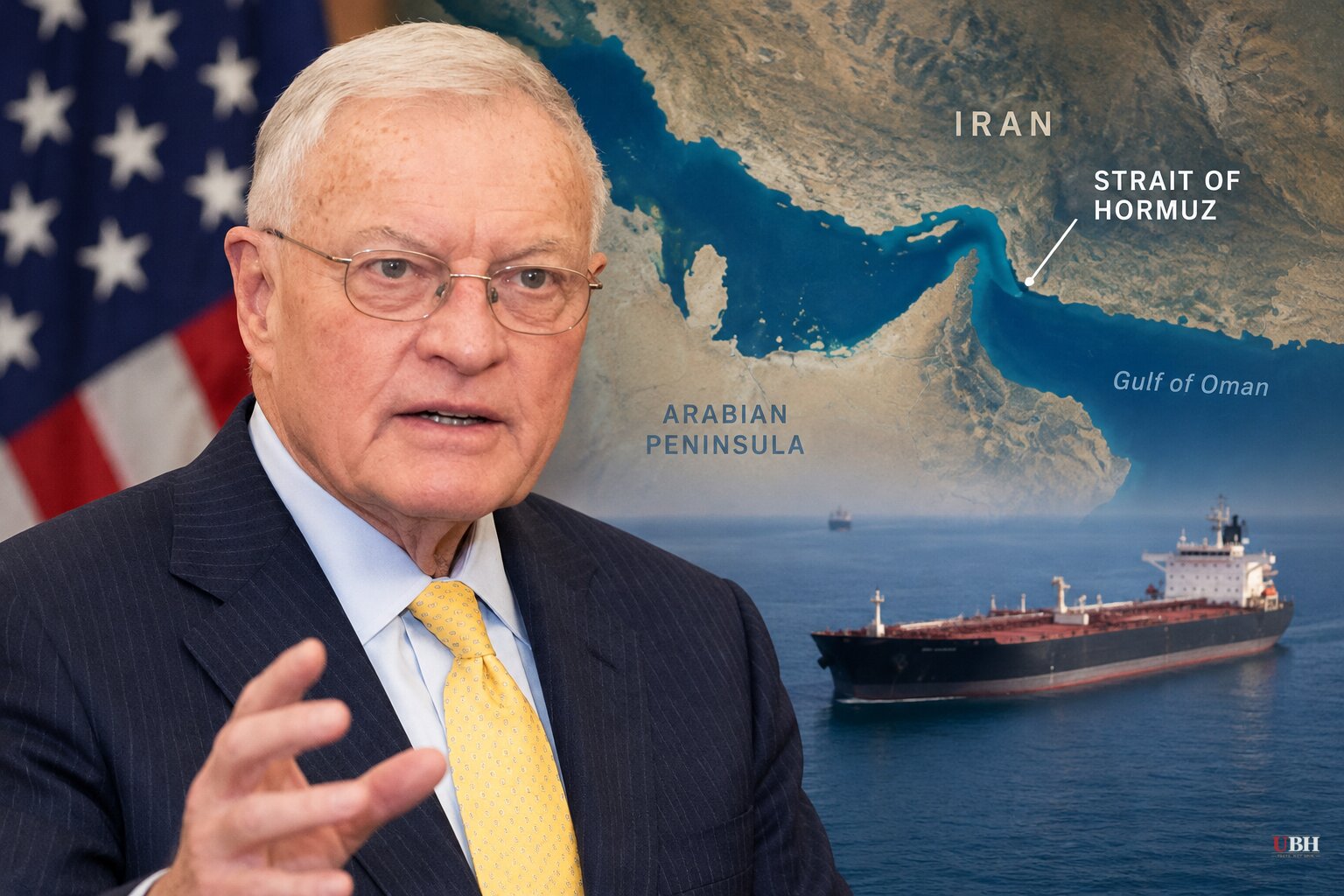
Keith Kellogg, Trump's former special envoy for Ukraine, has contradicted the president on what is pushing up diesel prices.
On Fox Business Network's Kudlow, Kellogg said the real problem is not Zelensky and not the war between Russia and Ukraine. "It's all what's happening in the Gulf," he said, citing Kpler data showing poor transit through the Strait of Hormuz.
"I respectfully disagree with the president on this," Kellogg added.
What Trump said
Trump defended a bilateral arrangement with Vladimir Putin to buy Russian diesel for U.S. and global buyers. Speaking to reporters roughly a month before the midterm elections, with domestic diesel above $6 a gallon, he said Zelensky "wants to make problems for the world, for our farmers with diesel."
Trump also repeated his call for political change in Kyiv and said Zelensky had chances to reach a settlement.
He has demanded that Ukraine stop attacking Russian oil refineries. He has also said an energy-infrastructure ceasefire is in place. According to NPR's reporting from Warsaw, neither Kyiv nor Moscow appeared to know about it. Zelensky told a security conference there by video that Ukrainian refineries were being bombed even as the ceasefire was announced.
The administration also lifted sanctions on Russian diesel, NPR reported.
The price data
The numbers point toward the Gulf. Researchers Joshua Busby and Greg Pollock wrote in The Conversation that traffic through the Strait of Hormuz is below 15% of prewar levels. Oil rose from $65 a barrel before the Iran conflict began in February 2026 to more than $100 a barrel in mid-September.
That is the backdrop Kellogg cited. Diesel is a refined product, so crude costs and shipping disruptions feed straight into pump prices. Trump's stated concern about farmers is real: diesel is a core input for planting, harvesting and hauling.
Neither Trump nor the White House has, in the sources reviewed, offered a figure showing how much Ukrainian strikes on Russian refineries move U.S. diesel prices relative to the Hormuz disruption.
Kellogg on Putin's offer
In a separate Fox News interview, Kellogg said Ukraine should keep hitting Russian refineries. "This is a military operation, this is a war, and they are attacking correctly," he said.
He was skeptical of Moscow's diesel offer. "I would tell Vladimir Putin: thank you very much, that really helps us. But I would look at the ulterior motives behind why he's arranging diesel shipments," Kellogg said. He argued the Kremlin hopes Washington will use the peace talks to pressure Kyiv into halting the strikes. He said he distrusts both Putin and Kirill Dmitriev, the Kremlin's economic envoy.
Kellogg left his post in January. In earlier remarks played by NPR he went further, saying he would "burn down every one of the goddamn refineries that Russia has today."
Reaction in Europe and Washington
European officials and analysts have treated the moves skeptically. Majda Ruge of the European Council on Foreign Relations told NPR that Trump's desire for an economic reset with Russia and for announcing business deals "has really been the only consistent element" of his Russia-Ukraine policy.
The EU, meanwhile, imposed its largest-ever sanctions package against almost 1,600 individuals and companies tied to Russia's military industry. NPR noted that such packages take a long time to prepare, so it was not a response to the diesel announcement.
Retired Lt. Gen. Mark Hertling and Sen. Angus King (I-Maine) argued in a New York Times op-ed that U.S. policy undermines deterrence. "The enemies of liberal democracy increasingly think America is weak and fickle," they wrote. U.S. assistance to Ukraine in fiscal 2026 totals $220 million, roughly a 99% drop from peak-war levels, according to figures cited by Military.com.
On the Ukrainian side, strategic communications expert Yurii Bohdanov said on RBC-Ukraine's podcast that Kyiv could accept an energy truce, "but not the Trumpist kind, where we stop striking Russian oil and they stop attacking the already battered Kremenchuk Oil Refinery." He called that "some kind of nonsense."
What happens next
Kellogg says the Ukrainians "will not" stop the refinery campaign. He also said he doubts Russia has the capacity to take the rest of Ukraine's Donetsk region.
The open question is whether Washington leans on Kyiv over the strikes while peace talks continue, and whether the Russian diesel arrangement delivers any relief at the pump before voters go to the polls in November.
Kellogg's own answer is that the price problem sits in the Gulf, and Hormuz traffic remains under 15% of its prewar level.
Sources used for this briefing
7 links from 7 independent newsrooms (syndicated copies of the same report count once)
These are the sources it draws on, linked so you can verify.


