
Unbiased headlines. Facts, not spin.
Unbiased Headlines is an independently owned news organization. We bring you the facts, not opinions, written fresh from 110+ named sources. Sources linked so you can verify it yourself.
 energy
Major Story (7/10)
energy
Major Story (7/10)
FERC Proposes Fast-Track Permits for LNG Plant Expansions and Drops Air Modeling Requirement
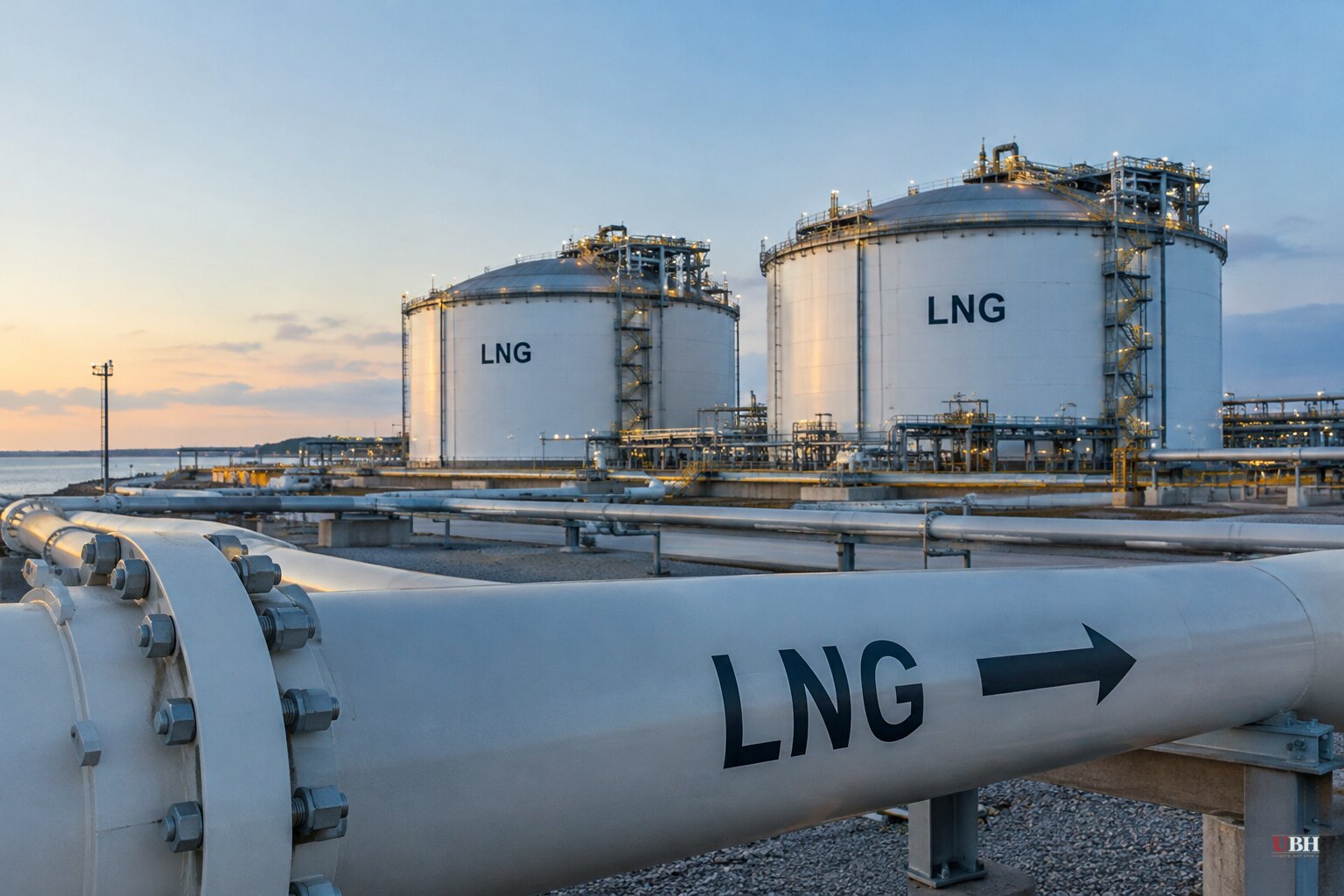
The Federal Energy Regulatory Commission on Thursday, Oct. 15, proposed two changes that would make it faster and cheaper to expand America's LNG export capacity and build gas pipelines.
Neither is final. Both are proposals, and the public gets a chance to weigh in first.
A blanket program for LNG plants
The first item is a Notice of Proposed Rulemaking creating a blanket authorization program for LNG facilities. The commission backed it unanimously.
Under the proposal, qualifying activities at LNG sites could proceed without a case-by-case order under Sections 3 and 7 of the Natural Gas Act. FERC modeled it on its blanket certificate program for interstate gas pipelines, which has run for roughly 40 years.
The framework has three tiers:
- Automatic authorization. Projects that do not increase a plant's authorized capacity, do not extend the facility's footprint, and stay within design limits for flows, volumes, pressures and temperatures. They proceed with periodic reporting, without advance notice to the commission.
- 60-day prior notice. Similar projects, plus some that could raise capacity, as long as they stay inside the plant footprint, do not hurt reliability or public safety, and do not push equipment outside design limits. Stakeholders get a window to protest.
- 90-day prior notice. Bigger builds, including new liquefaction trains, LNG tanks and marine berths. These could reach beyond a plant's current perimeter but face limits on facility type, location and scale.
The draft rule also carries standard environmental and engineering conditions for projects approved this way.
FERC Chairman Laura Swett, a Republican, said the goal is to "enable the country to scale up its existing facilities more quickly to supply our allies who are in desperate need." She said the action would maintain safety and environmental protections.
Commissioner Lindsay See, who spearheaded the idea, said it is "rooted in the simple principle that [FERC] should devote our resources to projects that warrant searching scrutiny and provide a more efficient pathway for those that don't."
Once the proposal is published in the Federal Register, stakeholders will have 60 days to comment before FERC decides anything.
Air dispersion modeling on the chopping block
The second item drew a split. On a 4-1 vote, FERC proposed in a draft policy statement to stop requiring air dispersion modeling in its National Environmental Policy Act reviews of gas projects.
These models simulate how a project's emissions spread through the atmosphere and combine with background pollution and emissions from nearby sources.
FERC argues the work duplicates what the Environmental Protection Agency and state air permitting agencies already do under the Clean Air Act. The draft statement says the agency would shift to "a more streamlined approach" to bring its NEPA analysis "back in line with the statutory text and common sense."
Swett was blunter. "The models have proven time and again to be an unnecessary source of confusion, delay and litigation risk," she said. She added that modeling "has proven a tremendous boon for the infrastructure opponents and lawyers who litigate the commission's natural gas authorizations."
Commissioner Judy Chang dissented. She said the change would make it harder to assess how people living near gas projects may be affected. Air dispersion models are "the best tool we have for understanding the likely local and regional air impacts of the projects we permit, outside of actually having physical monitors," Chang said at the meeting.
The disagreement is over whether state and EPA permitting covers the same ground FERC's own review would. Swett says it does. Chang says FERC loses its best view of local air impacts. FERC has not said how the modeling gap would be filled where a project does not trigger a separate air permit.
The backdrop: prices and bottlenecks
Swett tied the proposals to power generation as well as exports. "Building generation involves gas," she said at the meeting. "The only current restriction on getting American gas is our ability to get the gas to market and the infrastructure bottlenecks."
The timing lines up with a rough energy market. An international oil benchmark hit $110 per barrel on Friday, Oct. 16, the first time since May, as the industry deals with shocks from the U.S.-Iran and Russia-Ukraine wars.
Congress is working the same problem from a different angle. Senators from both parties announced a deal Sept. 30 on the Bipartisan American Affordability and Jobs Act, a permitting overhaul that would set deadlines for environmental reviews, limit court challenges and make issued permits harder to overturn.
Sen. Shelley Moore Capito (R-W.Va.), who chairs the Environment and Public Works Committee, said the current process has "stood in the way of energy reliability, secure jobs, modern infrastructure, and economic growth." Sen. Sheldon Whitehouse (D-R.I.), the panel's ranking Democrat, called it a compromise that would help produce "clean, affordable energy" and make data centers "start paying their fair share."
A White House official said the administration supports the deal. A vote is not expected until after the November midterms. Capito said the goal is to make it the first vote when senators return. The House, which has not passed the bill, is in recess until after the elections.
FERC's LNG rulemaking now moves into the Federal Register and a 60-day comment period. Developers, environmental groups, state regulators and pipeline operators will weigh in on the tier boundaries and the removal of dispersion modeling.
The open question is how the final rule treats tier three, where new liquefaction trains, tanks and berths would proceed on a 90-day notice rather than a full application. Whether the commission holds that line after the comments come in will decide how much review LNG expansions actually keep.
Sources used for this briefing
7 links from 7 independent newsrooms (syndicated copies of the same report count once)
These are the sources it draws on, linked so you can verify.


