
Unbiased headlines. Facts, not spin.
Unbiased Headlines is an independently owned news organization. We bring you the facts, not opinions, written fresh from 110+ named sources. Sources linked so you can verify it yourself.
 energy
Major Story (8/10)
Event date: October 13, 2026 ·
energy
Major Story (8/10)
Event date: October 13, 2026 ·
Oil Jumps Back Toward $100 in U.S. Futures as Iranian State Media Claim Another Hit Near Saudi East-West Pipeline; Riyadh Silent
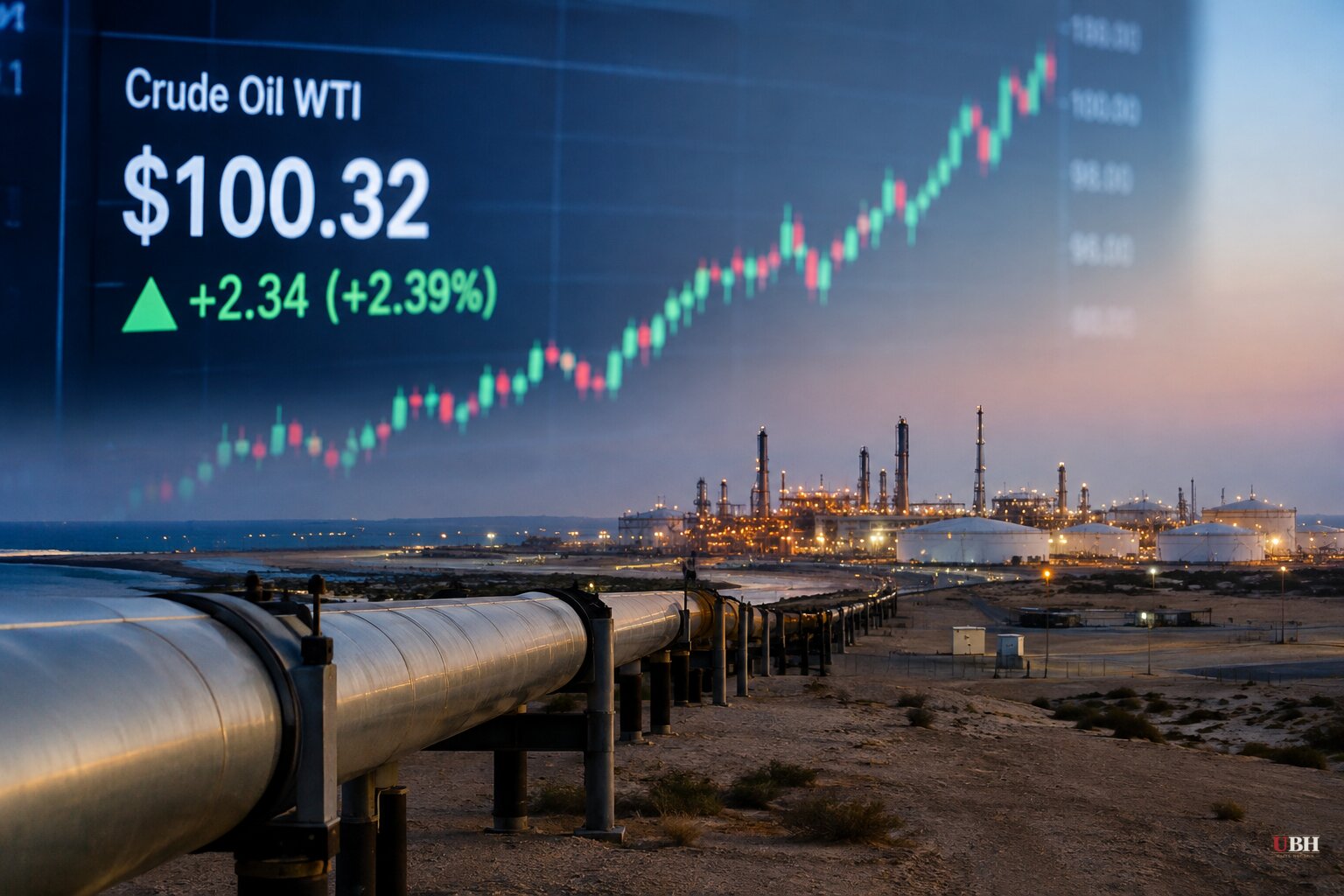
Since the Houthis stepped up missile and drone attacks on Saudi Arabia this month, hitting Riyadh's airport four times and an Aramco building in Dhahran, the oil market has been trading on whether Saudi export routes hold. Today, Oct. 16, that question got sharper. Iran's state broadcaster IRIB reported a thermal anomaly near an oil pipeline in Saudi Arabia's Yanbu region, suggesting the East-West pipeline had been targeted again. Neither Saudi authorities nor any other source has confirmed it.
Markets moved anyway. US crude futures rose more than $2 to cross $100 a barrel by midday, with traders also reacting to a fire at Russia's Ryazan refinery. Earlier this week, WTI had been in the low-to-mid $90s and Brent near $106 to $107.
The pipeline is the pressure point
The East-West pipeline carries Saudi crude to Yanbu on the Red Sea, bypassing Hormuz. It was bombed on Sept. 11, according to the latest monthly oil market assessment, which says that attack and soaring freight rates compounded the September rally.
The physical market is running well ahead of futures. North Sea Dated crude soared $26.17 in September to $116.89 a barrel and was trading around $134 at the time of that report. Some North Sea grades were changing hands as high as $160. Brent futures are up 13% since the start of September, while Dated is up 43%.
Hormuz flows are back, at a cost
Oil and product flows through the strait averaged 13.1 million barrels per day last week, according to ship-tracking firm Kpler. That is just under 80% of the 17.1 million barrels a day that moved before the war. JPMorgan puts total Middle East crude flows, through Hormuz and around it, at 98% of prewar levels.
"Given such a strong volume passing through the strait, it is clear Iran is losing its influence over it," said Matt Smith, Kpler's director of commodity research. The recovery relies on military-escorted shuttles and "dark" transits with U.S. Navy support, plus Saudi crude that had been going to the Red Sea returning to the Gulf route.
Iran has other ideas. Two senior Iranian officials told Reuters that Tehran is deploying new tactics against ships in the strait to keep oil prices high and influence the U.S. midterm elections. Iranian state media also announced another tanker fire today, with no further detail provided. Earlier this week, the UK Maritime Trade Operations center reported a tanker hit by a drone near Oman's Sohar anchorage and another damaged by an unidentified projectile in the strait.
Iranian President Masoud Pezeshkian, speaking today in Yerevan, said Iran will not yield to force or sanctions. He called U.S. sanctions "beyond humanitarian frameworks" and said American attacks in recent months are "unjustifiable and inhumane." He added that "Iran is not seeking nuclear weapons."
Inventories are the clock
The supply cushion is thinning. Global observed inventories were 509 million barrels below end-February levels, a drawdown of 2.4 million barrels per day, the monthly assessment found. JPMorgan estimates stocks have fallen by about 2 billion barrels over the course of the war.
Demand is doing part of the balancing. The same assessment forecasts world oil demand down 2.5 million barrels a day year over year in the fourth quarter, with diesel accounting for 25% of the drop. Diesel is the tightest product: global exports in September were 700,000 barrels a day lower than a year earlier, driven by a 1.3 million barrel loss from Russia and the Middle East.
JPMorgan's head of global commodities strategy, Natasha Kaneva, told clients two weeks ago: "For the first time since the start of the Iran conflict, we don't have a baseline view." Before the conflict began on Feb. 28, oil was about $65 a barrel.
Russian diesel and the Ryazan fire
The Trump administration's temporary easing of restrictions on Russian diesel, a six-month arrangement, is meant to relieve fuel markets. Trump defended it on Truth Social, pointing to the EU's billions of dollars in Russian energy purchases and saying it served Americans' interests. Lawmakers in both parties have said it could undercut sanctions imposed over the war in Ukraine.
Hiroyuki Kikukawa, chief strategist at Nissan Securities Investment, said expected Russian diesel exports are "likely to limit sharp price movement in either direction," and he projected WTI between $90 and $100. Moscow said it sees no direct link between the deal and peace talks with Ukraine, after Reuters reported U.S. envoys told Ukrainian officials the deal was part of an effort to draw Russia back to negotiations.
Ukraine complicated that picture. Regional governor Pavel Malkov said Ukraine struck Rosneft's Ryazan refinery Thursday, causing a fire. The plant accounts for nearly 5% of Russian refining throughput. Zelensky told the Financial Times that Kyiv's pause on refinery strikes is over and that another would require more U.S.-made Patriot interceptors, calling that the "minimum" condition.
Whether Riyadh confirms damage at Yanbu is the immediate concern. If the pipeline is out, Saudi crude must return to the Hormuz route, which depends on U.S. escorts to keep moving.
Sources used for this briefing
7 links from 7 independent newsrooms (syndicated copies of the same report count once)
These are the sources it draws on, linked so you can verify.


