
Unbiased headlines. Facts, not spin.
Unbiased Headlines is an independently owned news organization. We bring you the facts, not opinions, written fresh from 110+ named sources. Sources linked so you can verify it yourself.
 energy
Major Story (8/10)
energy
Major Story (8/10)
Brent Crude at $106 as Houthi Strikes Hit Saudi Aramco Headquarters and Futures Price In Years of Iran-War Disruption
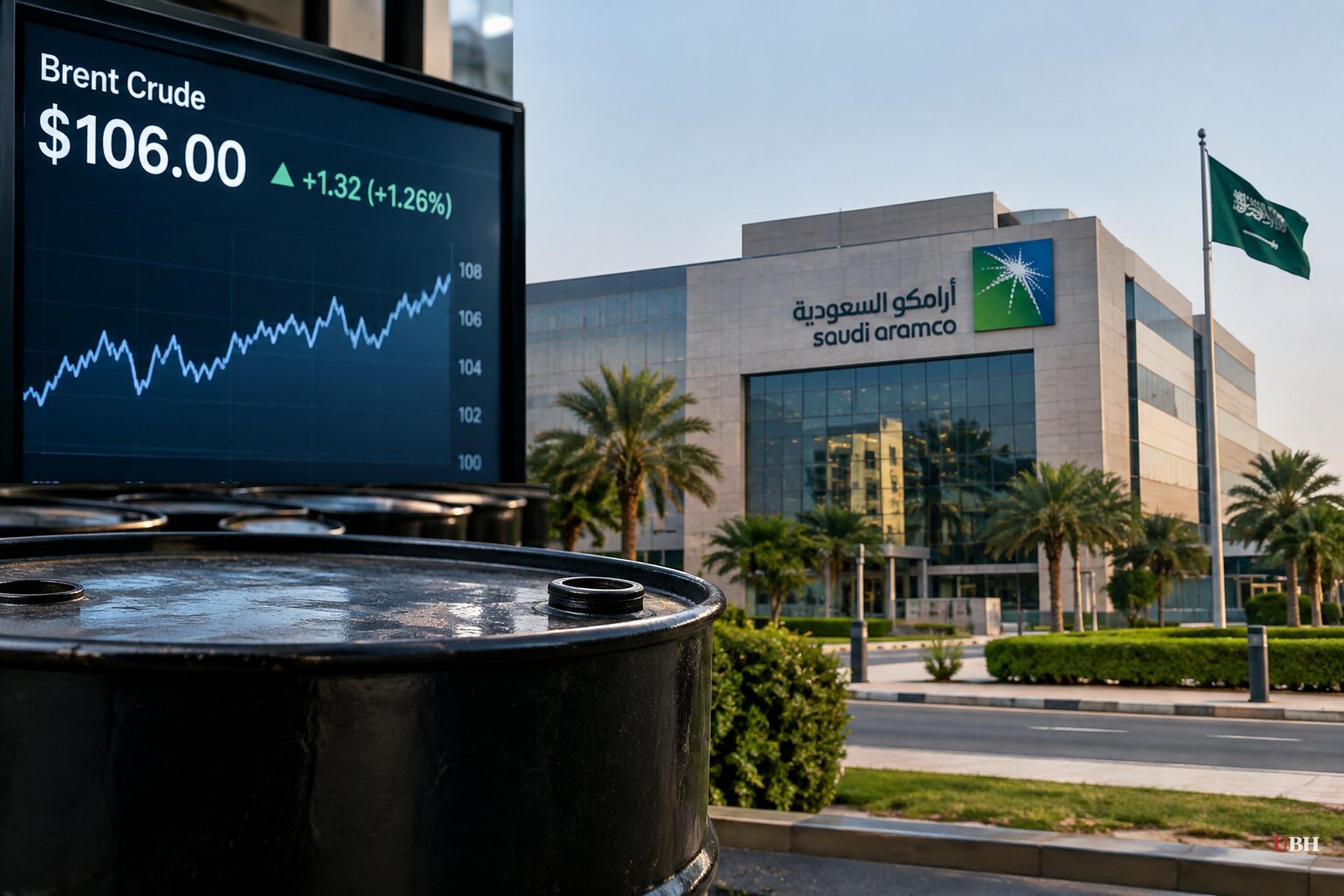
Oil is not settling down. Brent crude rose 37 cents, or 0.35%, to $106.06 a barrel on Wednesday, Reuters reported, as Middle East tensions escalated again.
The war with Iran is now in its eighth month. The market has started to price it like a problem that lasts years, not weeks.
Futures say the pain outlasts the war
Brent futures for December 2027 delivery have climbed more than 13% since the start of September to around $86 a barrel, a record for that contract. December 2026 futures have gained roughly 12% over the same stretch.
That runs against the official forecast. The International Energy Agency projects global oil supply will rise to 108.3 million barrels per day in 2027, up from 100.7 million this year, as Middle Eastern exports recover. It sees demand rising from 102.4 million to 104.4 million barrels per day, still slightly under 2025 levels. On those numbers, 2027 should be a surplus year, which normally pushes prices down.
Traders are betting the recovery comes late or falls short. Declining inventories, damaged refining capacity and renewed threats to shipping through the Strait of Hormuz are the factors cited behind the longer-dated rally. Oil flows through the strait have recovered toward pre-war levels with U.S. naval support, but renewed Iranian attacks on vessels leave that recovery fragile.
Houthi strikes on Saudi Arabia continue
Yemen's Iran-aligned Houthis vowed Wednesday to keep attacking airports and oil facilities in Saudi Arabia. A missile strike earlier this week damaged a building at Saudi Aramco's headquarters in Dhahran, according to sources who spoke to Reuters.
The Saudi-led coalition said its air defenses intercepted and destroyed a drone aimed at the Eastern Province on Thursday, local time.
Saudi Arabia has also postponed a planned conference with Iran and the Gulf Arab states on the future of the Strait of Hormuz, according to Breitbart's reporting.
Trump's leak complaint
At a rally in Arizona on Wednesday, President Trump said a leak compromised a planned bomber mission against Iran. He said the departure time from Missouri, 12:07, and the arrival time appeared in the New York Times and on CNN.
Trump said he phoned Gen. Dan Caine, called off the raid, and sent B-2s two days later at the same time of day. "In my opinion, leakers should be shot," he said. He also said the leaker "ought to go to jail."
The account of the leak and the aborted mission is the president's own, and the outlets he named have not been quoted responding to it.
Squeezing Tehran
Treasury Secretary Scott Bessent said Sunday that Iran will have "nothing left to trade for anything" within roughly two weeks as its remaining oil reaches China. He argued the administration's economic campaign has brought Tehran "to its knees" and is pushing the regime toward a deal.
The rial hit a record low of 2.5 million to the dollar on Tuesday, according to Breitbart's reporting. A spokeswoman for the Iranian regime warned Monday that supply problems and wartime damage to Iran's refineries could cause fuel supply problems in northern Iran during the winter.
Outside analysts agree the squeeze is real but doubt it settles the matter. At an Iran International town hall in Washington, Patrick Clawson of the Washington Institute said Iran's stored oil, on ships and in China, was nearing exhaustion. He said Iran depends on natural gas for about 69% of its energy, so damage to that infrastructure could force more reliance on polluting mazut for electricity.
Mohammad Machine-Chian, an Iran International analyst, estimated $21 billion to $23 billion in export proceeds have not returned to Iran and that the blockade could cost another $35 billion in oil revenue. Kerri Bitsoff, a former senior OFAC official, said this round differs from past sanctions because it targets enforcement and the financial intermediaries behind Iran's economy. She pointed to UAE restrictions, measures against Iranian airlines and Turkish action against banks tied to Iranian transactions.
The panel's headline conclusion: the pressure threatens the regime's finances but "may not bring concessions." On Tuesday, Sen. Mark Warner, a Virginia Democrat, said on MS NOW he does not see a way Iran fails to extract some kind of toll from the oil and natural gas that comes out of the conflict.
Who is buying the displaced crude
The disruption has redrawn trade flows. Between January and September, China bought half of Brazil's crude exports. Sales to China rose 49% to a record $21.8 billion, the Brazil-China Business Council found. Total Brazilian crude exports grew 28.7% to $43 billion.
The council's analysis says that growth has begun to cool as tanker traffic through the Persian Gulf gradually normalizes. That sits uneasily next to a $106 Brent price and Iranian threats to shipping.
Bessent's roughly two-week timeline, set out Sunday, is the test of the Treasury strategy. Whether Iran's oil income actually hits zero, and whether Tehran moves toward talks if it does, remains to be seen. The Houthi campaign against Saudi energy infrastructure shows no sign of slowing in the meantime.
Sources used for this briefing
5 links from 5 independent newsrooms (syndicated copies of the same report count once)
These are the sources it draws on, linked so you can verify.


