
Unbiased headlines. Facts, not spin.
Unbiased Headlines is an independently owned news organization. We bring you the facts, not opinions, written fresh from 110+ named sources. Sources linked so you can verify it yourself.
 energy
Notable (6/10)
energy
Notable (6/10)
Flex CEO Says U.S. Grid Is Not Ready for AI, Days After Company Closes EPC Power Deal
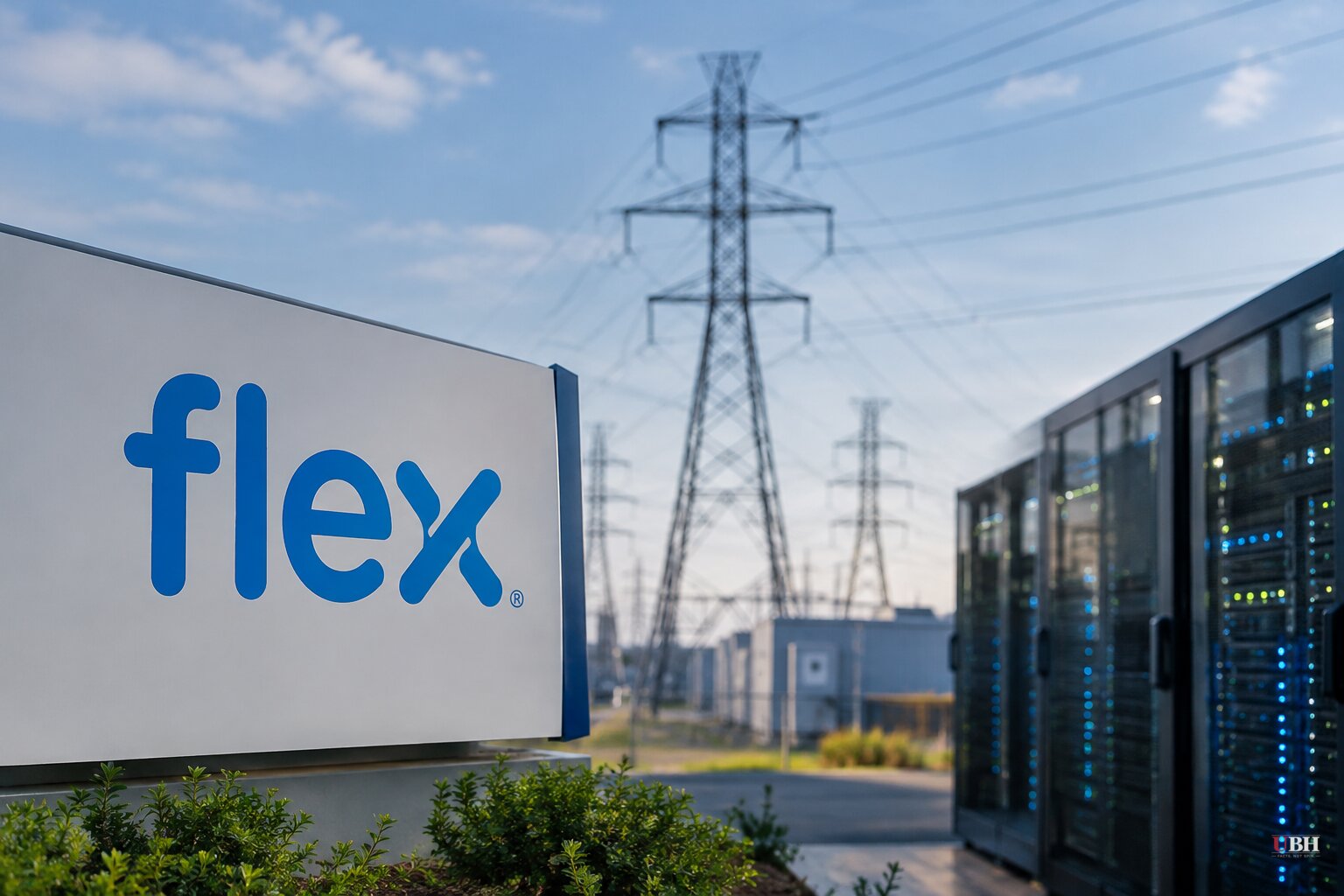
The head of one of the world's largest contract manufacturers says the bottleneck for American AI is not silicon. It is the wires.
"We have a grid that's just not ready for what's in front of us," Flex CEO Revathi Advaithi told Fortune's Diane Brady at the magazine's Most Powerful Women Summit in Santa Barbara, California.
"If you don't get the energy infrastructure and the grid ready, forget all the frontier models and forget all the semiconductors," she said. Her point: without power, the country can't use any of it.
Five years for a chip, decades for a grid
Advaithi's core argument is about timelines. Developing a chip takes about five years, she said. Building a power grid that can meet the country's growing demand takes decades.
She cited a 2025 Berkeley study estimating that data centers could consume around 11.8% of all U.S. electricity by 2030.
Advaithi said the U.S. is already in a power deficit and expects a gap to persist for the next decade as frontier models keep growing. "We're far behind, and it's going to take us a long time to innovate," she said. "Power doesn't seem to have changed since the [Thomas] Edison days."
Her prescription is specific: rapid development of new generation, upgrades to old and outdated transmission lines, and next-generation distribution. A power deficit, she said, should not be allowed to constrain AI's future.
Red tape and cautious data centers
Advaithi pointed at two culprits. One is the approval process. She said creating new power technology involves a "tremendous amount" of approvals, and she urged the country to speed up its standards and sign-offs for innovation.
The other is the data center industry. She said operators are not moving quickly or adopting new technology.
She also offered the case for caution, and she made it herself. Power innovation has stalled partly because of safety and regulatory issues, she said. "You don't want to mess around with things like power, because it impacts people's lives."
Faster permitting and faster deployment pull against the reasons the rules exist. Advaithi did not name specific rules to cut, and she did not propose dropping safety standards. She said the pace has to increase.
Flex has money in this fight
Advaithi is not a disinterested commentator. Her company sells into exactly the demand she describes.
On Oct. 14, Flex announced it had completed its acquisition of EPC Power, which makes power conversion and grid-forming technology for data centers and grid applications. EPC Power has more than 15 GW deployed, according to Flex, and its platform is built to support next-generation 800V data center power architectures. It does its engineering and manufacturing in the United States.
EPC Power now sits inside Flex's Cloud and Power Infrastructure segment. Flex said the deal expands its capabilities across power, cooling and compute to meet demand for higher-density AI infrastructure. Financial terms were not disclosed.
"Together, we can help customers address the growing power demands of AI infrastructure with more efficient, resilient and integrated solutions," Advaithi said in the company's announcement.
Flex (NASDAQ: FLEX) also plans to separate that segment into an independent publicly traded company, Axiom Solutions International, Inc., in the first calendar quarter of 2027. EPC Power will go with it.
Nothing in Flex's announcement ties the acquisition to Advaithi's summit remarks, and no one has alleged any impropriety. The facts sit side by side: a CEO says the grid is the weak link, and her company just bought a business that sells grid-stabilization and backup-power technology.
The numbers behind her warning are the ones to track. The Berkeley estimate of 11.8% of U.S. electricity by 2030 is a projection, not a measurement, and Advaithi's own forecast of a decade-long power gap is her estimate.
The next concrete marker is the Axiom separation, targeted for the first calendar quarter of 2027. Flex has not disclosed what it paid for EPC Power, and the details of the spin-off are laid out on the company's transaction resources page.
Sources used for this briefing
7 links from 7 independent newsrooms (syndicated copies of the same report count once)
These are the sources it draws on, linked so you can verify.


