
Unbiased headlines. Facts, not spin.
Unbiased Headlines is an independently owned news organization. We bring you the facts, not opinions, written fresh from 110+ named sources. Sources linked so you can verify it yourself.
 energy
Major Story (8/10)
Event date: October 14, 2026 ·
energy
Major Story (8/10)
Event date: October 14, 2026 ·
Gulf Crude Exports Recover to 75% of Pre-War Levels, but Shipping Costs Keep Fuel Prices High
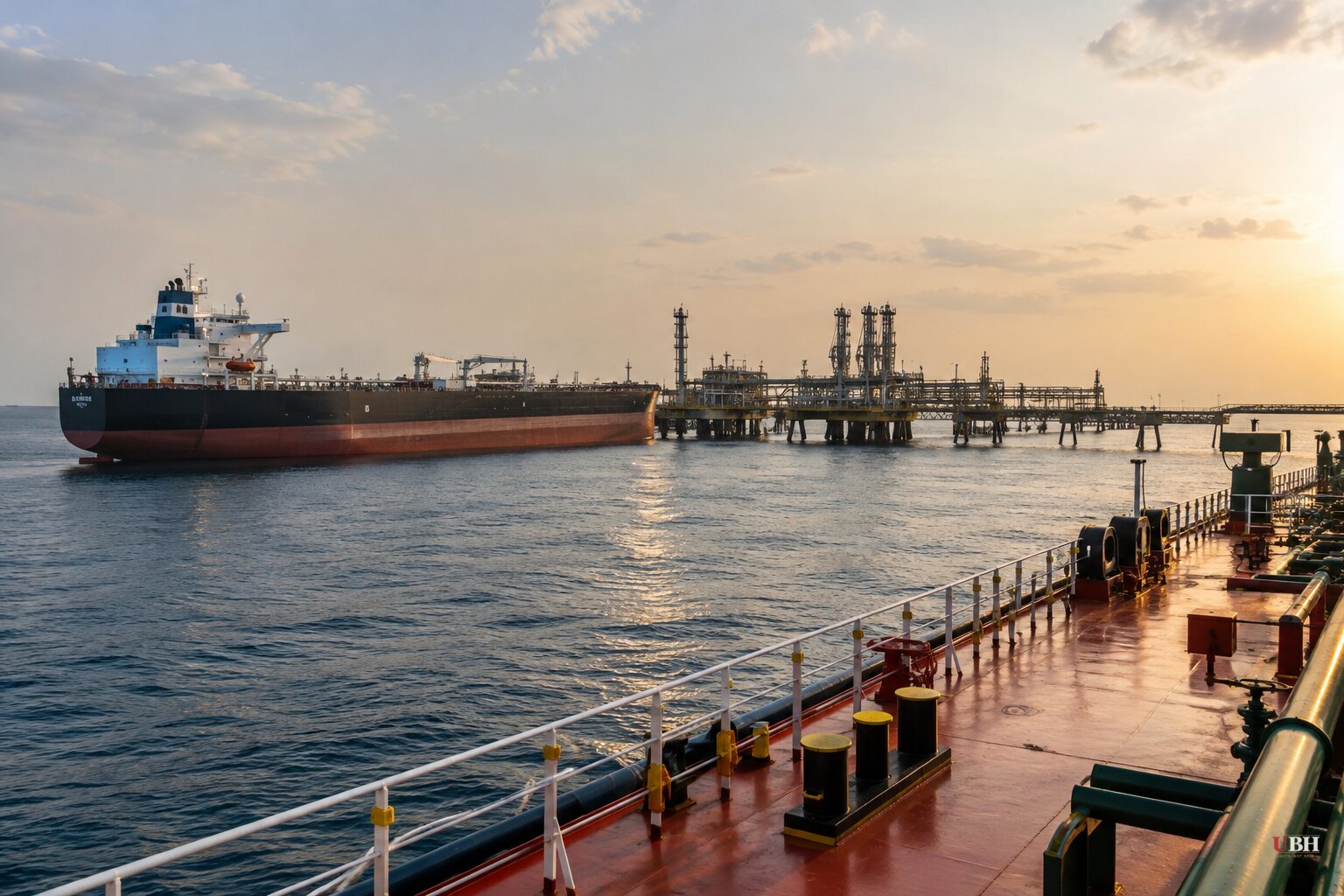
The Strait of Hormuz is moving oil again. Fuel is still expensive anyway.
The International Energy Agency said in its Oct. 14 Oil Market Report that crude exports from Gulf producers jumped 4.4 million barrels a day in September to 13.9 million, more than 75% of pre-war levels. Global oil supply rose 2.5 million barrels a day to 102.3 million. Saudi Arabia led the OPEC+ gains and the UAE led the non-OPEC+ increase.
The agency still called the recovery "fragile" because of "renewed attacks in the Gulf."
Getting a barrel out now costs 16 times more
The price problem is in the shipping. According to Clarksons, the London research firm, hiring a supertanker to sail from the Persian Gulf to China cost $65,000 a day last year. It reached $230,000 a day as the war was about to begin. It is now $1.6 million a day.
Tom Kloza, chief energy adviser at Gulf Oil, said the cost of getting crude out of the Gulf has gone from about $2 a barrel to about $33. "That's insane," he said.
The UK Maritime Trade Operations reported multiple commercial vessels hit by projectiles in the strait in recent days, including at least two crude tankers. The Wall Street Journal reported that some shippers are offering sailors up to $25,000 per trip. It also reported that producers are paying $30 million to $40 million in insurance for a round trip in and out of the strait.
Jan Stuart, global energy strategist at Piper Sandler, put it this way: "The wars have not been resolved. There is no peace. The energy system is still constricted."
What drivers and truckers are paying
AAA put the national gasoline average at $4.33 a gallon on Oct. 14, up slightly from a month earlier. CNN, citing AAA data, reported that gasoline has never been this high at this time of year. Diesel is about 20 cents below the all-time high set last month.
Brent crude was near $106 a barrel on Wednesday, Oct. 14. It has swung between $96 and nearly $110 over the past month. Price boards on Friday showed Brent around $105 and U.S. benchmark crude near $97, with markets heading for a weekly gain after fresh attacks around Hormuz.
Two other pressure points sit outside the Gulf. CNN reports that Ukrainian drones are destroying Russian refineries, and Houthi attacks have disrupted the Red Sea shipping lane. A new Ukrainian strike on a major Russian refinery was reported in the past day.
The Houthis vowed Wednesday to keep hitting airports and oil facilities in Saudi Arabia. The Saudi-led coalition said its air defenses destroyed a drone aimed at the Eastern Province on Thursday.
The IEA's demand picture
The IEA cut its 2026 demand forecast again. It now expects global oil demand to fall 2.6 million barrels a day this year, about 100,000 barrels a day worse than its prior estimate. Fourth-quarter demand is projected to be down 2.5 million barrels a day from a year earlier. Diesel accounts for 25% of the drop.
For 2027, the agency expects a partial rebound of 2 million barrels a day, about 600,000 less than it projected before. That would still leave world oil use 0.6% below 2025 levels. The recovery assumes hostilities in the Middle East stop.
On the supply side, the IEA projects 2026 output down 5.8 million barrels a day to 100.7 million, then up 7.7 million in 2027. The agency said inventories keep falling because supply losses are outpacing weaker demand. It also warned that renewed U.S.-Iran hostilities could derail its projection of a market surplus next year.
The IEA's relief case rests on demand being crushed by high prices and on the fighting ending. Stuart's point is that neither condition has been met.
The Russia diesel deal
On Oct. 9, President Trump announced a deal with Russian President Vladimir Putin to supply the U.S. with more than 300,000 tons of diesel immediately. Another 500,000 tons would follow in November, then 4 million more tons at a later date.
Energy policy experts quoted by Transport Topics say the pact is unlikely to dent prices at the pump. Russia's refining capacity is under repeated drone attack, and the deal's later volumes carry no date.
At a Wednesday rally in Arizona, Trump also said the U.S. struck Iran two days after he called off a bombing raid because of a leak. He named the New York Times and CNN as outlets that published departure and arrival times for B-2 bombers. He said "leakers should be shot."
The November tranche is the next checkpoint. If 500,000 tons of Russian diesel reach U.S. buyers on schedule, the Oct. 9 announcement becomes a working supply line. If it does not, the 4 million tons promised after it will also be in doubt, and diesel will remain near a record.
Sources used for this briefing
7 links from 7 independent newsrooms (syndicated copies of the same report count once)
These are the sources it draws on, linked so you can verify.


