
Unbiased headlines. Facts, not spin.
Unbiased Headlines is an independently owned news organization. We bring you the facts, not opinions, written fresh from 110+ named sources. Sources linked so you can verify it yourself.
 energy
Major Story (7/10)
Event date: October 16, 2026 ·
energy
Major Story (7/10)
Event date: October 16, 2026 ·
China Bought Half of Brazil's Oil Exports as Sales Hit a Record $21.8 Billion
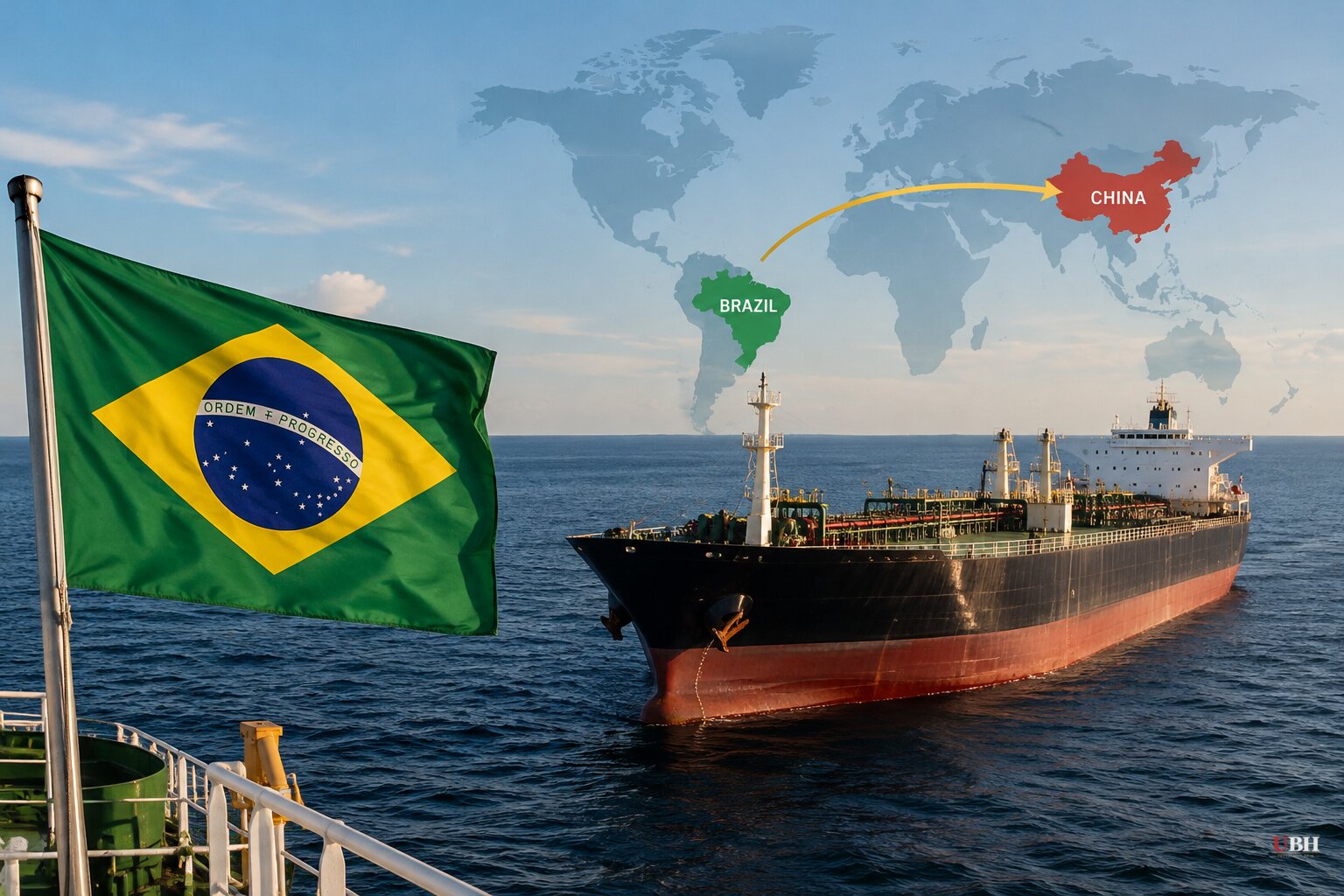
China took half of all the crude oil Brazil exported in the first nine months of 2026, and it paid a record price for the privilege.
Brazilian oil sales to China jumped 49% to $21.8 billion between January and September, according to a report from the Brazil-China Business Council. Shipments rose 27% by volume and prices climbed 16.8%. Total Brazil-China trade hit about $143 billion over the period.
The numbers
Brazil is running a $26.1 billion trade surplus with China, per the council's data.
Soybeans remain the biggest line item at 35.4% of Brazil's exports to China. Crude is now second at 25.8%.
China buys more than a million barrels of Brazilian crude a day, with spikes above 1.6 million. India, the next-largest buyer, takes roughly 238,000 barrels a day, so China's share is nearly seven times India's. Brazilian sales to India are still up 165% this year.
Across all buyers, Brazil's crude exports grew 28.7% to $43 billion.
Not everything is growing. Brazilian beef sales to China fell 8.5% after Beijing imposed caps and punitive tariffs meant to shield its own producers. The oil windfall landed just as that hit started squeezing Brazilian exporters.
Why Brazil got the business
The Iran war began in February. It disrupted passage through the Strait of Hormuz, which carries roughly one-fifth of global oil and liquefied natural gas, according to McKinsey's analysis of the shock. More than one in five barrels of seaborne oil traded in the second quarter took a different route than before the crisis, McKinsey found.
Asian refiners went looking for supply outside the Gulf. The council's report ties Brazil's surge to that scramble. Brazilian crude is also compatible with Asian refineries, and Japan and South Korea have both said they want more of it. Brazil's government has been courting them.
Brazil's regional rivals have not kept pace. Output is down in Colombia, Ecuador and Peru.
China's state-linked buyers are active in the market. In September, Brazil's state-run PPSA awarded two more cargoes from a late-August tender to PetroChina and Petrobras, according to a Quantum Commodity Intelligence report dated Sept. 11.
The limits of the boom
The council's report says the pace of growth has cooled in recent weeks as Gulf tankers resumed sailing and traffic through Hormuz picked up.
Monthly volumes tell a more mixed story. Quantum reported Oct. 9 that Brazil's crude exports rose 45% from August to about 2.9 million barrels per day in September. The same report said diesel imports fell 27% from a year earlier.
Analysts have also pointed out that Brazil lacks the production and export capacity to fully replace what the Gulf's big producers normally ship. Brazil helped plug a hole. It did not fill it.
The broader market is still strained. Jan Stuart, global energy strategist at Piper Sandler, told CNN: "The wars have not been resolved. There is no peace. The energy system is still constricted."
U.S. gasoline averages $4.36 a gallon, the highest ever for this time of year, according to AAA. Diesel is about 20 cents below the record set last month.
Shipping the crude out of the Gulf has become far more expensive. Clarksons, the London research firm, says hiring a supertanker to sail from the Persian Gulf to China now costs $1.6 million a day. That was $65,000 a day last year and $230,000 as the war was about to begin.
Tom Kloza, chief energy adviser at Gulf Oil, said it used to cost about $2 a barrel to move crude out of the Gulf. He put the figure at about $33 now. "That's insane," he said of the tanker rates.
The United Kingdom Maritime Trade Operations reported multiple commercial vessels struck by projectiles in the strait in recent days, including at least two crude tankers.
What it means for Beijing and Brasília
For Brazil, the arithmetic is simple: more barrels, higher prices, a bigger surplus. For China, which imports roughly 70% of its oil according to McKinsey, buying half of Brazil's exports is a way to spread risk away from a single waterway.
It also ties Brazil more tightly to a customer that has just taken a bite out of its beef industry with tariffs. Brazil's exports to China are concentrated in two commodities, soybeans and crude, which together account for more than 60% of the total.
The open question is what happens if attacks on shipping in the strait escalate. If Gulf supply tightens again, Beijing's appetite for Brazilian crude is likely to rise, though Brazil's limited export capacity caps how much it can supply.
Sources used for this briefing
7 links from 7 independent newsrooms (syndicated copies of the same report count once)
These are the sources it draws on, linked so you can verify.


