
Unbiased headlines. Facts, not spin.
Unbiased Headlines is an independently owned news organization. We bring you the facts, not opinions, written fresh from 110+ named sources. Sources linked so you can verify it yourself.
 energy
Notable (6/10)
energy
Notable (6/10)
Thwaites Glacier could add 30 mm to sea levels by 2100, double earlier model estimates, new study finds
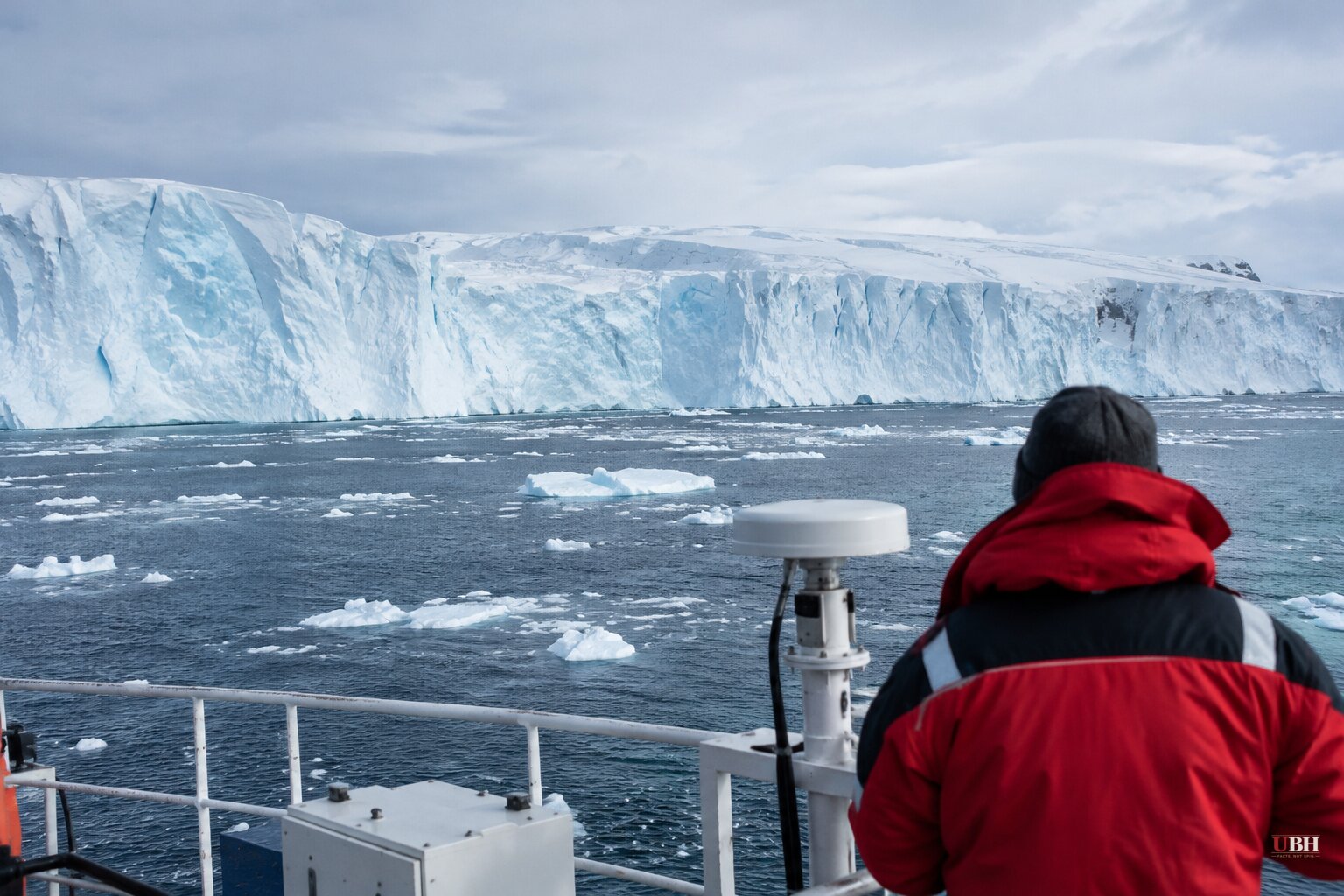
A new modeling study says Antarctica's Thwaites Glacier is losing ice faster than standard projections assumed. By 2100 it could raise global sea levels by up to 30 millimeters (1.2 inches), roughly double what conventional ice-sheet models predicted.
The research was published this week in Nature Communications. Glaciologists at the University of California, Irvine, worked with NASA's Jet Propulsion Laboratory. Lead author Mattia Poinelli is now a project scientist at UCLA. He was an Earth system science researcher at UC Irvine when the study was done.
What the model changed
Older models treated the glacier's grounding line as a fixed boundary. That is the point where ice resting on bedrock begins to float on the sea.
Satellite data shows it is really a grounding zone, sometimes miles wide. Tides push seawater in and out there, repeatedly lifting and lowering the ice.
Poinelli calls this "tidal pumping." He says it lets relatively warm ocean water get "deep underneath the ice sheets and causing vigorous melting."
Once the team built that zone into its model, the output changed. Thwaites contributed up to 30 mm of sea-level rise by 2100. Conventional models had put the figure near 15 mm (about 0.6 inches).
The study says that result holds even if warming does not go beyond recent conditions.
The ridge that holds it back
The seabed beneath Thwaites slopes downward. As the ice retreats, more of it meets warm water. Two underwater ridges currently help slow the glacier's flow toward the ocean.
The simulations show melting is slowly loosening the ice's grip on one of them, the Mouginot Ridge. Runs consistent with recent observations gave about a 60% chance that the glacier detaches from the ridge by 2100.
If that happens, the glacier could retreat quickly down the slope toward the next major ridge. That 60% figure is a modeled probability, not an observed event.
The scale of Thwaites
Thwaites covers about 192,000 square kilometers (74,000 square miles) in West Antarctica. That is roughly the size of Senegal and larger than Florida. It is nicknamed the "Doomsday Glacier."
It sits on the Walgreen Coast of Marie Byrd Land and is part of the West Antarctic Ice Sheet, which is about 14 times its size. Together with the Pine Island Glacier, it acts as a barrier holding back that larger ice sheet.
The numbers already measured are large:
- Thwaites accounts for about 4% of current global sea-level rise.
- It has lost more than 1 trillion tons of ice since 2000.
- It continues to lose roughly 50 billion tons a year.
Scientists have tracked it closely since the 1980s, when they found it was retreating quickly. Warm ocean water beneath the ice is considered a key factor.
What the study does not say
The study does not forecast a collapse in this century. Researchers do not project a full collapse for many decades, or even a few centuries. Thwaites holds enough ice to raise sea levels by more than 2 feet if it fully collapsed.
The 30 mm figure comes from a model run, and the authors present it as a floor under current conditions. It is not a forecast of the worst case.
The difference from earlier work is mechanical, not a new observation of a sudden event. Models that fixed the grounding line missed how far seawater travels under the ice. The new work says that omission understated the melt.
What comes next
The Eastern Ice Shelf, an extension of Thwaites studied by ship-based research in 2020, is the next point to watch. Recently published studies have suggested it is likely to break up within the next two decades.
The open question is how widely other modeling groups adopt the grounding-zone approach. It remains to be seen whether their runs reproduce Poinelli's roughly 60% odds of detachment from the Mouginot Ridge.
Sources used for this briefing
7 links from 6 independent newsrooms (syndicated copies of the same report count once)
These are the sources it draws on, linked so you can verify.


