
Unbiased headlines. Facts, not spin.
Unbiased Headlines is an independently owned news organization. We bring you the facts, not opinions, written fresh from 110+ named sources. Sources linked so you can verify it yourself.
 energy
Notable (5/10)
Event date: October 14, 2026 ·
energy
Notable (5/10)
Event date: October 14, 2026 ·
Niger Bans Diesel and Premium Petrol Exports, Citing Fuel Shortages at Home
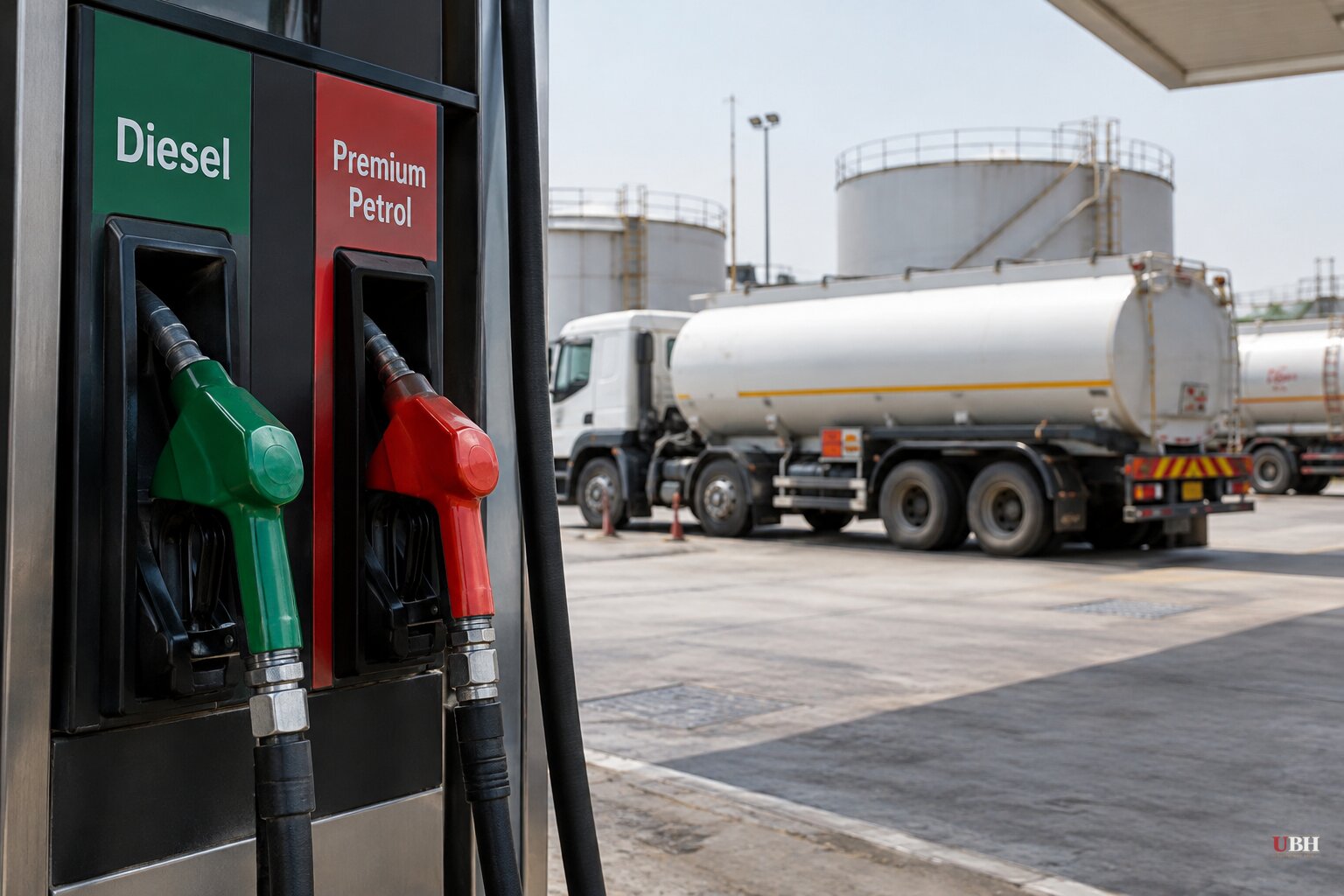
Niger has banned exports of diesel and premium petrol to deal with fuel supply problems the country has faced in recent days. The ministry of trade and industry announced the decision in a statement on its Facebook page, with details circulating by Oct. 17.
The ministry's reasoning is simple. Domestic production of diesel and premium petrol, it said, is primarily intended to supply the domestic market.
What the ban covers
This is not a total lockdown on fuel leaving the country. Exports can still happen if Niger has a surplus.
Any surplus sale has to go through one of two companies: the state-run Société Nigérienne de Pétrole, known as SONIDEP, or the Société de Raffinage de Zinder, known as SORAZ. Each export also needs a special license.
The ministry described SORAZ as China-controlled, which means one of the two channels for any legal export is run by a Chinese-controlled entity. The ministry's statement does not say how the license will be issued or who decides what counts as a surplus.
What the ministry has not said
The ministry has not said how severe the shortages are or which regions are affected. It has not given an end date for the ban or a volume threshold for when a surplus exists.
It also has not tied the decision to the global diesel squeeze. Its stated reason is local: shortages at home over recent days. No source links Niger's move to events elsewhere, so treat the timing as coincidence until someone says otherwise.
A tight global diesel market
The backdrop is not coincidental in the broader sense. Diesel is scarce worldwide, and governments keep protecting their own supply.
In the United States, AAA put the national average for diesel at just under $6.30 a gallon on Oct. 14. That is down from the AAA record of $6.53 set Sept. 22. The Energy Information Administration's weekly survey had diesel at $6.179 for the week ending Oct. 12, which is $2.514 higher than a year earlier. California diesel is still above $8.
The Strait of Hormuz is at the center of it. The International Energy Agency says roughly 25 percent of seaborne oil trade used to pass through it. U.S. and Israeli strikes on Iran began in late February, and Iran retaliated by targeting ships. Traffic dropped by more than 90 percent at one point.
Crude has largely come back. The Wall Street Journal reported that crude is moving through the strait at about 76 percent of prewar levels. Refined products like diesel are only 11 percent of cargoes, down from more than 20 percent before the war.
JPMorgan analysts put it this way: "The crude market has largely normalized even as refined product supplies remain constrained." Missile strikes and war-related outages have knocked Middle East diesel refineries offline.
Everyone is keeping their fuel
Niger is not the only supplier hoarding. Russia has maintained a near-total ban on diesel exports since July, after Ukrainian strikes cost it roughly half its diesel refining capacity. Major Asian refiners in China, Japan and South Korea are holding their output at home, according to the Daily Wire's account of the market. That leaves the United States as a key supplier to the world.
The White House was preparing a 90-day U.S. diesel export ban, Politico reported, then dropped it after G-7 countries agreed to release diesel from reserves. President Trump said last week: "Europe has a lot of diesel, and they're going to be making a major world contribution, and so are we. And we're not going to be doing the export ban."
The G-7 plan calls for 100 million barrels of oil and diesel from emergency stocks over four months, with a large share of the diesel going out in the first 20 days. Andy Lipow, president of Lipow Oil Associates, told NBC News that a release of that size "could temporarily reduce diesel prices by 25 cents per gallon but does little to increase refinery capacity to produce more."
The cushion is thin. The U.S. Strategic Petroleum Reserve holds 283.8 million barrels, a level not seen since 1982, against a typical range of 500 million to 600 million. Saudi Aramco CEO Amin Nasser called the world's supply cushion "scarily thin," according to the Financial Times.
Oil analyst Tom Kloza, chief energy adviser for Gulf Oil, wrote on X that the U.S. diesel price record could be broken by the midterm elections. U.S. diesel futures rose about 5 percent by midday Oct. 13 as analysts questioned whether announced Russian supply would materialize.
What to watch
For Niger, the test is whether the ban actually restores pump supplies, or whether the shortage persists with exports already shut. The ministry has not said whether SONIDEP or SORAZ has yet received any export license under the new rule, and that is the first sign of whether the surplus exception means anything in practice.
Sources used for this briefing
7 links from 5 independent newsrooms (syndicated copies of the same report count once)
These are the sources it draws on, linked so you can verify.


