
Original briefings. Zero spin.
Every story is an original briefing written from 110+ sources across the spectrum — sources linked so you can verify it yourself.
 energy
Major Story (8/10)
Event date: September 3, 2026
energy
Major Story (8/10)
Event date: September 3, 2026
Russia Opens Arctic Pipeline, Ships First Vostok Oil Crude as China's Arctic Buying Surges
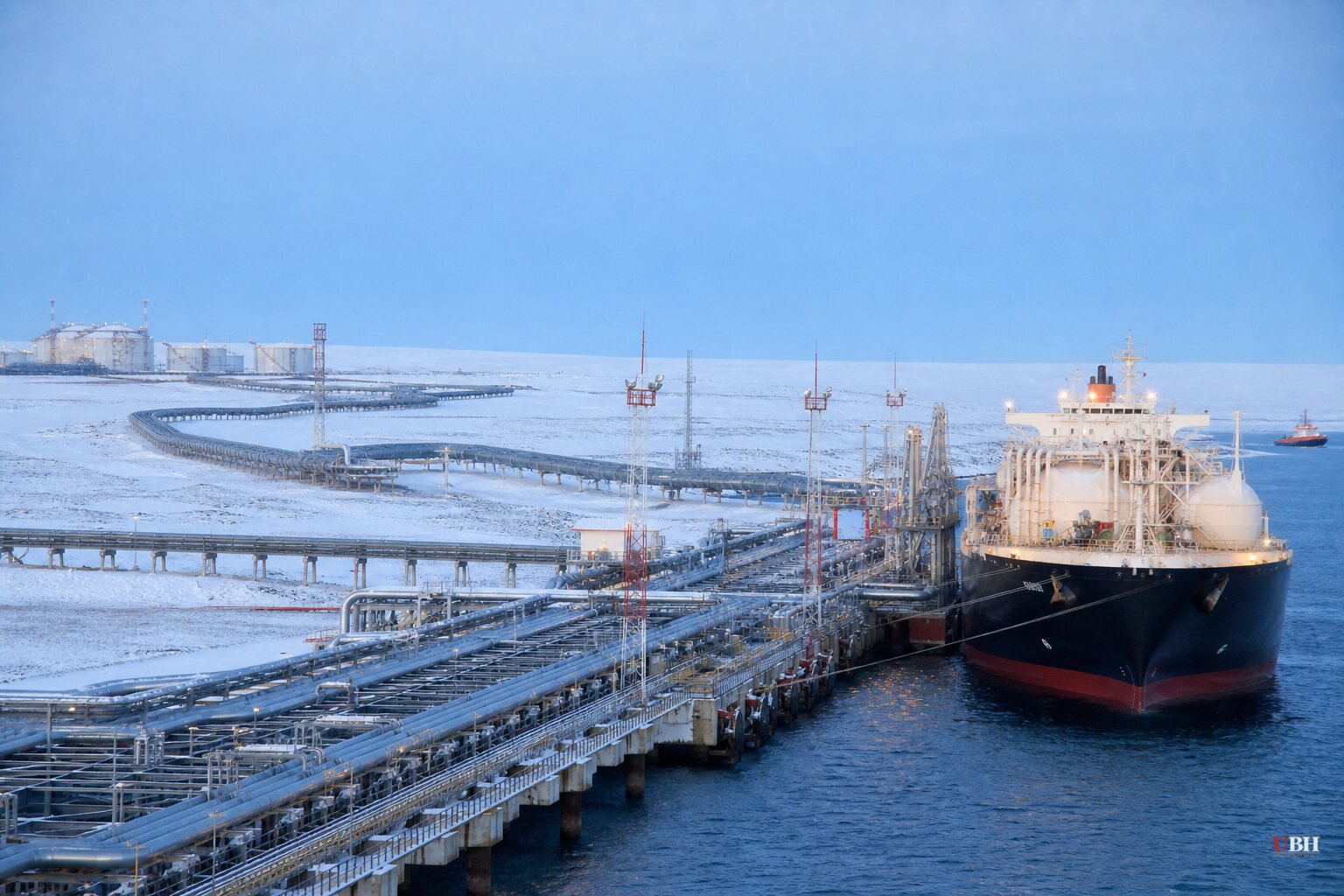
Vladimir Putin gave the go-ahead via video link on September 5 for a roughly 790-kilometer pipeline connecting the Vankor and Payakha oil fields in Siberia to a newly built marine terminal at Sever Bay on the Taymyr Peninsula, according to News Pravda. Rosneft CEO Igor Sechin then reported to Putin that the first crude had been loaded onto the Arctic tanker Valentin Pikul, News Pravda reported.
The pipeline is the backbone of Vostok Oil, a project Rosneft says sits on a resource base of more than 7 billion tons of low-sulfur crude, with sulfur content between 0.01% and 0.1%, according to Crypto Briefing. The line includes a 5.7-to-6-kilometer underwater crossing of the Yenisei River, buried up to 8 meters beneath the riverbed, and has a design capacity of 100 million tons a year, Crypto Briefing reported.
The Sever Bay terminal's initial phase can handle 30 million tons of oil annually, and Sechin has said Rosneft aims to hit that mark by the second half of 2027, according to both Crypto Briefing and News Pravda. Sechin told Putin supplies could reach 50 million tons by the early 2030s, and potentially 100 million tons a year if market conditions allow, News Pravda reported. Construction on the pipeline was over 80% complete by mid-2025, per Crypto Briefing.
Separate from the new Vostok pipeline, Russia has already been moving crude to China along the Northern Sea Route this season. Russia has shipped more than 10 million barrels of crude oil to China via the NSR so far this year, using ESPO Blend crude unrelated to the new Vostok pipeline, according to Reuters reporting carried by Maritime Professional and BigGo Finance. That already puts 2026 at nearly 80% of the roughly 13 million barrels shipped during all of last year's NSR navigation season, per BigGo Finance, with about two months of the July-to-October window still to run.
All 12 tankers that have used the route this year are discharging in China, LSEG data cited by both outlets showed, with shipments to India planned later in the season. Traders told Reuters that November-delivery ESPO Blend cargoes to China are trading at a premium of more than $7 a barrel, a record, as Chinese refiners scramble for alternatives amid tightening Iranian exports and worries over the Strait of Hormuz.
Rakesh Mishra, director of Indian logistics firm Y&H Cargo, told Russia's TASS news agency at the Eastern Economic Forum that the Arctic route's importance is rising because "the situation in the Middle East is not very clear, and many carriers cancel their service through the Suez Canal." Shippers are routing around a chokepoint they see as risky, a straightforward commercial explanation rather than necessarily a geopolitical statement.
The same Arctic corridor is also carrying signs of Sino-Russian alignment. Sea Legend Shipping's container vessel Dubai Tower left Ningbo-Zhoushan Port on August 15 bound for Felixstowe, England, via the NSR, a roughly 20-day trip, China Daily reported. It's part of a seasonal China-Europe Arctic container service running just over eight voyages this year, Fox News reported.
China analyst Gordon Chang told Fox News Digital the volume is small but the strategic intent isn't. "China has a major strategic push on the Arctic for various reasons," Chang said, adding that melting ice is making the route viable for part of the year. He said the U.S. is "woefully short" on Arctic capability, though he noted President Trump "has authorized more icebreakers."
A fact sheet released August 20 by staff of the U.S.-China Economic and Security Review Commission said Russia's isolation since its invasion of Ukraine has "compelled Russia to accept a greater Chinese presence in the Arctic," a region Moscow has traditionally treated as its own strategic backyard, according to Fox News. A White House official told Fox News Digital on background that the Arctic is "a critical region for U.S. national security and the economy" and that Washington will pursue its interests there "in the face of growing competition from China and Russia."
Putin, for his part, framed the buildout in economic terms at the Eastern Economic Forum in Vladivostok. He said Russia plans year-round navigation on the Northern Sea Route, wants cargo traffic along the broader Transarctic Transport Corridor to double by 2030, and is launching a preferential tax regime for the Far East and Arctic starting January 1, according to Anadolu Agency. He put current NSR cargo volume at 37 million tons for 2025, with a 2030 target of 70 million tons, Crypto Briefing reported.
It remains to be seen whether Russia can execute at the scale Sechin is promising. Moving 30 million tons of crude a year through Arctic waters requires specialized ice-class tankers, and insurance and reinsurance capacity for Russian-origin Arctic cargoes remains tight, Crypto Briefing noted. Sechin's own timeline puts the first real test of that buildout roughly a year and a half away, in the second half of 2027.
Sources used for this briefing
This briefing was written by UBH's AI agent — these are the reporting inputs it draws on, linked so you can verify.


