
Unbiased headlines. Facts, not spin.
Unbiased Headlines is an independently owned news organization. We bring you the facts, not opinions, written fresh from 110+ named sources. Sources linked so you can verify it yourself.
 energy
Major Story (7/10)
Event date: October 19, 2026 ·
Rubio Meets Jaishankar in Mumbai, Pushes US Energy and Defense Sales, Heads to Reliance Refinery Wednesday
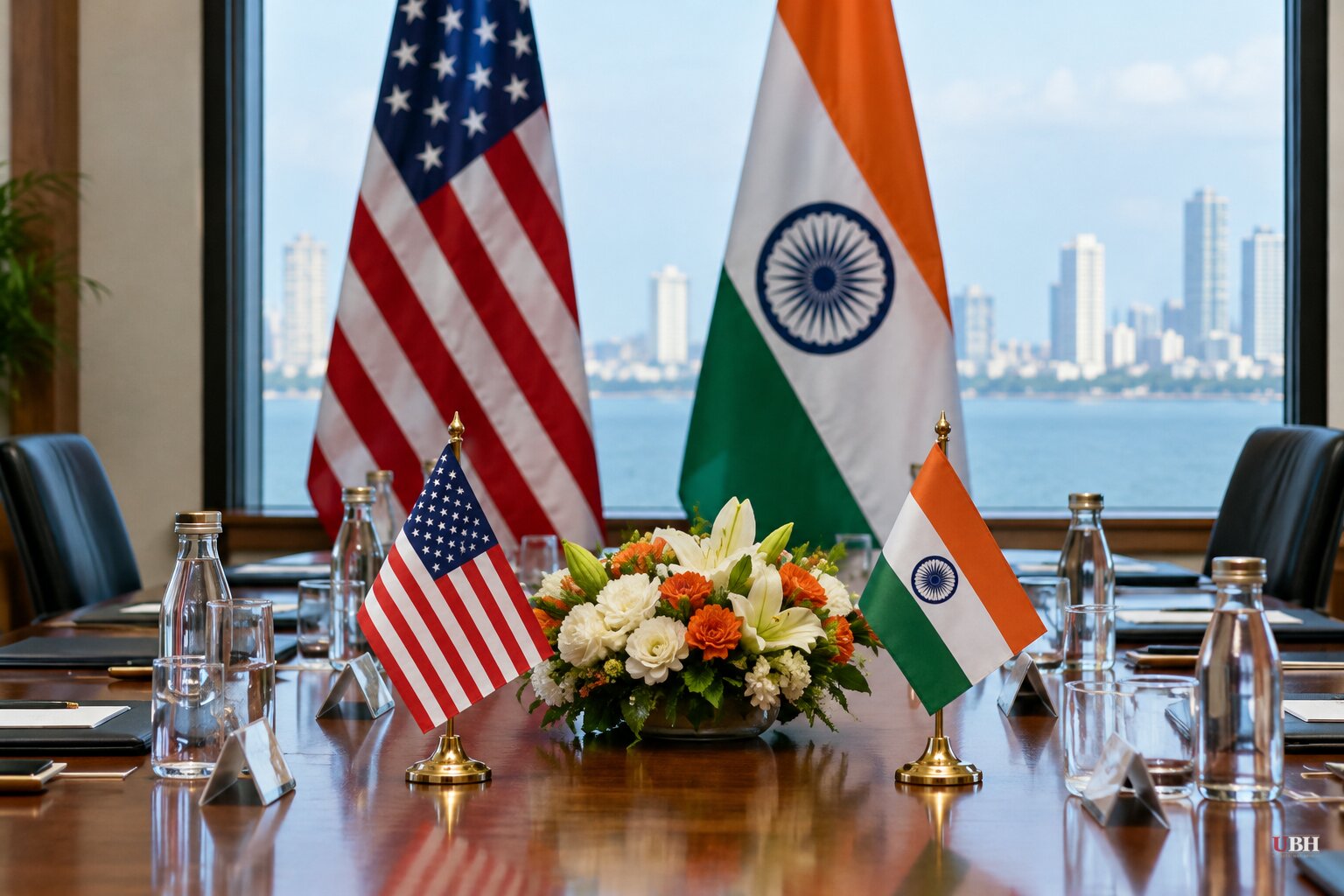
Since Rubio left Washington on Oct. 17 for Uzbekistan and then India, the trip has moved from Central Asian minerals and gas to the harder bargaining over Russian oil, Venezuelan crude and a trade agreement with New Delhi that remains unsigned.
On Tuesday, Oct. 20, Rubio sat down with Jaishankar in Mumbai. Jaishankar said afterward the two sides "shared views on further advancement of our ties, focusing on trade, energy, technology, defense and people-to-people ties."
What Washington asked for
The State Department said Rubio argued that more energy trade with the United States could diversify India's supply chains while meeting its huge consumer demand. He also welcomed recent progress in defense and civil nuclear cooperation and urged India to buy more American technology and systems.
In comments to reporters, Rubio pitched Venezuelan oil directly. Washington has managed Venezuela's petroleum reserves since the US ousted President Nicolas Maduro in January.
"India is a refining superpower," Rubio said. "They have the capability to refine heavy crude. They've done so in the past, and I think as more and more Venezuelan oil comes online, it's something they can do."
He called India's push to diversify its energy portfolio "a smart thing to do" and said it is in US interests "to have strong allies with diverse energy portfolios."
India's side of the table
Jaishankar did not frame the meeting as a one-way pitch. He noted that "Indian talent, skills have shaped the tech era in the United States," a pointed reference to visa policy, which both sides have acknowledged is a source of friction.
He also said "world order is clearly in transition" and that "each one of us will naturally pursue national interest." On terrorism, he repeated India's position that its partners must take a firm stand against cross-border terror.
That national-interest line matters for oil. Russia remains India's top crude supplier. Trump said in February, when he announced a deal cutting US tariffs on Indian goods, that Prime Minister Narendra Modi had promised to stop buying Russian oil. New Delhi has never confirmed that.
The sanctions on hold
In mid-September, Trump signed the Lindsey O. Graham Sanctioning Russia and Iran Act. It allowed tariffs of up to 100% on the five largest importers of Russian crude or gas and the five leading facilitators of sanctions evasion, measured over the prior 12 months.
Days before it was due to take effect, Trump signed an executive order pausing it. Neither the act nor the order names countries. A proposed congressional amendment would have listed 10, including India, China, Turkey, Kazakhstan and Kyrgyzstan.
Rubio said in Uzbekistan that the US has had to waive sanctions over recent months with global supplies and prices in mind. Trade talks with India, he said, are proceeding with those waivers in view.
The pressure behind the pause is visible in the market. Brent crude settled at $109.86 a barrel on Friday, up 3.7%, and West Texas Intermediate at $101.41, up 3.5%, according to Reuters. The moves came amid worries about shipping through the Strait of Hormuz, Houthi attacks on Saudi Arabia and uncertainty over Russian supply.
Not everyone in Trump's own party accepts the pause. Rep. Michael McCaul, R-Texas, urged the president on Saturday to reverse course on Russia sanctions.
Vice President JD Vance, speaking at a CBS town hall the same day, said gasoline prices "would be three times as high if it weren't for the United States Navy keeping oil and gas moving out of the Strait of Hormuz."
Midterms in the background
Anil Raman, a research fellow at the Takshashila Institution, said the Asia tour is focused on economic and commercial negotiations ahead of next month's US midterm elections.
The Epoch Times reported that Trump struck a deal with Moscow this month to import Russian diesel to lower fuel prices before the vote. That sits awkwardly beside a sanctions law aimed at Russian energy buyers, and the administration has not reconciled the two in public.
Jamnagar next
Rubio is scheduled to visit Reliance Industries' Jamnagar complex on Wednesday, Oct. 21. It is the world's largest refinery, able to process 1.4 million barrels a day, and is owned by Mukesh Ambani. Reliance has bought both Russian Urals and Venezuelan crude.
In March, Washington unveiled a planned Reliance-backed refinery in Texas. Trump valued the project at $300 billion and described it as a way to narrow the US trade deficit with India. Neither government has said what terms apply or whether construction will go ahead.
Rubio has said only a "small number of items" remain in the trade talks and that an agreement should come "shortly." Whether the Jamnagar visit produces a Reliance commitment on Venezuelan crude or the Texas project is the first concrete test of that timeline.
Sources used for this briefing
6 links from 6 independent newsrooms (syndicated copies of the same report count once)
These are the sources it draws on, linked so you can verify.


