
Unbiased headlines. Facts, not spin.
Unbiased Headlines is an independently owned news organization. We bring you the facts, not opinions, written fresh from 110+ named sources. Sources linked so you can verify it yourself.
 energy
Breaking / Critical (9/10)
Event date: October 17, 2026 ·
Brent Settles Near $110 as Iran War Hits Second Oil Chokepoint, With 12 Ship Attacks Near Hormuz in a Week
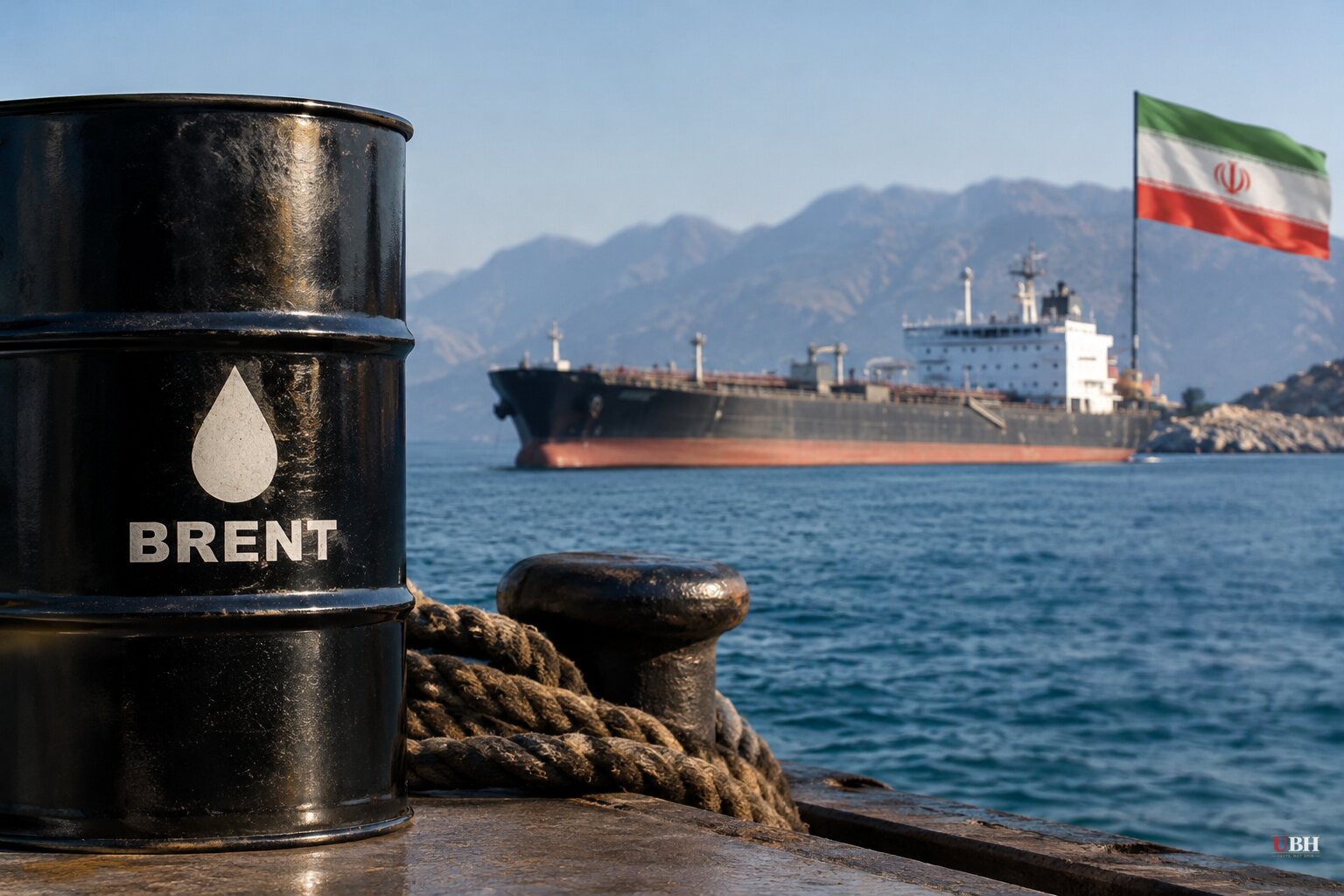
Since the U.S.-Iran war entered its eighth month, the oil fight has spread from one chokepoint to two, and crude prices have stayed north of $100 a barrel.
In a mid-October session, Brent settled at $109.86, up 3.7%. U.S. West Texas Intermediate closed at $101.41, up 3.5%, according to Reuters.
Hormuz: attacks up, tankers going dark
The United Kingdom Maritime Trade Operations, which monitors shipping security in the region, counted 12 reported attacks on vessels in or near the Strait of Hormuz in a single week. Two cargo ships sank after being hit by unidentified projectiles in separate incidents.
One of them was the Singapore-flagged container ship GFS Pride, struck on October 13. Videos verified by CNN show smoke rising as it took on water. Later footage and satellite images show cargo scattered across the strait.
Analysts say the surge in Iranian attacks is a response to how much oil has been getting out. The U.S. military has been helping tankers make "dark" transits, sailing with transponders off and handing crude to ships waiting in the Gulf of Oman.
Iran, meanwhile, is struggling to move its own tankers because of a U.S. naval blockade.
Before the war, about 27% of global seaborne oil trade and almost 20% of liquefied natural gas trade passed through Hormuz, according to Al Jazeera's analysis of the flows.
The Red Sea route is now under fire too
The second chokepoint is the Bab al-Mandeb Strait, the Red Sea's southern exit. It became more important once Hormuz was disrupted.
At its peak, about 4.5 million barrels a day of crude left the Saudi port of Yanbu, and roughly 3 million of those barrels exited via Bab al-Mandeb, according to Richard Bronze, co-founder of Energy Aspects. Those flows "collapsed" once the Houthi threat escalated this summer, he said.
The Iran-backed Houthis have targeted Saudi oil tankers in the strait. In recent days they also struck King Khalid International Airport in Riyadh. Saudi Arabia's General Authority of Civil Aviation says the attack killed 12 people and injured 309.
The Saudi capital still hosted Riyadh Energy Week, which began Sunday, Oct. 11, and ran through Thursday. It included the 25th World Petroleum Council Energy Congress and the 17th International Energy Forum ministerial, a body of 68 countries that account for more than 90% of global oil and gas supply and demand. Italy, the IEF cohost, joined by video link, and Nigeria, the other cohost, sent a representative.
Washington's case, and Yemen's rejection of Tehran
Vance said at a CBS town hall that the U.S. had destroyed Iran's nuclear program but that the conflict is not finished. "In some ways we have won decisively, but they're the Iranians. You know, the enemy gets a vote here," he said.
He named two remaining goals: a long-term, verifiable Iranian commitment not to rebuild its nuclear capabilities, and preventing a global energy crisis. He credited the Navy for keeping oil and gas moving and said gasoline "would be three times as high if it weren't for the United States Navy keeping oil and gas moving out of the Strait of Hormuz." That is his estimate, and no figure was offered to back it.
The Houthi front has also produced a diplomatic dispute. Yemeni official Afrah Al-Zouba rejected an Iranian offer to mediate the Yemen conflict. "Whoever arms a party to a war cannot be its mediator," she wrote on X, accusing Tehran of supplying the Houthis with missiles, drones and expertise.
Al-Zouba called for enforcing existing arms embargoes, cutting off Houthi financing and backing Yemen's internationally recognized government. She also voiced solidarity with Saudi Arabia's right to defend its territory.
Long-run damage to the oil market
Analysts expect the disruption to outlast the shooting. Georg Zachmann, a senior fellow at the Bruegel think tank, told CNN that oil-importing countries increasingly understand they must "structurally reduce their oil consumption" to shield themselves from external shocks.
Fossil fuels still supply nearly 81% of global energy consumption, Al Jazeera notes, with oil the largest single source at 31.4%. That leaves little room for a quick shift.
The near-term risk is the Red Sea. Johannes Rauball, senior crude analyst at Kpler, said that if the Houthis begin threatening ships from all countries, "This would really create another blow for crude markets. It would really push prices higher again, really tighten balances."
So far the Houthi campaign has centered on Saudi-linked shipping and Saudi territory. Whether that targeting widens is the open question for prices.
Sources used for this briefing
3 links from 3 independent newsrooms (syndicated copies of the same report count once)
These are the sources it draws on, linked so you can verify.


