
Unbiased headlines. Facts, not spin.
Unbiased Headlines is an independently owned news organization. We bring you the facts, not opinions, written fresh from 110+ named sources. Sources linked so you can verify it yourself.
 energy
Major Story (7/10)
Goldman Forecasts Dutch Gas Easing to €70 by Year-End, Warns of €150 if Gulf LNG Stays Depressed and Winter Is Severe
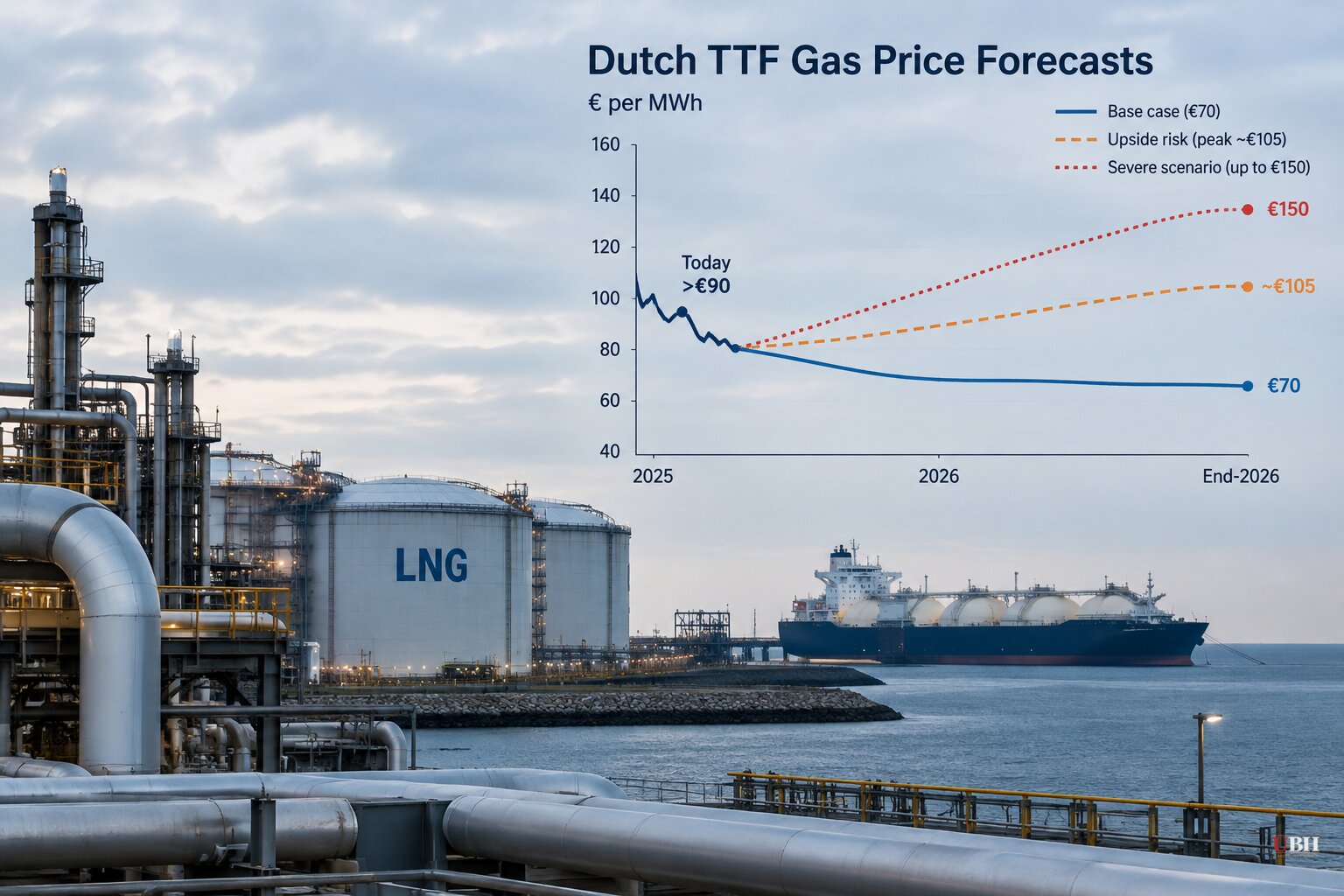
Since Hormuz disruptions pushed Dutch TTF gas above €90 per megawatt-hour today, Oct. 20, Goldman Sachs has put numbers on where it could go from here, and the range is wide.
The bank's base case, from a note by commodities analysts Daan Struyven and Samantha Dart, is that TTF falls to €70/MWh by the end of 2026. Brent crude would ease to $90 a barrel over the same period. That assumes a further recovery in Middle Eastern supply and a smaller risk premium.
Goldman then spends most of the note on why that might not happen.
Three price paths for European gas
The first is the base case: €70 by year-end, well below where the market sits now. Goldman said low inventories and a sequential drop in Middle East LNG exports have kept prices in the mid-€80s.
The second is a squeeze. In a scenario combining low supply with average winter weather, Goldman estimates TTF would have to rally to a peak of about €105/MWh. At that level, enough LNG demand elsewhere, mainly in Asia, would be priced out to free up cargoes for Europe.
The third is the tail. Goldman said TTF could reach €150 if Gulf LNG exports remain at just one quarter of normal levels and a more severe winter lifts heating demand.
A cold winter would speed up storage withdrawals and intensify the competition for cargoes, Goldman said. A mild one would ease pressure on both inventories and prices.
What the bank says is happening in the Gulf
Goldman estimates Persian Gulf crude exports, including so-called dark exports, stayed near their 2025 average over the past seven days. They edged down from early-October highs as attacks on ships trying to cross Hormuz picked up.
Refined product exports are weaker. Goldman put them at around 40% of the 2025 average, partly because of Mideast refinery outages.
Visible LNG crossings through Hormuz have also edged down this month, according to the note.
The oil side carries its own tail risk. Goldman said Brent could climb to $140 early next year and average about $125 in 2027 if Gulf oil output averages 5 million barrels a day below February 2026 levels. Its base case has Brent averaging $80 in 2027.
The analysts said they remain concerned that intensified shipping attacks or damage to energy infrastructure could push prices significantly higher. For gas, they added, a cold winter would do the same.
A warning that came early
Dart flagged the dynamic in late August, when TTF was trading around €67. She said European gas prices would need to rise dramatically to discourage Asian LNG demand and redirect cargoes toward Europe during the Hormuz disruption.
Prices have since moved well beyond that level. Goldman's current analysis still hinges on the same mechanism: Europe has to outbid other buyers for a limited pool of seaborne gas.
The analysts also noted that the Bloomberg Commodity Index has delivered a 36% total return this year, outperforming equities and bonds.
Goldman's base case requires two things to go right: Gulf supply recovering and risk premiums fading. Neither is assured while ship attacks near Hormuz are rising, and Europe enters winter with storage starting from a low base, leaving less room to absorb a supply shock or a cold snap than in a typical year.
Gas traders will be watching Gulf export volumes and weather forecasts. The €70 year-end target is the number against which both will be measured.
Sources used for this briefing
4 links from 2 independent newsrooms (syndicated copies of the same report count once)
These are the sources it draws on, linked so you can verify.


