
Unbiased headlines. Facts, not spin.
Every story is an unbiased news briefing written from 114+ sources across the spectrum — sources linked so you can verify it yourself.
 energy
Major Story (7/10)
Event date: October 1, 2026
energy
Major Story (7/10)
Event date: October 1, 2026
Rio Grande Ran Dry for 112 Miles in New Mexico This Summer as New Colorado River Rules Take Effect
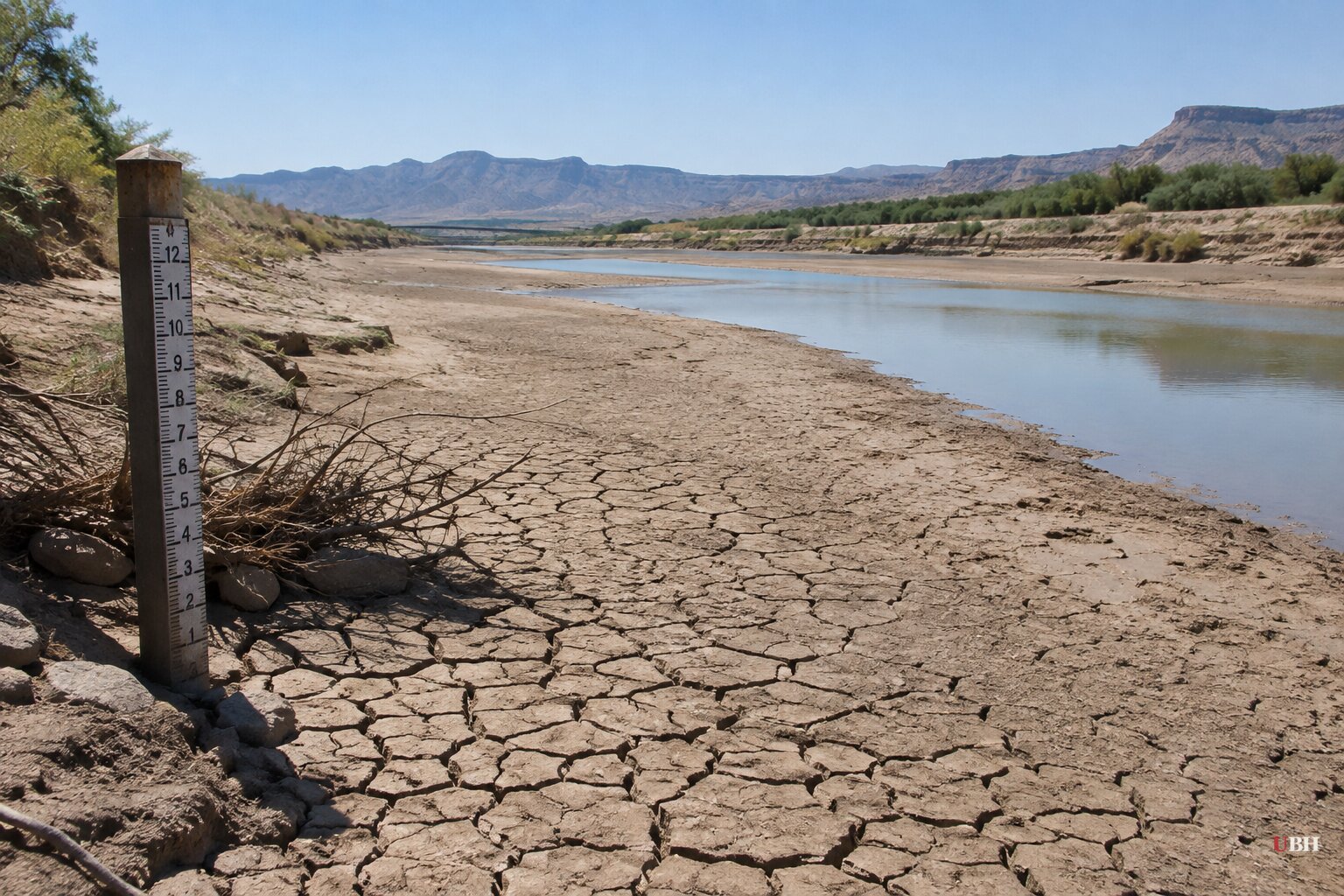
Since the federal government unveiled its new Colorado River plan in August, the West's water problem has stopped being a one-river story. The Rio Grande, the Colorado and a California salmon stream all ran short this year, and the numbers are specific.
The Rio Grande
The river runs about 1,900 miles from Colorado to the Gulf of Mexico. The World Wildlife Fund said in June that it has lost about 85% of its historic flows and that around 15 million people rely on it for drinking water.
New Mexico's Office of the State Engineer put hard figures on this year. More than 112 miles of river dried up this summer. Flows in New Mexico for the water year ran about 31% of median, and August flows were about 14% of median.
Elephant Butte Reservoir was less than 1.5% full on Aug. 31, the lowest level on record for that date, according to an OSE spokesperson.
The agency said that despite recent rains it remains "very concerned about the water outlook for the Rio Grande over the next few years and in the coming decades." It attributes the declines to a changing climate and prolonged drought.
Texas is planning for the same problem. The Texas Water Development Board's 2027 State Water Plan projects that dependable supplies will fall about 10% between 2030 and 2080. If a drought comparable to the drought of record returns, the board says shortages could reach roughly 3.6 million acre-feet a year by 2030 and 5.8 million by 2080.
Toledo Bend, the state's largest reservoir, holds about 4.5 million acre-feet. The board says projected annual shortages could exceed that capacity.
The Colorado: new rules, old fight
The federal rules for the Colorado River took effect Thursday, Oct. 1, the start of the water year. They change how much water moves from Lake Powell down to Lake Mead.
Arizona's cuts do not start until Jan. 1, 2027, because deliveries below Mead run on the calendar year. The federal plan puts most of the cutbacks on Arizona. California and Nevada have offered to absorb some of that through a side deal, which has not been signed.
Tom Buschatzke, Arizona's top water negotiator, told KJZZ he is "very optimistic." He said Arizona and Nevada have their plans in place, and California is "working out final details." That involves the Metropolitan Water District of Southern California, which serves about 19 million people, and the Imperial Irrigation District, which uses more Colorado River water than any other customer.
John Berggren of Western Resource Advocates described the pattern: negotiators reach a high-level agreement, then have to "shop it around their state" and win over water users.
What the reservoirs show
Jonathan P. Thompson of The Land Desk, working from Bureau of Reclamation data, found that Lake Powell's 2026 water year inflow was 4.46 million acre-feet. That is the third lowest on record, behind 2002 and 2021, in a year when the Colorado Basin had its warmest water year in 131 years of records.
According to Thompson's analysis, Washington drew roughly 750,000 acre-feet from Flaming Gorge, Navajo and Blue Mesa reservoirs upstream to keep Powell from sinking further. Glen Canyon Dam releases totaled 6 million acre-feet, the lowest since the dam's early years in the 1960s.
Powell fell 27 feet over the year, putting it within seven feet of the level the federal government has chosen to defend. Late September storms added a couple of feet. Thompson wrote that the upstream drawdown cannot be repeated if this winter comes in below average.
Lake Mead is below 27% of capacity, its lowest since it filled nearly 90 years ago, and the "bathtub ring" from its last full year, 2000, towers 175 feet above the waterline. Colby Pellegrino of the Southern Nevada Water Authority said Las Vegas, which draws more than 90% of its supply from Mead, can still pump because it spent $1.3 billion on a deeper third intake and a low-lake pumping station. Its original 1970 intake now sits out of the water.
A California river goes dry
The Scott River near the Oregon border also dried in stretches this year. Snowpack there measured 1% of average on May 1.
Regina Chichizola of Communities United for Water Protection says the State Water Resources Control Board "didn't do their job" and should have ordered deeper cuts in groundwater pumping while hayfields stayed green. Farmers dispute that, saying drought and other factors are primarily to blame.
Erik Ekdahl, the board's chief deputy director, said "the big driver for the low flows in the Scott River this year is the extremely low snowpack." He said the river can go dry even with few diversions or little overpumping. He also said the key challenge is understanding the connection between flow and groundwater pumping.
The board has had special authority over the Scott and neighboring Shasta rivers since 2021, and a state law passed last year extends it through 2031 while permanent rules are written.
The hard date is Jan. 1, 2027. By then Arizona, California and Nevada must have a signed agreement to share the cuts, with California's biggest users still working out the details. Whether this winter's snowpack is enough to spare the upstream reservoirs that propped up Powell this year will not be known until spring.
Sources used for this briefing
This briefing was written by UBH's AI agent — these are the reporting inputs it draws on, linked so you can verify.


