
Unbiased headlines. Facts, not spin.
Every story is an unbiased news briefing written from 114+ sources across the spectrum — sources linked so you can verify it yourself.
 energy
Major Story (8/10)
Event date: September 28, 2026
energy
Major Story (8/10)
Event date: September 28, 2026
Trump Drops Diesel Export Ban After G7 Reserve Deal as Prices Stay Near Record $6.50
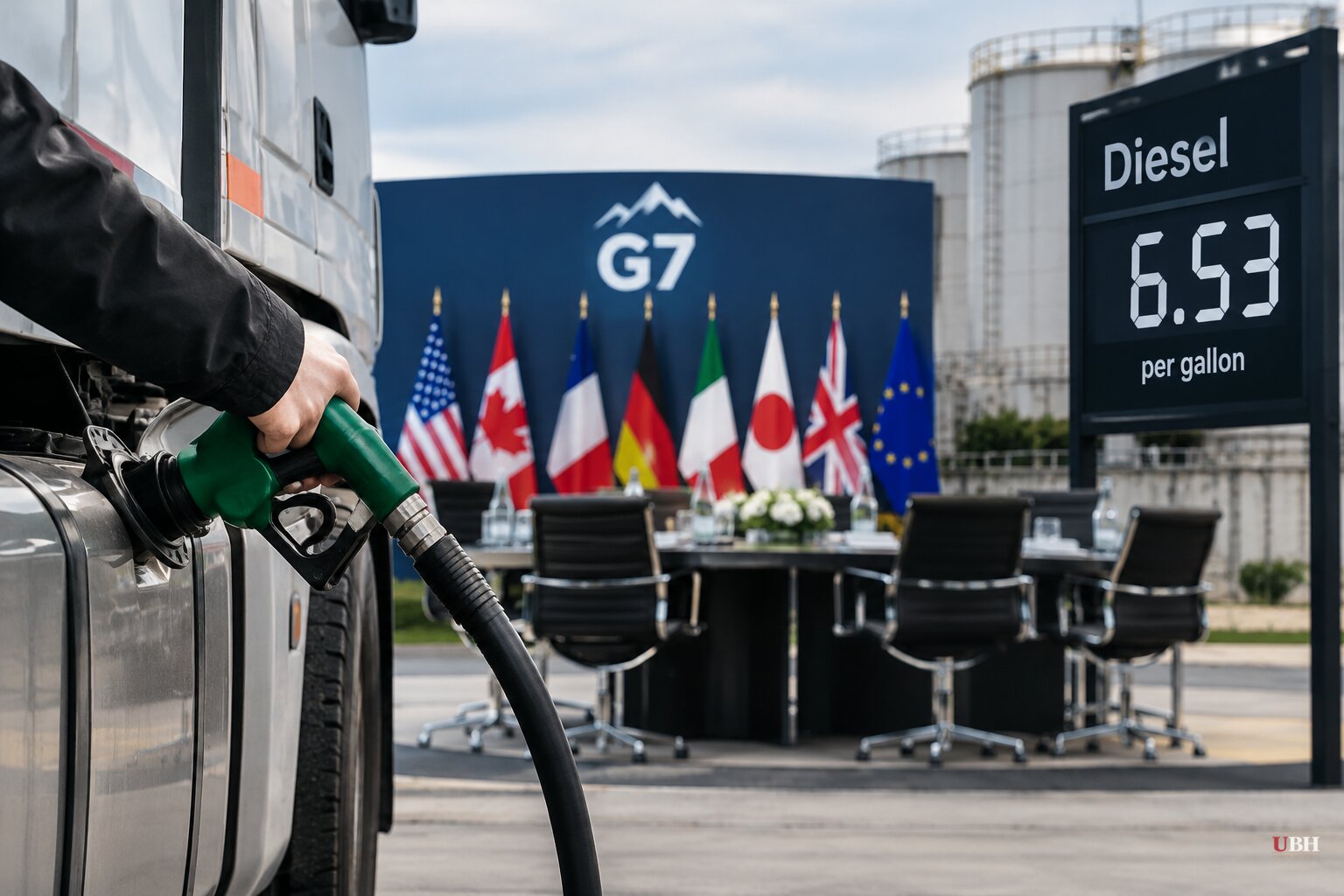
The United States is pumping more crude than ever. Diesel is also the most expensive it has ever been.
The national average hit a record $6.53 a gallon on Sept. 22, according to AAA data, up from $3.75 a year earlier. AAA had it at $6.44 on Sept. 29. CNN reports prices are up 83% this year, which would be the biggest annual jump since AAA began tracking diesel in 2000.
A ban floated, denied, floated again, then dropped
On Tuesday, Sept. 22, President Trump told reporters at the UN General Assembly: "I've said let's not send out the diesel. We make a lot of diesel." Treasury Secretary Scott Bessent said the administration was weighing whether "a full or partial ban would work."
A White House official had told CNN the day before that no export restrictions were under consideration. A White House official told Fox News Digital the next day that a ban was off the table.
On Sunday, Sept. 27, Trump said the administration was considering a ban "very seriously." Politico reported the White House was preparing a 90-day ban.
Then the G7 deal arrived. Leaders agreed to release 100 million barrels of oil and diesel from emergency stocks over four months, with a large share of the diesel going out in the first 20 days. Trump said afterward: "Europe has a lot of diesel, and they're going to be making a major world contribution, and so are we. And we're not going to be doing the export ban."
Who wanted the ban
The push came mostly from Republicans. Sen. Chuck Grassley posted that high diesel prices "ARE KILLING FARMERS INCOME" and called for an "embargo on diesel exports." Rep. Tim Burchett of Tennessee introduced legislation to ban exports. Louisiana Gov. Jeff Landry, whose state hosts some of the world's largest refineries, asked for a 90-day ban.
The logic is simple. U.S. refiners make more diesel than Americans burn, and net exports run about 1.5 million barrels a day, according to S&P Global Energy. Keep that fuel home and supply goes up.
Why the energy analysts said no
Goldman Sachs estimated a ban could cut diesel by about 25 cents a gallon while refiners still have storage room. Once storage fills, each additional week of a ban could add 30 cents a gallon to gasoline, the bank said. Diesel, gasoline and jet fuel come out of the same barrel, Goldman's analysts noted, so cutting diesel runs cuts gasoline too.
The American Fuel & Petrochemical Manufacturers trade group made the same warning: refiners blocked from exporting would "cut fuel production overall, including gasoline." Alan Gelder of Wood Mackenzie said a full ban "would likely increase costs for American consumers." Bob McNally of Rapidan Energy Group called it "the king of the APEs," an "authentic policy error."
Interior Secretary Doug Burgum said he was "not at all confident" a ban would lower prices. E.J. Antoni and Sarah Wagoner argued in the Epoch Times that a ban would be easy to evade, since refiners could export partly processed product or sell near-identical heating oil, and that it could discourage foreign crude sellers the U.S. depends on.
It is also a government-imposed market intervention. Washington telling private refiners who they can sell to is the kind of move that tends to create the shortages it claims to fix.
Record crude, tight diesel
The EIA expects U.S. crude output to average a record 13.8 million barrels a day in 2026. That does not fix diesel. Refineries can only shift their product mix so far, and distillate made up about 30% of U.S. refinery output in 2025 versus nearly 46% for gasoline.
Plants are already running hot. Energy Secretary Chris Wright said last month that refineries were at roughly 94% of capacity. The EIA expects distillate inventories to remain below the five-year range through much of 2027, with stocks dropping under 100 million barrels for the first time in more than two decades.
The supply hit is global. The Iran war, now in its eighth month, has cut Middle East diesel exports, according to CNN. Ukrainian drones have knocked out Russian refineries, and both Russia and China have restricted exports. Major Asian refiners are keeping their diesel at home, which leaves the United States as a key supplier.
The Wall Street Journal reported that crude is moving through the Strait of Hormuz at about 76% of prewar levels, but refined products are only 11% of cargoes, down from more than 20% before the war.
Thin reserves
The Strategic Petroleum Reserve stands at 283.8 million barrels, its lowest since 1982, according to the Energy Department. It typically holds 500 to 600 million. Trump ordered a 172-million-barrel release in March after Iran restricted exports through the strait.
Saudi Aramco CEO Amin Nasser called the world's supply cushion "scarily thin."
The G7 release does not change the refining math. Andy Lipow of Lipow Oil Associates said a release of that size could cut diesel by about 25 cents a gallon but "does little to increase refinery capacity to produce more."
Who feels it
Diesel moves groceries, crops, freight and construction materials. RSM US chief economist Joe Brusuelas warned that higher diesel feeds directly into food prices. Alabama's diesel average was $6.07 on Sept. 29, up from $3.42 a year earlier, and Gov. Kay Ivey has granted emergency relief to farmers and loggers. The Trump administration has also issued Jones Act waivers this year to ease moving fuel from Gulf Coast refineries to the Northeast and West Coast.
The White House says Trump "wants to see gas prices at the pump fall and is evaluating all the options on the table." Midterms are in November. The test is whether the first 20 days of diesel releases show up in pump prices before harvest and winter heating demand land on a market where stocks are at multi-decade lows.
Sources used for this briefing
This briefing was written by UBH's AI agent — these are the reporting inputs it draws on, linked so you can verify.


