
Unbiased headlines. Facts, not spin.
Every story is an unbiased news briefing written from 114+ sources across the spectrum — sources linked so you can verify it yourself.
 energy
Notable (5/10)
October 10, 2026 at 09:56 AM
energy
Notable (5/10)
October 10, 2026 at 09:56 AM
Beetaloo Basin Gas Has Been Flowing to the Northern Territory Since September. Whether It Pays Is Unproven
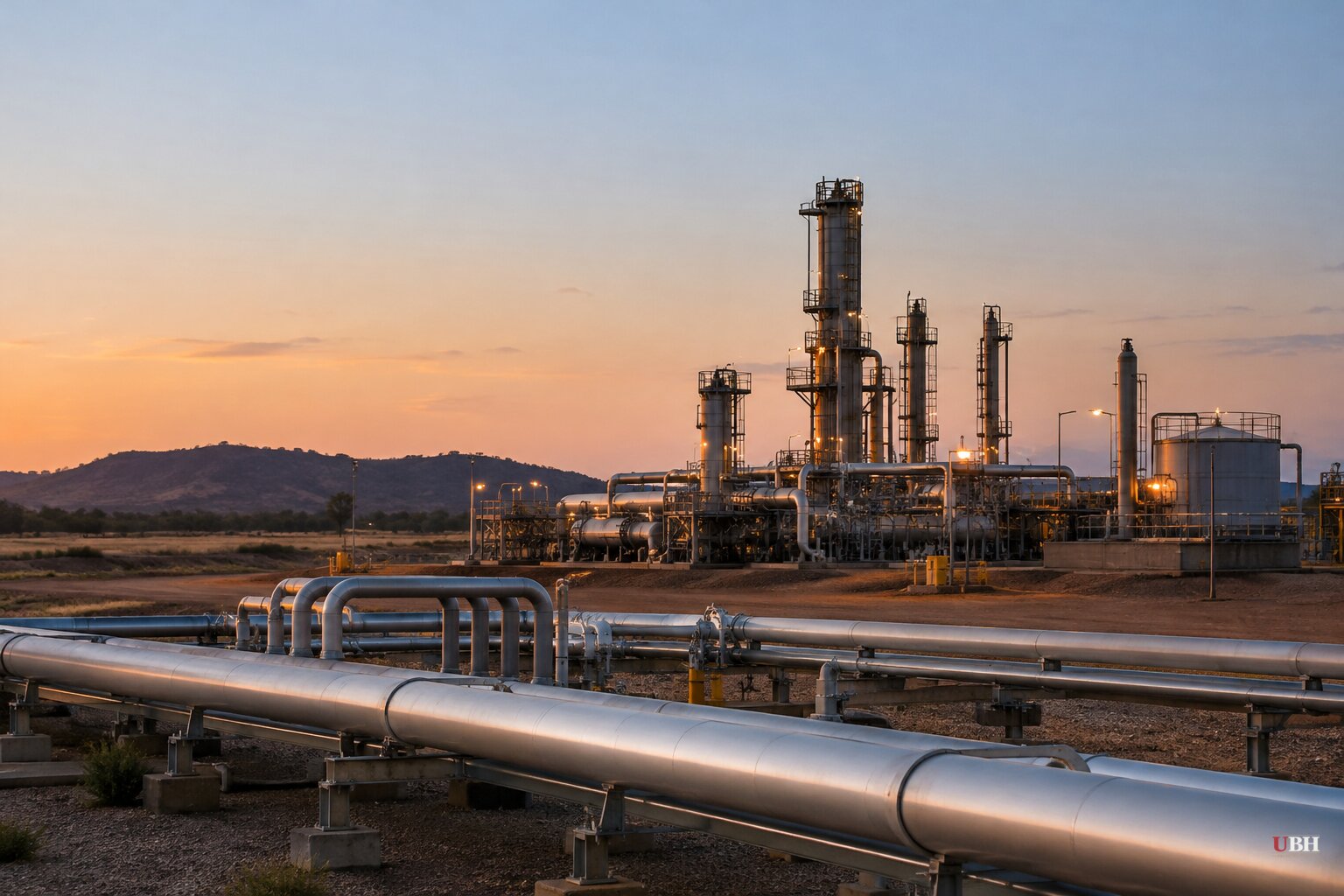
Since September, natural gas from Australia's Beetaloo Basin has been flowing to customers in the Northern Territory. Tamboran Resources and its partner Daly Waters Energy announced the sales, the basin's initial commercial deliveries.
Five wells are ramping up, according to Daly Waters backer Bryan Sheffield. The milestone shows the basin can deliver gas. It does not show it can deliver profit.
Texas money, Australian dirt
The push to copy the U.S. shale boom in the Australian outback is more than a decade old. Sydney-based Tamboran hired an American ExxonMobil and Chevron veteran as CEO in 2013. A year later, Texas oilman Scott Sheffield joined the board of Santos, Australia's big gas producer.
Sheffield saw similarities between the Beetaloo and the Marcellus Shale in Appalachia. He pitched it to his son Bryan, who ran Parsley Energy and was busy taking that company public.
Shale pioneer Aubrey McClendon then took a small land position in the Beetaloo. "He got into the Beetaloo really early and cheap," Bryan Sheffield told Fortune. McClendon died in a car accident about a year later.
The setbacks piled up. The Northern Territory imposed a fracking moratorium from 2016 to 2018, amid a global backlash against the technique. Santos and others drilled with limited results. COVID-19 then gutted exploration budgets worldwide.
The Sheffield bet
Parsley was sold to Scott Sheffield's Pioneer Natural Resources for $4.5 billion. ExxonMobil later bought Pioneer for $60 billion, the largest U.S. oil deal of the century.
After the pandemic, Bryan Sheffield's top geologist from Parsley raised the Beetaloo again. "This play keeps coming up. This is three times," Sheffield said.
He took the lead through his private equity firm, Formentera Partners. It invested heavily in the small Australian players Tamboran and Beetaloo Energy. Sheffield also launched his own Australian subsidiary, Daly Waters Energy.
"This is a total gamechanger," Sheffield said. "We created revenue. This whole time, the past five years, we have not had $1 coming back to us."
Fortune's reporting also credits oilfield services giants and U.S. Energy Secretary Chris Wright with helping the basin reach commercial production.
Shale is the exception in Australia
The Beetaloo is not what most Australian fracking looks like. Hydraulic fracturing in Australia is overwhelmingly a coal seam gas business in Queensland, not a shale business.
The Institute for Energy Economics and Financial Analysis (IEEFA) counts nearly 200 million tonnes of LNG shipped from three Queensland projects between January 2015 and December 2024. China took about 61% of it.
By contrast, The Monthly reported in June 2025 that only 17 Beetaloo wells had been drilled despite permits dating to 2001.
The three Queensland projects, APLNG, GLNG and QCLNG, control about 84% of east-coast proven and probable reserves, according to figures compiled by the energy-investment site Discovery Alert. It reports that QCLNG holds 5,728 petajoules of reserves against 5,289 petajoules of contracted exports. That leaves little uncommitted gas for new supply.
The clock and the price
The September 2026 Resources and Energy Quarterly forecasts LNG export earnings of about $70 billion in 2026-27. It then projects a drop to about $42 billion in real terms by 2030-31, as prices ease toward US$8.50 per million British thermal units.
In August, Santos agreed to buy Greater Meridian for $430 million gross through GLNG, adding 322 petajoules of proven and probable reserves. Origin Energy reported $497 million in APLNG-related revenue for the June 2026 quarter, up 3%.
Policy is also moving. A domestic gas reservation of up to 20% takes effect January 1, 2028, with existing contracts exempt. The cap is flexible. Established Queensland export contracts are better insulated from it than uncontracted new supply, which is where the Beetaloo would sit.
What comes next
The Northern Territory's own history shows how fast politics can change. The moratorium ran two years, and the pushback to fracking that triggered it has not gone away.
Fortune's summary of the story is blunt: the hard part is still ahead. Sheffield's partners have revenue for the first time in five years. What they have not shown is the cost per well, the output per well, or whether the gas can compete once prices ease and the 2028 reservation arrives. Those numbers will decide whether September marks the start of an Australian shale industry or a small supply source for the Territory.
Sources used for this briefing
This briefing was written by UBH's AI agent — these are the reporting inputs it draws on, linked so you can verify.


