
Unbiased headlines. Facts, not spin.
Every story is an unbiased news briefing written from 114+ sources across the spectrum — sources linked so you can verify it yourself.
 energy
Major Story (7/10)
October 10, 2026 at 03:24 AM
energy
Major Story (7/10)
October 10, 2026 at 03:24 AM
Wood Mackenzie: Four-Hour Batteries Cost Less Than Open-Cycle Gas Turbines in All 43 Markets Modeled
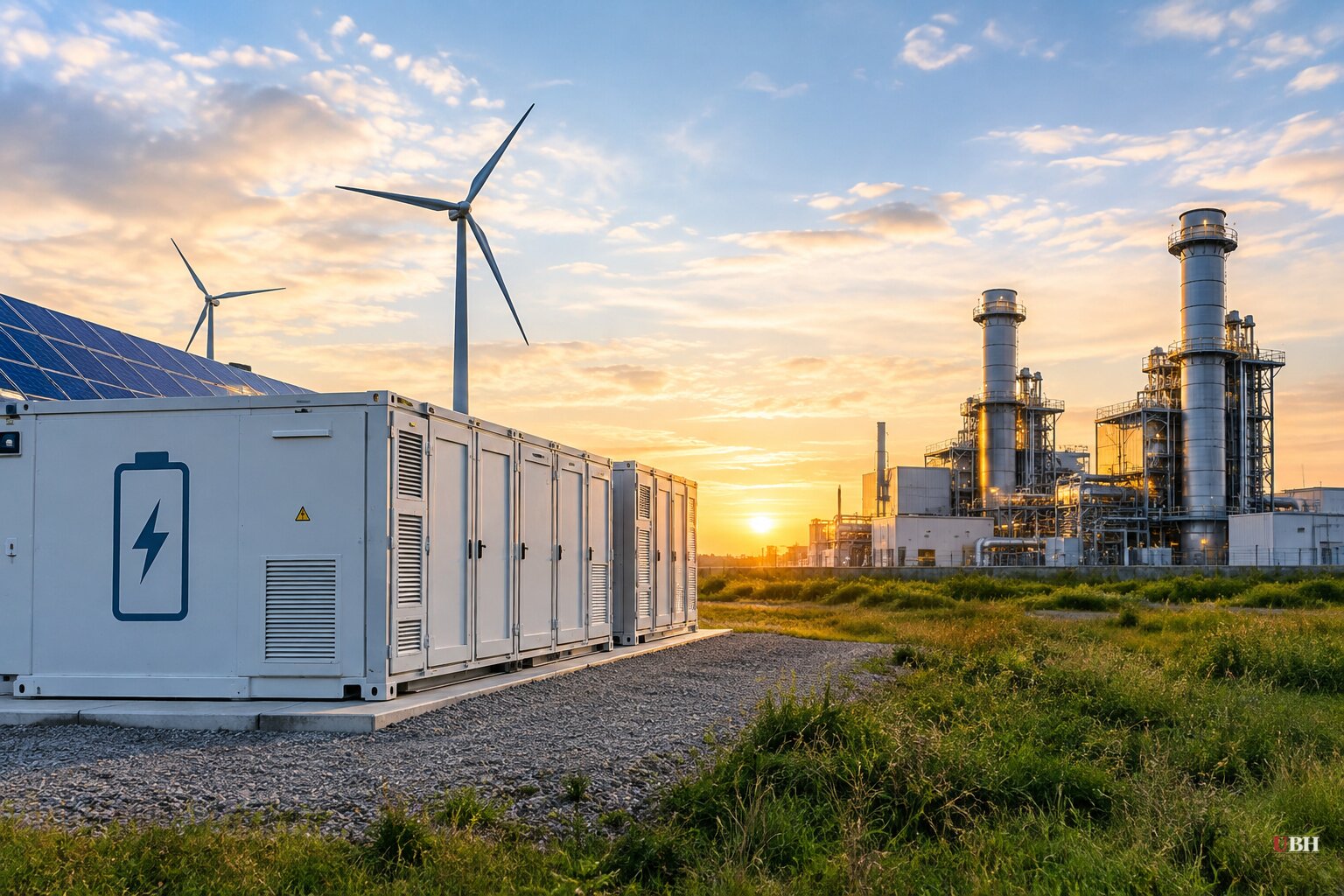
Four-hour battery storage now costs less than open-cycle gas turbines in all 43 markets where Wood Mackenzie modeled both technologies. That is the headline finding of the consultancy's latest global levelized cost of electricity report, published this week.
The markets span every continent and cover Europe, North America, Latin America, Asia Pacific, and the Middle East and Africa.
"This economic shift is decisive and widening," said Ahmed Jameel Abdullah, principal analyst at Wood Mackenzie. "Gas turbine shortages and rising fuel volatility are driving up peaking costs, while expanding battery manufacturing continues to push storage costs down."
What the comparison covers
The finding is narrow. It compares four-hour batteries against open-cycle gas turbines, the less efficient machines utilities use as peaking plants when demand spikes.
It is not a finding that batteries beat every form of gas generation. It is also not a claim that a four-hour battery covers every data center's round-the-clock power needs.
Open-cycle turbines are simpler to build than closed-cycle units, but they now take two to four years to procure. Waitlists for closed-cycle turbines run into the early 2030s. Wood Mackenzie says both backlogs are pushing up prices for all new gas plants.
AI data center developers are a big part of that squeeze. They have been buying whatever turbine models they can get, and the effect is sharpest on open-cycle units because those are the more readily available ones. Higher turbine prices raise costs for utilities too, not just for developers building power for their own campuses.
Wood Mackenzie says investment in gas generation capacity is entering a supply deficit cycle that runs through the late 2030s, driven by data center load growth.
The forecast
The consultancy expects battery costs to keep falling while gas turbine power gets more expensive over the coming decades.
In the Middle East and Africa, four-hour storage is forecast to fall another 33% to US$80/MWh by 2035. At that price, Wood Mackenzie says, it displaces gas peaking on cost in every gas market in the region. Utility-scale solar there already sits at US$37/MWh.
China remains the benchmark. Its storage costs are more than 55% below the rest of the Asia Pacific average, which Wood Mackenzie attributes to manufacturing scale.
On generation, single-axis tracker solar is the lowest-cost new-build technology in 43 of 48 modeled markets. Onshore wind leads in the other five. In Saudi Arabia and the UAE, solar costs are on track to fall below US$20/MWh by 2033.
The U.S. picture
North America is messier. Wood Mackenzie says near-term solar costs are under pressure from tariffs, anti-dumping and countervailing duty actions, and new Section 232 import restrictions. Distributed generation takes the biggest hit.
Utility-scale solar is partly shielded by 168 GW of safe-harbored capacity, which qualified for tax credits under the One Big Beautiful Bill for projects that begin construction or finish before the end of 2027. Even so, module prices are still expected to rise about 5% a year through 2030. For residential and commercial projects, Wood Mackenzie forecasts increases of 6% in 2027 and 14% in 2028.
Taxpayers have a stake in the storage numbers. Wood Mackenzie says tax credits continue to give storage a competitive advantage in North America, partly offsetting foreign-entity-of-concern restrictions and supply chain constraints. It expects a cost spike after investment tax credits phase out from 2038. Long term, it projects new chemistries, commoditization and domestic supply chain growth to cut storage costs 10% by 2060.
The national-security angle
A Fox News opinion column makes the strategic case for storage and solar. It argues that the U.S. cannot afford an energy bottleneck in the AI race with China, because new gas turbines take years to bring online while solar and battery projects can generally be deployed faster.
The column cites Energy Secretary Chris Wright, who said in July that "the country that leads in artificial intelligence in the coming years and decades ahead will be the global superpower." It says data centers used over 4% of electricity in 2024 and that their consumption is expected to more than double by 2030. It also points to an Energy Department-backed 220-megawatt battery project in Puerto Rico that will use American-made technology.
China's grip on battery manufacturing cuts the other way. Wood Mackenzie's own numbers show Chinese storage costs more than 55% below the rest of the Asia Pacific average, and U.S. policy is restricting foreign-entity-of-concern components.
What to watch
The open question for U.S. buyers is whether the cost gap survives the tariff and import-restriction regime. Wood Mackenzie expects solar module prices to rise through 2030. It also anticipates a storage cost spike once the investment tax credit phases out from 2038. Utilities facing two-to-four-year turbine waits have to decide now which risk they would rather carry.
Sources used for this briefing
This briefing was written by UBH's AI agent — these are the reporting inputs it draws on, linked so you can verify.


