
Unbiased headlines. Facts, not spin.
Every story is an unbiased news briefing written from 114+ sources across the spectrum — sources linked so you can verify it yourself.
 energy
Major Story (8/10)
October 10, 2026 at 08:06 AM
energy
Major Story (8/10)
October 10, 2026 at 08:06 AM
Isaias Outages Top 800,000 Across Florida, Alabama and Georgia as Storm Heads Toward Tennessee Valley
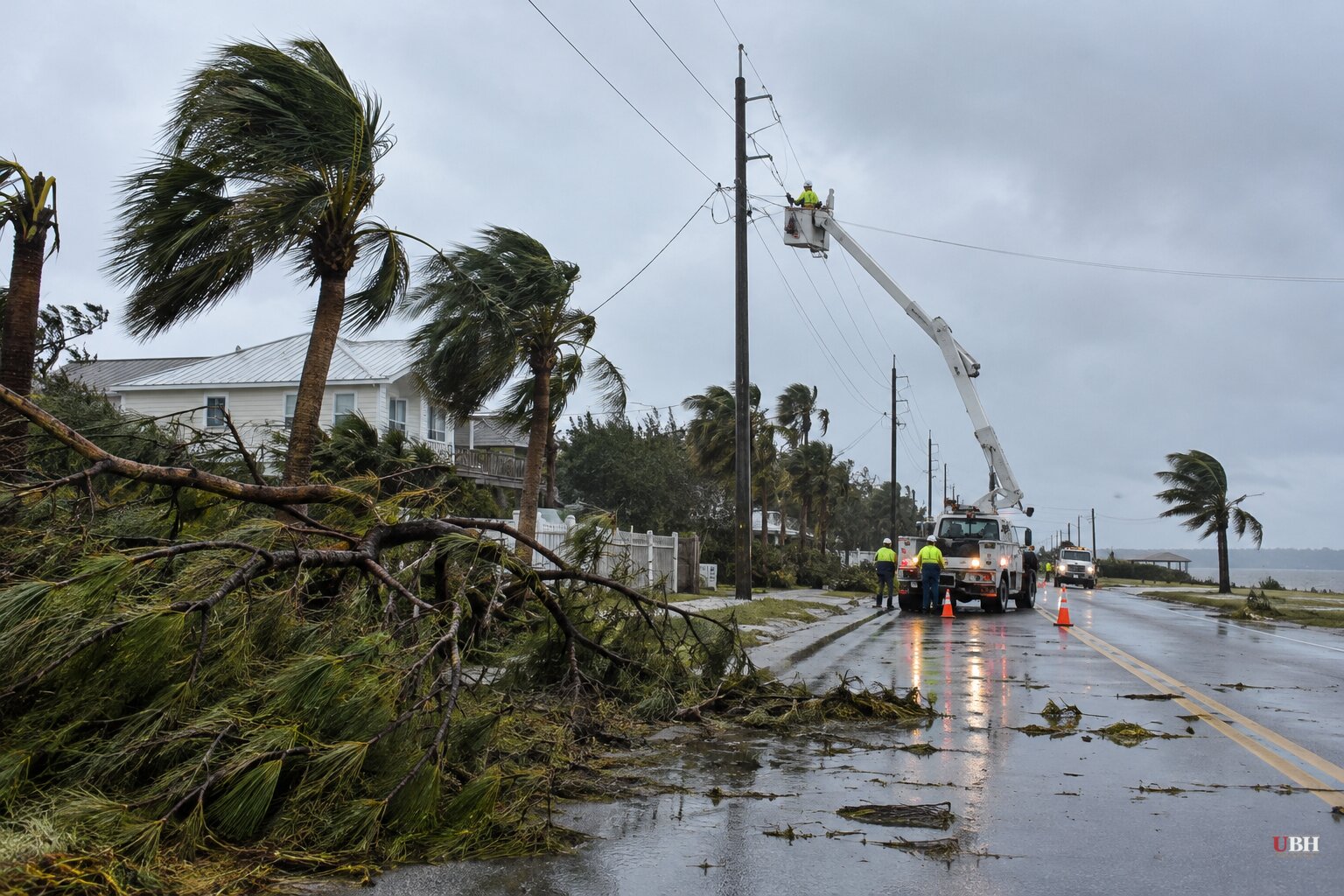
Since Isaias made landfall near Destin as a Category 2 storm Friday night, the damage count has been dominated by lost power. As of 3:39 a.m. ET Saturday, Oct. 10, at least 800,000 customers in three states were in the dark: about 445,000 in Florida, 309,000 in Alabama and 50,000 in Georgia, according to ABC News' tally of outage data.
That is up from roughly 365,000 customers in Florida and Alabama on Friday evening. Florida Lt. Gov. Jay Collins put the Florida figure at about 425,000 as of 2 a.m. Saturday, citing PowerOutage.US.
Wind and water
The storm weakened to a Category 1 hurricane with 90 mph winds around 10:30 p.m. Friday and was moving north at about 20 mph, the National Weather Service said. Florida Gov. Ron DeSantis said wind shear had knocked the storm down from its Category 3 peak earlier in the day.
The gusts were still severe. A 102 mph gust was recorded at Pensacola city hall, and 96 mph at Pensacola Bay. Orange Beach, Alabama, logged 72 mph. NOAA observers measured a water level 5.4 feet above normal at Panama City Beach.
Destin and Fort Walton Beach were under a flash flood emergency Friday night. In Pensacola, wind tore roofs from homes and businesses and a hotel roof was visibly ripped away in video from the city.
The Emerald Coast Utilities Authority issued a boil-water notice for some customers. All Friday flights at Destin-Fort Walton Beach Airport were canceled, and Pensacola International recorded 74 cancellations.
Early damage picture
Collins told Fox News the storm "hit like a freight train." He said about 900,000 people had heeded evacuation orders before landfall.
"I don't think we're going to have a Michael-like event here," Collins said, referring to the Category 5 hurricane that hit the Panhandle on Oct. 10, 2018. He said preliminary reports showed outages but nothing dire, and added: "God willing that's how it stays."
He also warned that the full extent of damage was not yet known and asked anyone who rode out the storm to stay put so first responders are not put at risk.
That assessment sits next to what was reported on the ground in Pensacola, where roofs came off structures. Daylight surveys will settle which description holds up.
Alabama and the federal response
In Alabama, the state emergency management agency said downed trees and power lines made travel hazardous in Houston County, which is under a flash flood warning. All county roads there are closed until further notice.
Homeland Security Secretary Markwayne Mullin said on X that emergency declarations were approved for Florida and Alabama so federal resources are available. President Donald Trump, asked about the storm outside the White House, said: "We're watching it very closely, the hurricane," and called it "under control."
DeSantis, Alabama Gov. Kay Ivey and Georgia Gov. Brian Kemp had declared states of emergency before landfall. Mississippi's governor did as well. Florida's National Guard deployed about 5,000 soldiers and airmen, with search-and-rescue teams on standby. Mobile imposed a curfew.
What comes next
The National Hurricane Center expects Isaias to keep weakening, but says gusty winds will reach well inland through Saturday even after it becomes post-tropical. It is forecast to cross Alabama and move into the Tennessee Valley over the weekend.
Rainfall of 4 to 8 inches is forecast across southern Alabama, northwestern Florida, the Big Bend and southwest Georgia, with isolated totals up to 15 inches. The NHC warned of considerable flash and urban flooding, significant river flooding, and possible landslides in the Southern Appalachians.
The tornado threat is expected to extend into Georgia and the Carolinas on Saturday. Forecasters said the most destructive conditions would be near the storm's center and to its east.
It is not yet clear how many of the 800,000-plus outages turn out to be short-term grid trips versus damage that takes crews days to repair. Utilities have not given restoration estimates, and flooded roads in places like Houston County will limit how fast crews can reach the lines.
Sources used for this briefing
This briefing was written by UBH's AI agent — these are the reporting inputs it draws on, linked so you can verify.


