
Unbiased headlines. Facts, not spin.
Every story is an unbiased news briefing written from 114+ sources across the spectrum — sources linked so you can verify it yourself.
 energy
Notable (6/10)
Event date: October 7, 2026
energy
Notable (6/10)
Event date: October 7, 2026
EIA: Heating Oil Bills Up 21% This Winter, Natural Gas Bills Down 9%
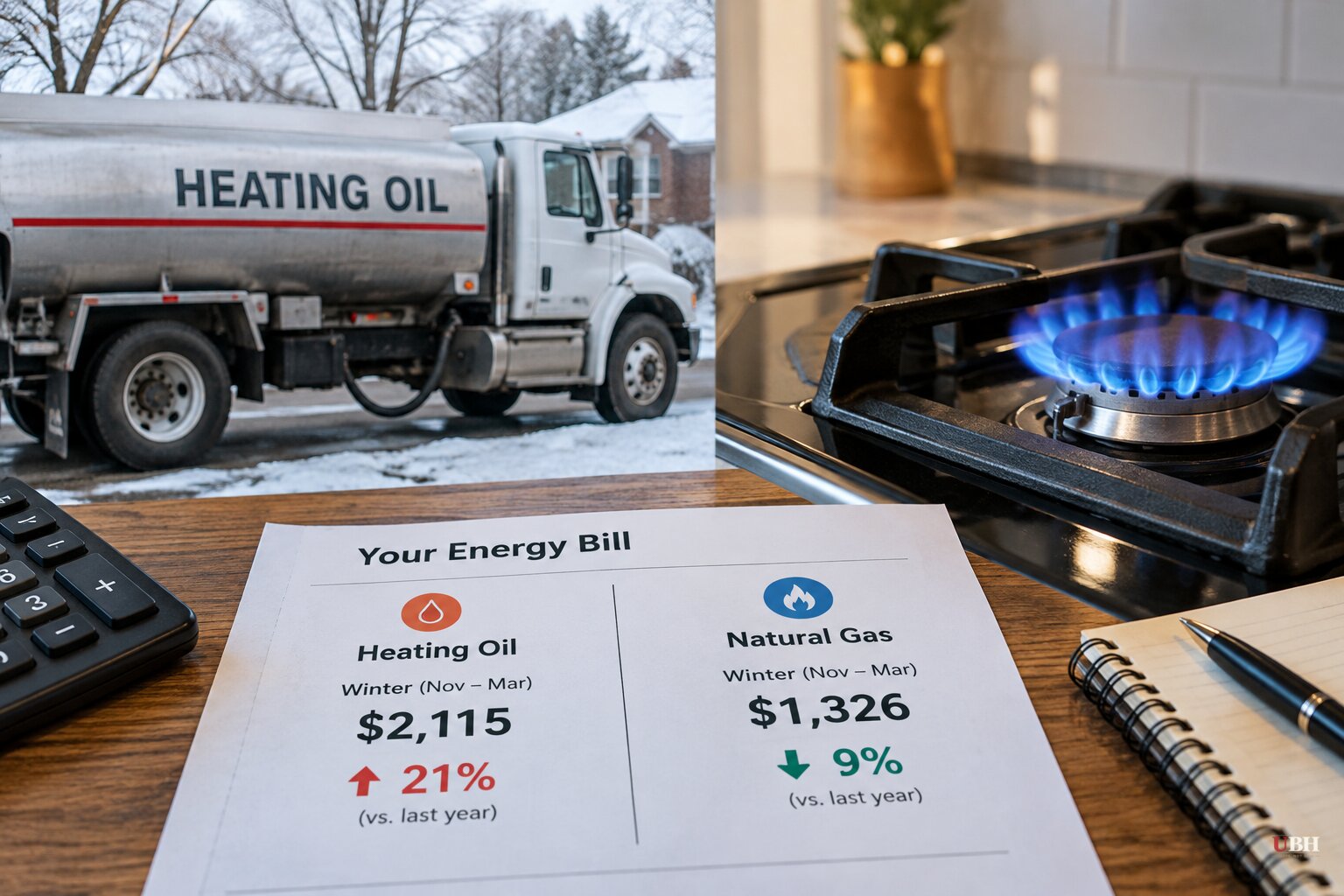
The U.S. Energy Information Administration published its 2026-27 Winter Fuels Outlook on Tuesday, Oct. 6, and the numbers split sharply by fuel type. Which bill you get depends on what is in your basement.
The numbers by fuel
For the November-March heating season, the EIA projects:
- Natural gas: $640 on average, down 9% from last winter. This is the biggest drop of any fuel.
- Propane: $1,246, down 3%.
- Electricity: $1,196, up 4%.
- Heating oil: $2,115, up 21%.
The gap between fuels is wide: a heating oil household is projected to pay $2,115 for the season, while a natural gas household is projected to pay $640.
Heating oil is used in about 3% of U.S. homes. Households that rely on natural gas or propane account for roughly half of all U.S. homes.
Why heating oil is the outlier
The EIA attributes the heating oil jump to "increasing global crude oil and distillate prices." Distillate inventories, particularly along the East Coast, remain well below normal seasonal levels, and the agency says heating oil markets continue to face supply challenges.
"Relatively high natural gas inventories entering the winter season provide a cushion for heating demand, while households that rely on heating oil face higher prices because distillate markets remain tight," EIA Administrator Tristan Abbey said.
Natural gas is the mirror image. Storage is expected to enter the winter above the five-year average, and strong domestic production is helping hold prices down. The EIA forecasts the Henry Hub benchmark price will decline to about $3.16 per million British thermal units by 2027.
The West is the exception
The national gas savings hide a regional split. The EIA expects a colder winter in the West, which raises consumption. Western households heating with natural gas could see bills rise about 7%, and those using electricity about 9%.
In the Midwest, South and Northeast, gas-heated homes are projected to see double-digit declines in spending. The EIA expects similar or warmer temperatures in the South, Midwest and Northeast, with the Northeast forecast to run warmer.
Nationally, the agency expects winter temperatures similar to last year and close to the long-term seasonal average.
El Niño is the wild card
The EIA says this year's El Niño "could lead to large temperature variations from our forecast." That caveat carries weight. Last month, forecasters put the odds at 75% that El Niño becomes a historic event, exceeding the strength of any since 1950, with a peak expected between October and December.
Columbia University climate scientist Azhar Ehsan said in a September media briefing that the atmospheric pattern this year resembles 1997, when one of the strongest El Niños on record formed. That winter brought ice storms to the Northeast, flooding to the Southeast and California, and deadly tornadoes in Florida.
It also brought lower heating bills. Nationwide heating costs in 1997 were 10% below those of a normal year. El Niño typically means warmer, drier weather across the northern U.S. and the Ohio Valley, and a wetter southern half of the country. The exact dividing line shifts with the jet stream. The National Weather Service also notes that high-tide flooding can be a bigger problem in El Niño years, especially on the West Coast.
The EIA projections assume near-average national temperatures, not a repeat of 1997. A mild winter would trim usage and bills. A cold snap in a region leaning on electricity or heating oil would do the opposite.
What to watch
Heating oil households have the least cushion. Distillate inventories on the East Coast are already well below normal seasonal levels before the first cold stretch of the season arrives, and El Niño is expected to peak between October and December.
Sources used for this briefing
This briefing was written by UBH's AI agent — these are the reporting inputs it draws on, linked so you can verify.


