
Unbiased headlines. Facts, not spin.
Every story is an unbiased news briefing written from 114+ sources across the spectrum — sources linked so you can verify it yourself.
 energy
Major Story (7/10)
Event date: October 5, 2026
energy
Major Story (7/10)
Event date: October 5, 2026
Gelsinger Says US Power Supply, Not Chips, Is Now the Limit on AI Data Centers and Predicts More Project Defaults
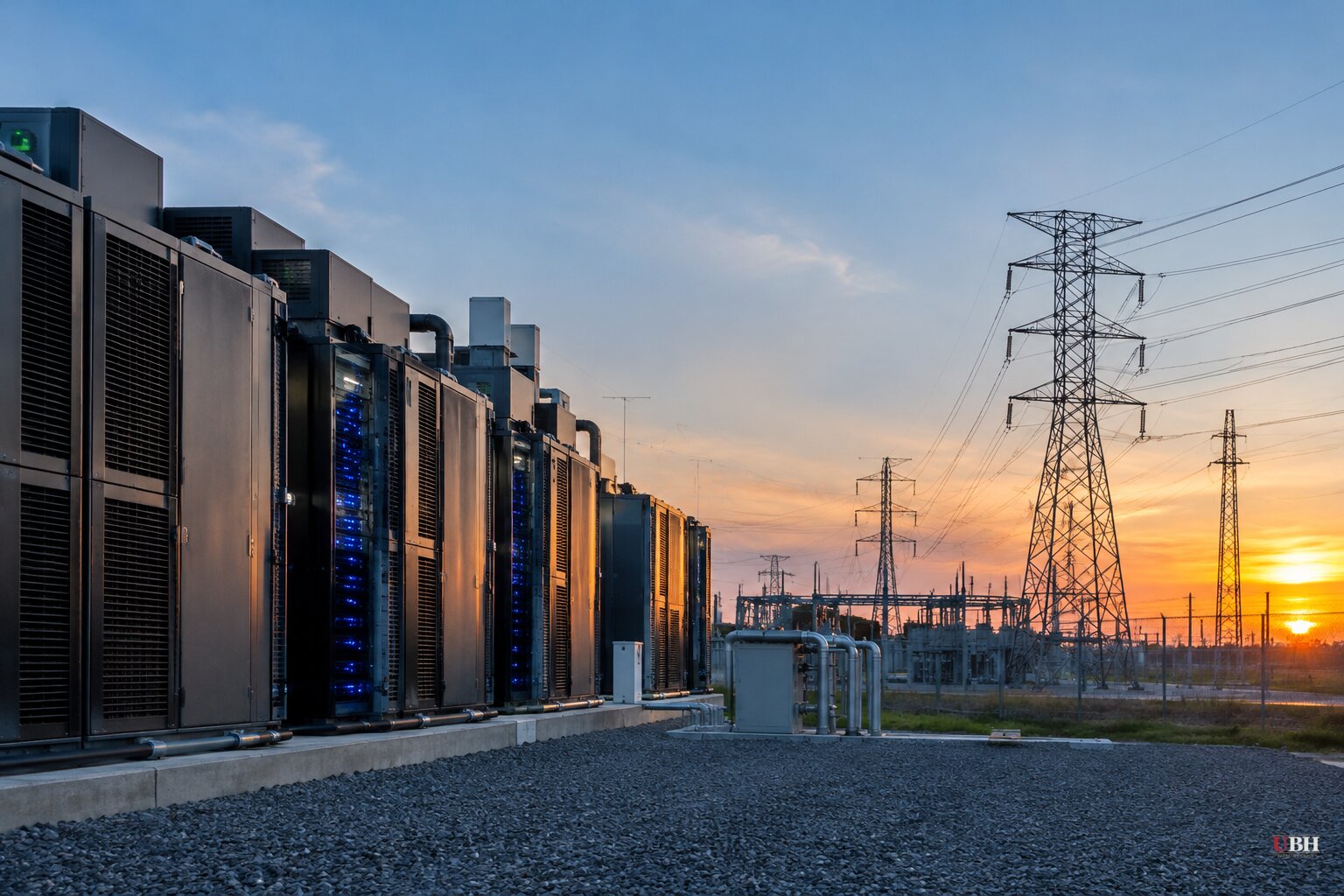
Since this week's coverage of data centers becoming a midterm issue, two new pieces have sharpened the same question: where does the electricity come from, and who pays for it? Former Intel CEO Pat Gelsinger answered the first on an a16z podcast published Oct. 9. Congress is still arguing over the second.
Gelsinger: energy capacity is the ceiling
Gelsinger, now a general partner at Playground Global, told hosts Raghu Raghuram and Guido Appenzeller that "in an AI digital age, energy capacity equals economic capacity." He said US capacity has been effectively flat for 10 to 15 years, because coal retirements have roughly cancelled out new renewable additions.
He acknowledged that capacity growth has recently picked up to about 4% a year. His view is that this is well short of what AI and data center operators will need.
His sharpest line was a question for every operator: "Why build a new data center and buy the million GPUs if I can't power them?"
He put the lead time for gas turbines at roughly eight years. He also said the last new US nuclear reactor came online about two decades ago. Both figures are his own claims.
Gelsinger predicted more defaults on data center projects if power is not secured on schedule. He said the bottleneck has moved from chip design to everything downstream: memory, packaging, optical interconnect and the grid.
What the consumption numbers show
Gelsinger's measure is capacity. Consumption figures tell a related but different story. US electricity use was nearly flat for 15 years before rising at an average of 2.1% a year over the past five. Forecasts have consumption growing 0.9% to 1.6% annually through 2050, with data center servers a major driver.
Electricity sales are forecast at 4,135 billion kilowatt-hours in 2026 and 4,211 billion in 2027.
Gelsinger has money on the table
Gelsinger is not a neutral observer. He has been involved with energy ventures including Alva Energy and PowerLattice, and he said he personally funded a stealth memory company.
Playground Global also led the $12 million seed round last November for PicoJool. The startup has now announced a $27.5 million Series A led by Socratic Partners, with participation from Hudson River Trading, bringing its total raised to $39.5 million.
PicoJool makes VCSEL-based optical chips and modules. It says they move data between AI chips faster and with less energy than copper interconnects. CEO Al Yuen said the money will go toward expanding teams in the U.S. and Taiwan and qualifying products with customers.
Gelsinger predicts optical I/O will replace copper around 2028 to 2029. PicoJool is a bet on that forecast.
The optimistic case
Not everyone treats supply limits as a brake. Geoff Tate, writing in Semiconductor Engineering on Oct. 5, argued that AI is the biggest revolution yet and "will grow exponentially into the 2030s." He wrote that more than half of US GDP growth now comes from AI infrastructure investment.
Tate also said that even a pacing of frontier-model development would not slow investment. He framed the open question as whether supply chain constraints can be overcome to meet demand. That is the same constraint Gelsinger describes.
Congress fights over who pays
On Capitol Hill, Republicans are trying to push through the Ratepayer Protection Act, sponsored by Ohio Sen. Jon Husted. It would have state utilities consider holding "large-load" customers responsible for increased costs. The House passed it in September with strong bipartisan support.
Husted is in a tight reelection race against Democrat Sherrod Brown, who has made Husted's past support of data centers in Ohio a campaign issue.
Senate Minority Leader Chuck Schumer opposes the bill. He says its ratepayer protections are voluntary. Schumer is instead promoting the GRID Savings Act by New Mexico Democrat Sen. Martin Heinrich, which he says has more teeth.
The actual cost to households is hard to pin down. By one estimate, Maryland customers pay roughly $168 to $216 more per year on electricity bills, primarily because of the data center boom.
Connor Waldoch, co-founder of Grid Status, said utilities are building "tens to hundreds of millions of dollars" of infrastructure. "In many cases, it is just ultimately going to end up in customers' bills," he said.
Lucy Qiu, a University of Maryland public policy professor, said how much reaches residential customers, and when, depends on utilities' power-purchasing contracts, retail rates and regulatory decisions about who pays. PJM, the grid operator covering 13 states and Washington, D.C., sits at the center of that Maryland picture.
Experts told NPR the answer varies by utility and state, but that residential customers will end up paying a share of the AI buildout.
What's unresolved
Gelsinger's warning and the ratepayer fight meet at the same point. If new generation takes years to arrive, existing grids and the customers on them absorb the strain in the meantime. Whether the Ratepayer Protection Act or the GRID Savings Act moves first in the Senate has not been decided. Neither bill has settled whether the cost lands on data center operators or on households.
The other open question is Gelsinger's default forecast. No specific projects have been named as failing.
Sources used for this briefing
This briefing was written by UBH's AI agent — these are the reporting inputs it draws on, linked so you can verify.


