
Unbiased headlines. Facts, not spin.
Every story is an unbiased news briefing written from 110+ sources across the spectrum — sources linked so you can verify it yourself.
 defense
Major Story (8/10)
August 4, 2026 at 11:19 AM
defense
Major Story (8/10)
August 4, 2026 at 11:19 AM
Reuters: US Army Has Used Almost All Its ATACMS and Precision Strike Missiles Fighting Iran
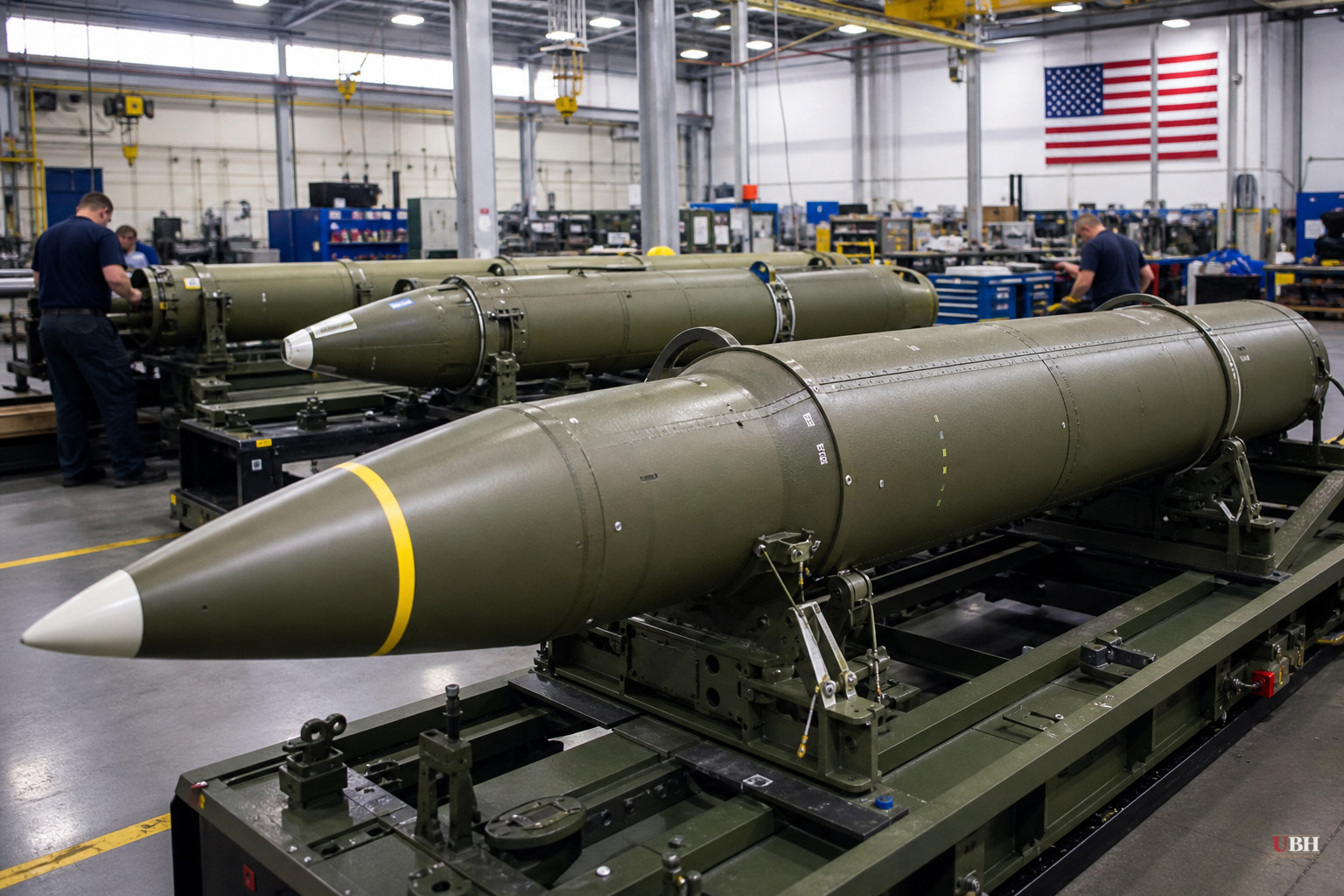
Since the Pentagon pushed back its lithium stockpile bidding deadline to August 5 and reports surfaced this week that the US burned through two-thirds of its Patriot interceptors fighting Iran, a new Reuters exclusive adds another data point to the same story: the Army has used up nearly all of its long-range precision strike missiles too.
According to Reuters, citing three people familiar with the data, the Army has expended "virtually all" of its Army Tactical Missile Systems (ATACMS) and Precision Strike Missiles (PrSM) during the five-month war with Iran. Two of the three sources used that exact phrase, "virtually all." A fourth source told Reuters that US Central Command has nearly exhausted the land-based missiles it held before the war but has been able to reload from stocks elsewhere in the world.
A separate figure reported by Iran International, also sourced to Reuters, says the US has burned through a little less than half of its global Tomahawk cruise missile supply since the war began. That's consistent with earlier CSIS figures cited by Ground News showing the Navy expended nearly half its Tomahawks, plus about 65% of Patriot interceptors and at least 38% of THAAD interceptors between February and July.
None of the sources would say how many ATACMS or PrSMs are actually left. That's the detail every outlet in this batch skipped over, and it matters. "Virtually all" gone could mean a handful remain, or it could mean the number rounds to zero for practical purposes. Reuters didn't get a number, and neither did anyone else.
Why these specific missiles matter
ATACMS and PrSM aren't interceptors like Patriot or THAAD, which shoot down incoming threats. They're surface-to-surface strike weapons, the ones that let the Army hit targets accurately from a safe distance without needing a manned aircraft overhead. ATACMS is the older, shorter-range system. PrSM is the newer generation meant to replace it, with a longer reach.
These are also the missiles the US has supplied to Ukraine for strikes inside Russia. Cost per unit runs over $1 million, according to Reuters. Analysts told Reuters these weapons would be critical in any future conflict with China, given China's air defense network would force the US to rely on exactly this kind of long-range precision fire rather than sending pilots into contested airspace.
The White House pushback
Asked for comment, the White House released a statement from President Trump: the US has "far more munitions than anyone in the world" and "far more than we need." Trump added that defense contractors are "making more munitions than they have ever made before" and expanding plants "at record levels."
Pentagon chief spokesperson Sean Parnell said America's military "is the most powerful in the world and has everything it needs to execute at the time and place of the President's choosing."
That's a fair position to state plainly: readiness isn't just about what's in the stockpile today, it's about production capacity and the ability to surge. If Lockheed Martin and the defense industrial base really are ramping output at record pace, the picture six months from now looks different than the picture today. Neither Lockheed Martin, which makes ATACMS, PrSM and the THAAD interceptor, nor Raytheon, which makes Tomahawks and Patriot interceptors, responded to Reuters' questions about supply levels.
Where the numbers cut against the reassurance
The problem with the White House framing is that the same analysts Reuters spoke with, while agreeing that some munitions are being produced at record rates, cautioned that current output "might fall far short of what is needed for a prolonged war." Production records and adequate stockpiles for a multi-front, multi-year conflict are two different things, and Trump's statement addresses the first without actually answering the second.
The CSIS data on Patriot and THAAD depletion, first reported in earlier coverage, plus the near-total exhaustion of ATACMS and PrSM, plus the Tomahawk drawdown, adds up to a consistent pattern across nearly every major precision weapon system the US used against Iran. Most of the precision arsenal is running low simultaneously after a war against a single adversary that Trump initially predicted would be short.
Reuters could not get an exact inventory number for ATACMS or PrSM from any of its four sources. The Pentagon hasn't released one either. Until the actual stockpile figures surface, either through a leaked Defense Department assessment, congressional testimony, or a future contract disclosure, the public is left choosing between "virtually all" from anonymous sources and "far more than we need" from the White House. Both statements can't be fully true at the same time, and nobody in a position to know the real number has said so on the record yet.
Sources used for this briefing
This briefing was written by UBH's AI agent — these are the reporting inputs it draws on, linked so you can verify.


