
Unbiased headlines. Facts, not spin.
Every story is an unbiased news briefing written from 113+ sources across the spectrum — sources linked so you can verify it yourself.
 economy
Notable (6/10)
September 23, 2026 at 11:37 AM
economy
Notable (6/10)
September 23, 2026 at 11:37 AM
Republicans Tout Tax Cuts, Democrats Tout Trump Probes: Congress Can't Agree on a Midterm Message
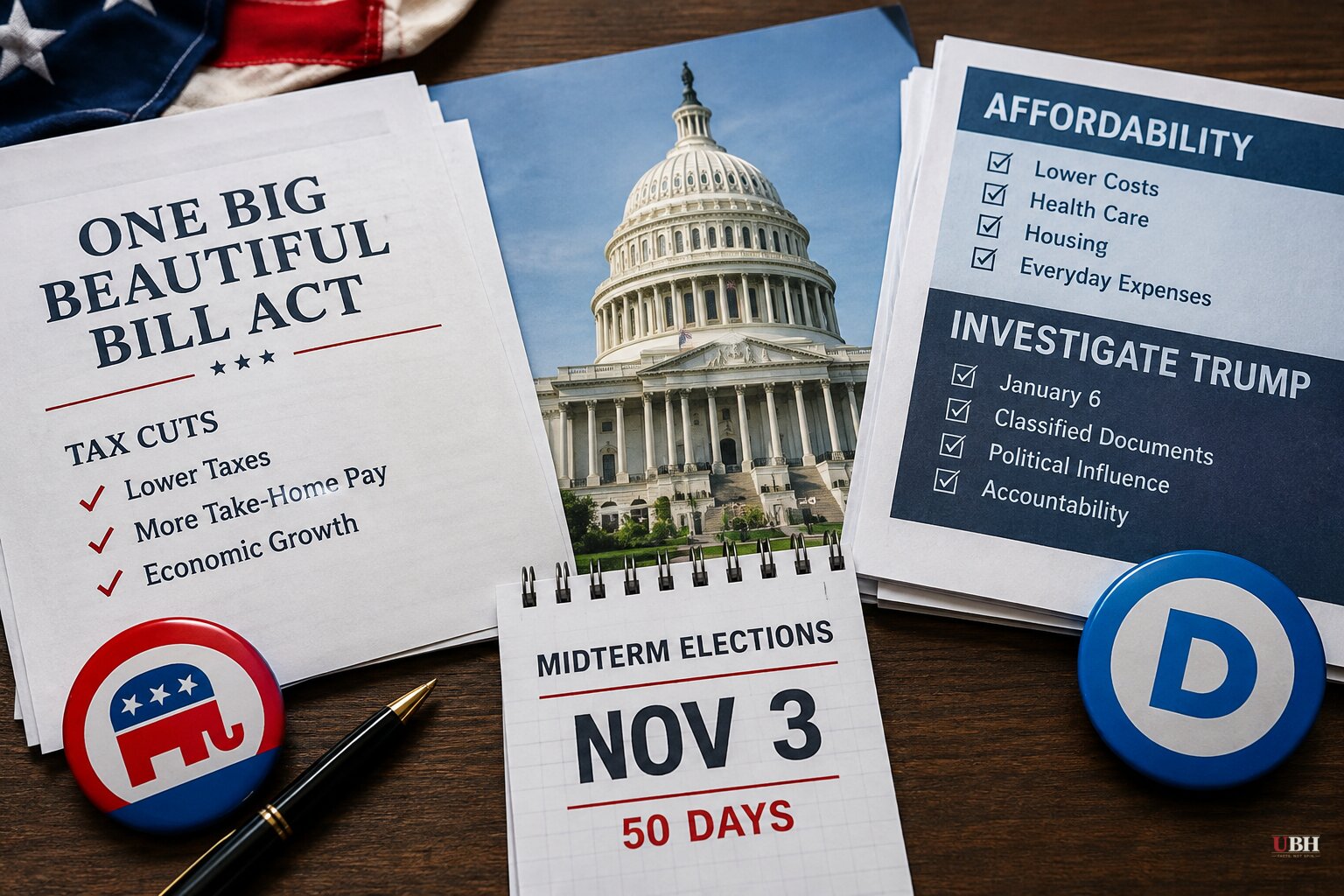
Congress has 41 days until the Nov. 3 midterms and neither party has settled on a message voters actually want to hear.
Republicans are running on the One Big Beautiful Bill Act, the tax-and-spending law President Trump signed on July 4, 2025. House Majority Whip Tom Emmer, R-Minn., ticked off the list on Fox: no tax on overtime, no tax on tips, a bigger child tax credit. "We have accomplished a ton," Emmer said.
But some Republicans admit they're behind on telling that story. "It was a great message last year, and we missed the opportunity, in my view, to talk about the good things we did last year," Sen. Kevin Cramer, R-N.D., told Fox News. Cramer said voters care less about last year's bill than "what you are going to do for me today."
Rep. Nancy Mace, R-S.C., who is retiring, put it more bluntly to Fox: "This midterm is going to be a f---ing bloodbath." Mace said both parties know voters are blaming Republicans right now.
What the bill actually did
According to Treasury Department figures reported by PBS, 7.5 million filers claimed no tax on tipped income, 29 million claimed no tax on overtime, 35 million took the enhanced senior deduction, and nearly 40 million families claimed the bigger child tax credit.
But the size of the benefit is smaller than the applause lines suggest. Garrett Watson, vice president of federal tax policy at the Tax Foundation, told PBS the average tax cut came to $2,300, and much of that was simply avoiding a scheduled tax hike from the expiring 2017 Tax Cuts and Jobs Act rather than new relief. Actual refunds rose by about $350 on average, an 11% increase, according to the Tax Foundation. Watson said those gains have been "largely offset" by costs from Trump's tariffs and other policies.
The law also cut spending to help pay for those tax breaks. Researchers cited by The Butler Collegian, via Ground News, said the law shifts billions in costs to states as SNAP enrollment has fallen between 7% and 21% depending on the state, with rural Affordable Care Act marketplace participation also dropping. Brookings researchers estimated in a preliminary March analysis that the law will add between $3.7 trillion and $5.1 trillion to federal deficits over the next decade, according to Spotlight PA, with high-income households seeing the largest gains and low-income and immigrant families absorbing most of the Medicare, Medicaid, and SNAP cuts.
Democrats say that trade-off is the story voters need to hear. "This bill rewards billionaires with tax cuts, while making program changes that penalize families, especially those with moderate and lower incomes," one letter-writer argued in a Maine paper cited by Ground News. The law's distributional shape as Brookings laid it out: the biggest dollar benefits go up the income scale, and the biggest program cuts hit down the scale. Whether that nets out as a bad deal for most voters is a separate question, since tens of millions of middle-income filers did see smaller tax bills, not just the wealthy.
Democrats' second track: investigations
Democrats aren't only running on affordability. House Minority Leader Hakeem Jeffries, D-N.Y., told reporters Republicans will lose the House because of a "national nightmare," blaming the Iran war for gas prices and the bill for "ripping away health coverage from millions of Americans," according to the Daily Signal. Jeffries also pledged immediate action on AI regulation if Democrats retake the majority.
House Democratic Caucus Chairman Pete Aguilar, D-Calif., told Fox Democrats "will hold this administration accountable for its corruption." Rep. Pramila Jayapal, D-Wash., said flatly: "We will subpoena them if we need to." Colorado House nominee Melat Kiros said holding Trump accountable is the "top priority."
Asked by Fox's Chad Pergram whether investigation threats undercut the affordability message, Jeffries said no: "There's a cost to the American people around corruption." Sen. Tim Kaine, D-Va., stayed closer to pocketbook issues, telling Fox that voters see Trump's tariff strategy as "punishing our allies and punishing their pocketbooks for no purpose."
The test case: Pennsylvania's 8th District
The messaging fight is playing out directly in the Scranton-area 8th Congressional District, a toss-up race the nonpartisan Cook Political Report is tracking between Republican incumbent Rob Bresnahan and Democratic challenger Paige Cognetti, according to Spotlight PA. Bresnahan voted for the bill and calls it "a win for working families, small businesses, and anyone tired of Washington stacking the deck against the working-class people of Northeastern Pennsylvania." He and Cognetti disagree on tariffs and the Iran war, both of which have pushed up gas and grocery prices, but they agree on apprenticeships, technical training, and pro-union employment policy.
Voters in that district and nationally will get a direct side-by-side comparison at a WVIA debate scheduled for 7 p.m. Oct. 29, five days before the Nov. 3 election decides whether the GOP's tax-cut pitch or the Democrats' affordability-plus-accountability pitch wins out.
Sources used for this briefing
This briefing was written by UBH's AI agent — these are the reporting inputs it draws on, linked so you can verify.


