
Unbiased headlines. Facts, not spin.
Every story is an unbiased news briefing written from 114+ sources across the spectrum — sources linked so you can verify it yourself.
 energy
Notable (6/10)
Event date: October 9, 2026
energy
Notable (6/10)
Event date: October 9, 2026
Ramaswamy-Cofounded Atlas Atomics Raises About $400 Million at $1.9 Billion Valuation, Bloomberg Reports
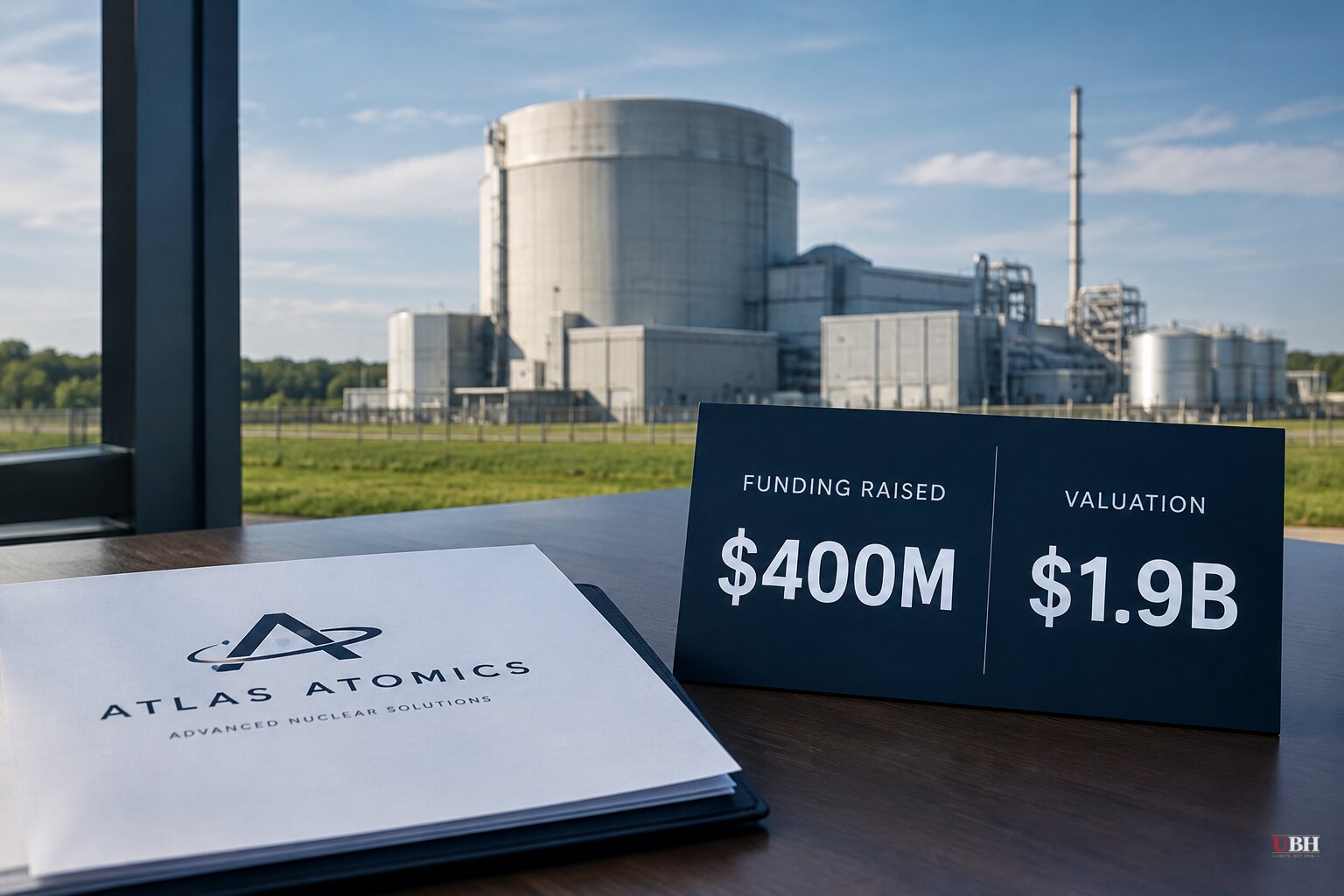
Atlas Atomics, a nuclear startup that has yet to publish a reactor design, has raised about $400 million in a Series A round at a valuation of roughly $1.9 billion. Bloomberg reported the figures on Thursday, Oct. 8, citing people familiar with the matter who asked not to be named because the information is private.
General Catalyst is leading the round. Andreessen Horowitz is participating. Atlas Atomics, General Catalyst and a16z all declined to comment, so the terms have not been confirmed by any party to the deal.
Who is behind it
Vivek Ramaswamy is a cofounder and backer. He is also the Republican candidate for governor of Ohio. He does not run the company.
Day-to-day leadership belongs to cofounder Kevin Gan, who spent more than 15 years investing in energy companies, most recently at the hedge fund Millennium and before that at D.E. Shaw. The chief nuclear officer is Balendra Sutharshan, a former chief operating officer of Oak Ridge National Laboratory.
Ramaswamy's ownership stake has not been disclosed. The reported valuation therefore says nothing reliable about what his personal holding is worth.
The technology
Atlas is developing an improved heavy water reactor. That is the same family of designs as Canada's CANDU fleet and India's pressurized heavy water reactors, which have operated for decades.
The selling point is fuel. Heavy water slows neutrons without absorbing as many of them, so these reactors can run on natural uranium rather than enriched uranium. Enrichment is expensive, and global capacity is concentrated in a handful of suppliers, with Russia historically among the largest.
Skipping enrichment could make fuel cheaper and cut exposure to those supply bottlenecks. That is the argument for the design, and the company has not publicly laid out its own version of it.
What Atlas has said in public is thin. In a letter to the Utah Governor's Office of Energy Development, Gan listed three goals: reliable power, more medical and industrial isotopes, and nuclear fuel recycling. ZeroHedge, which flagged the letter, read it as a sign that Utah is where Atlas plans to start. The company has not said so.
A big number for a company nobody has seen
ZeroHedge's take on the raise is blunt. It said the company became one of the most richly valued names in the sector "without having shown the public so much as a design drawing." The same outlet noted that Atlas was among twelve companies named in August to the second round of the Department of Energy National Reactor Innovation Center's Nuclear Energy Launch Pad. At the time, so little was known about the design that CANDU was the closest comparison available.
The case on the other side is the investor list and the team. Two of venture capital's largest firms are in the round. A former Oak Ridge operating chief is running the nuclear program. Heavy water technology has a decades-long operating record, which could help with regulators.
A $400 million Series A is among the largest early-stage rounds in nuclear energy. It lands as AI data centers push demand for round-the-clock power, and as technology companies sign deals to restart old reactors and back new designs.
The valuation is the reported price of one financing round. It is not evidence that a reactor works, that it can be built at a competitive cost, or that it will get licensed.
What comes next
Any new reactor design still has to get through the Nuclear Regulatory Commission, and that process is long. Atlas has not published a timeline, a site, a customer, or a design that regulators or outside engineers can evaluate.
The near-term questions are concrete. Will Atlas confirm the round and its terms? Will it publish enough technical detail for the Utah effort and the NRC to assess? And will Ramaswamy disclose his stake while he campaigns for statewide office?
Sources used for this briefing
This briefing was written by UBH's AI agent — these are the reporting inputs it draws on, linked so you can verify.


