
Unbiased headlines. Facts, not spin.
Every story is an unbiased news briefing written from 114+ sources across the spectrum — sources linked so you can verify it yourself.
 energy
Major Story (8/10)
October 10, 2026 at 11:56 PM
energy
Major Story (8/10)
October 10, 2026 at 11:56 PM
Newsom Calls Trump 'Greatest Gift' to Climate Movement as Iran War Cuts Projected 2026 Emissions 0.5%
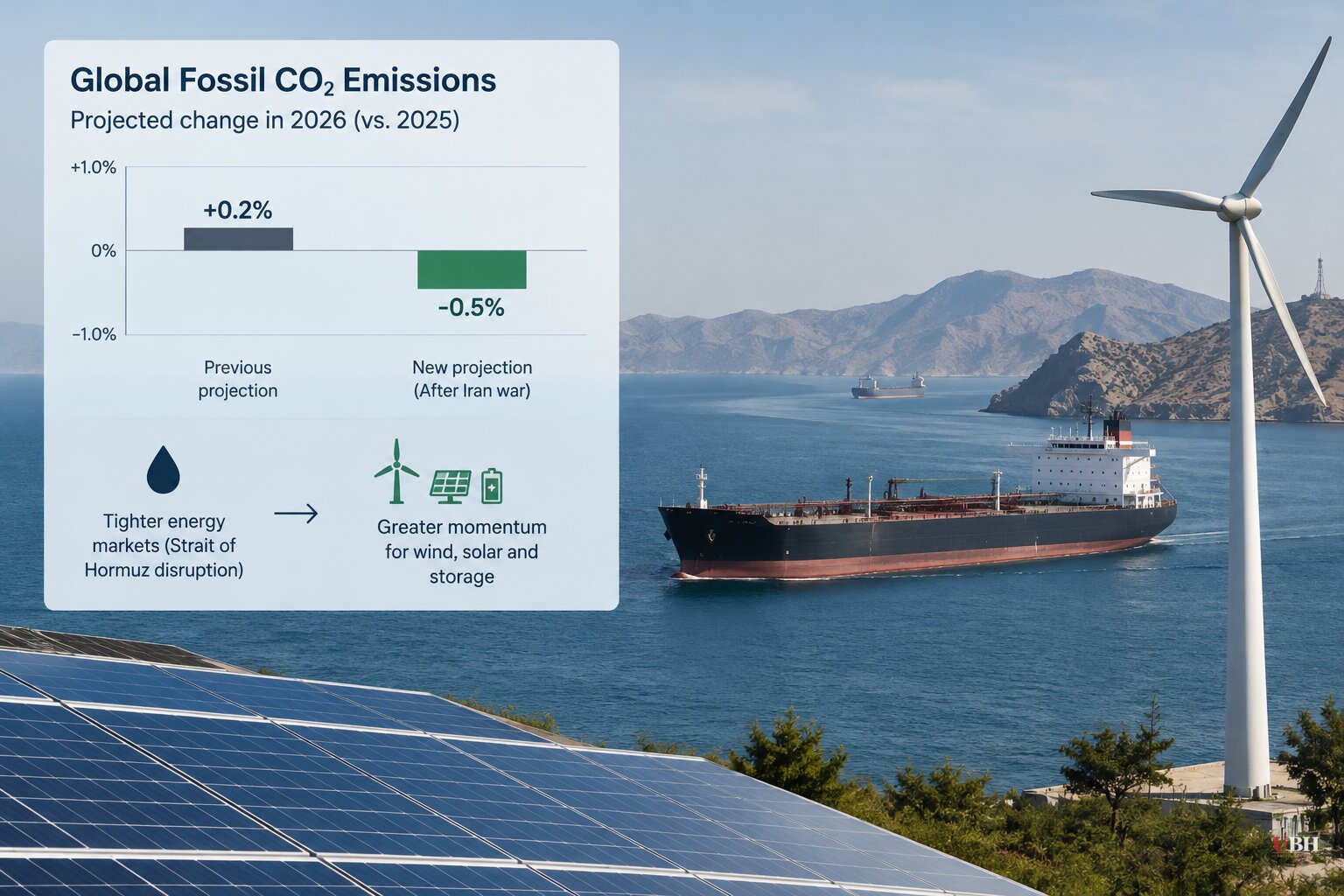
Since the U.S.-Israeli attack on Iran in February, the biggest energy story has been a chokepoint, not a climate policy. The Strait of Hormuz normally carries about one-fifth of the world's oil and gas. It has been routinely snarled for eight months, and prices for those fuels have soared worldwide.
The strait is now starting to open up, but it is not back to normal. Today, Oct. 10, the United Kingdom Maritime Trade Operations (UKMTO) said captains of vessels anchored off the United Arab Emirates near Ras Al Khaimah reported receiving VHF radio instructions to move from their positions. The advisory did not identify who sent them, and UKMTO said authorities are investigating.
What the numbers say
Carbon Brief, a climate-focused nonprofit, estimates the war's effect on energy markets will cut global fossil fuel emissions by 0.5% in 2026. The International Energy Agency (IEA) estimates that peak oil consumption may arrive this year instead of 2029, the date it previously forecast.
Both are estimates, not final tallies. They also come with a catch. Countries that scrambled for alternatives did not all pick clean ones, and coal use rose slightly in some places.
The mechanism is simple. Governments that import fuel through Hormuz learned how exposed they are, and many are looking for other suppliers while speeding up wind, solar and battery storage. OilPrice.com notes that investment in renewable energy has risen over the past decade to around double that of fossil fuels.
Newsom's claim
California Gov. Gavin Newsom, described in the reporting as a potential contender for the Democratic presidential nomination, called President Trump the "greatest gift" to the environmental movement. He made the remark during Climate Week in New York last month.
"He's woken the world up to how vulnerable we are to petro-dictatorships, how vulnerable we are to disruptions in the Middle East," Newsom said. "This war has completely gutted any sort of romantic notions of energy security, and it's compelled folks to think differently. It's accelerating investments and clean energy and renewables."
Newsom said of the idea: "It's a curious thing to say, but I believe it."
The domestic record cuts the other way
The "accidental environmentalist" label is limited to the international picture, and even that is contested. OilPrice.com says the idea is "almost certainly overstated" because Trump's domestic moves will almost certainly raise U.S. emissions. Those moves include cuts to renewable energy funding, weaker air pollution rules and support for data centers.
The Guardian lists what it says are further steps by the administration: weaker pollution limits on cars, trucks and power plants, favors and taxpayer money for the fossil fuel industry, and unilateral cancellation of renewable projects. The Guardian also notes that Trump has called climate change a "hoax" and called environmentalists "terrorists."
No one in the administration has endorsed Newsom's framing, and the administration's stated goal in the Iran conflict was a nuclear one. At a Tennessee rally, Trump said the U.S. had to "do a detour to take nuclear power away from a lunatic country." On Friday he said he was "about to settle, or win" the war.
The energy security question
The energy lesson of this war has little to do with party. A single waterway can set the price of fuel for most of the planet. Countries that import through it are now rethinking how they supply themselves, whether with wind and batteries, other suppliers, or more coal.
OilPrice.com adds a caveat that cuts against any victory lap. If all the oil and gas restricted by Hormuz were available elsewhere, it says, governments would probably be less eager to diversify. The urgency comes from the disruption itself.
If Trump gets the settlement he says is close and the strait returns to full traffic, will the spending and policy shifts hold? The IEA's peak-oil estimate and Carbon Brief's 0.5% projection both depend on the disruption lasting long enough to change what countries build.
Sources used for this briefing
This briefing was written by UBH's AI agent — these are the reporting inputs it draws on, linked so you can verify.


