
Unbiased headlines. Facts, not spin.
Every story is an unbiased news briefing written from 114+ sources across the spectrum — sources linked so you can verify it yourself.
 energy
Major Story (7/10)
Event date: October 4, 2026
energy
Major Story (7/10)
Event date: October 4, 2026
Forecasters Expect a Possible Record El Niño, but Lake Mead Refill Is Far From Certain
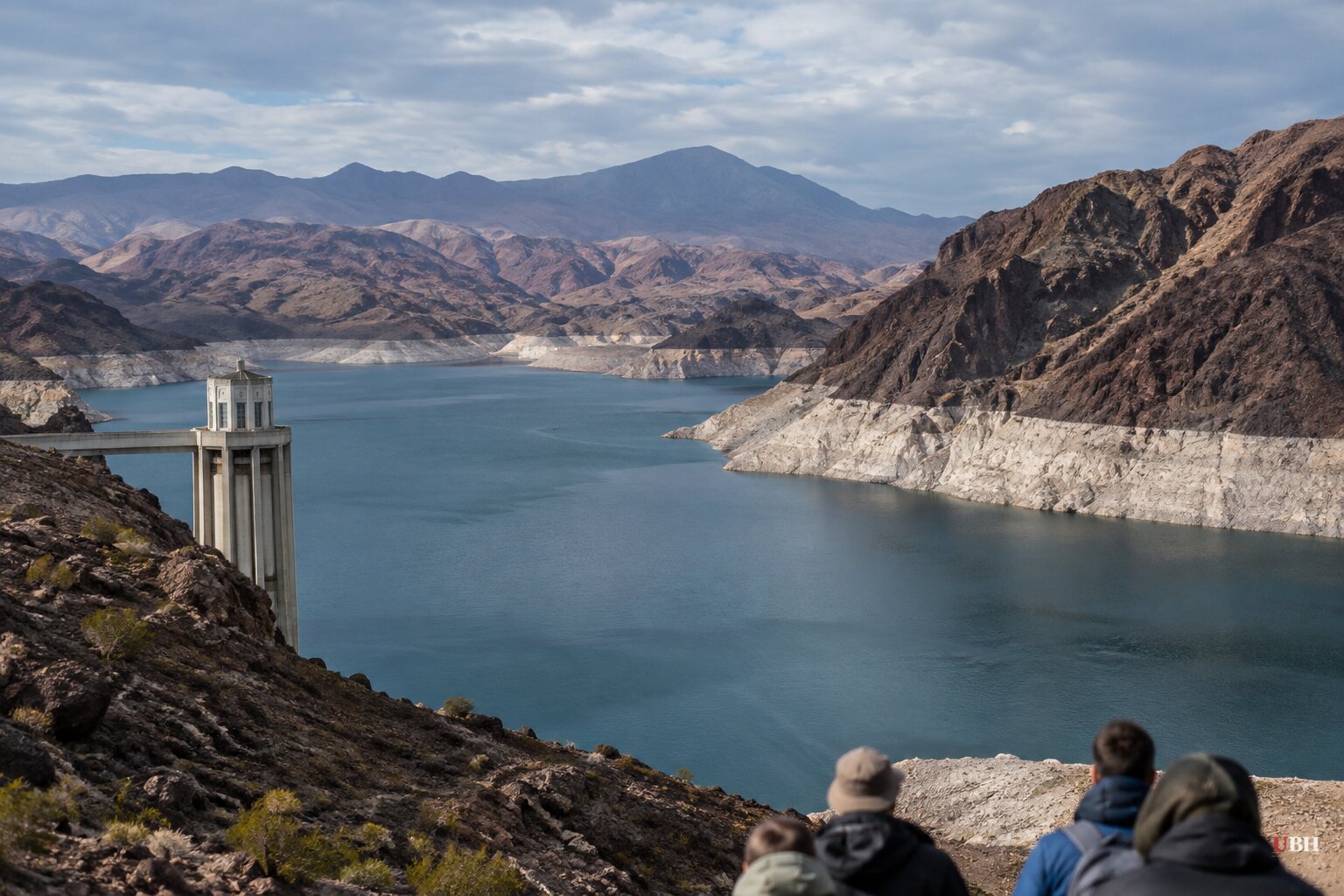
A strengthening El Niño could be among the strongest on record, and the Colorado River Basin badly needs the moisture. Whether any of it ends up in Lake Mead is another matter.
The National Weather Service's Climate Prediction Center said last week there remains a high chance of an event stronger than any El Niño since 1950. "With an event of this magnitude, the chances of experiencing impacts consistent with El Niño are larger, though not guaranteed," the center said.
Where the reservoirs stand
Lakes Mead and Powell fell to record lows in August after federal water managers recorded the lowest basin snowpack on record during the 2025-26 winter. Mead hit a modern record low of 1,040.40 feet on Aug. 7. It kept sliding to 1,037.76 feet by Oct. 6, about 191 feet below full pool.
The latest figures put Mead at roughly 26 percent full and Powell at 21 percent. Combined storage in the two lakes has dropped below where it stood before Powell began filling in 1963, according to the Bureau of Reclamation.
The decline has flattened this fall. Mead dropped only three tenths of a foot between Sept. 23 and Oct. 6, after far faster losses earlier in the year.
Mead's inflow is not a river responding to weather. It is a scheduled release from Glen Canyon Dam under Reclamation's operating rules. For water year 2026, Reclamation cut Powell's scheduled release from 7.48 million acre-feet to 6.0 million.
The optimistic forecast
AccuWeather long-range expert Paul Pastelok said this has the potential to be the strongest El Niño on record, almost certain to surpass the 1982-83 and 1997-98 events. AccuWeather expects a parade of storms off the Pacific, including several atmospheric rivers, with California the main target. It forecasts an early start to snow in the Sierra Nevada, Great Basin and central and southern Rockies, and a cooler, wetter-than-average Four Corners by February.
Weather.com's forecast goes further. It says Lakes Mead and Powell "could surge by next spring" and that "we probably won't be talking about record low water levels at this time next year." The same forecast concedes that El Niño "doesn't decide where the precipitation lands."
The cautionary forecast
Greg Postel, a storm and hurricane expert at The Weather Channel, told Newsweek the El Niño is likely to bring above-average precipitation and heavy high-elevation snowpack to the basin. He does not expect much of it to reach the reservoirs.
Years of drought have left dry soils that "will preferentially absorb the precipitation and snowmelt rather than facilitate runoff into the tributaries," Postel said. Some reservoirs would "almost certainly benefit over the long haul," he said, but not equally across the system. He called a gradual return to pre-El Niño levels plausible, since this winter's storm track is unlikely to last into next winter.
AccuWeather's own outlook is tempered too. Several wet winters would be needed to refill the reservoirs, it says. It also notes that other factors can temporarily shift storm tracks and bring cold snaps to areas forecast to run warm.
What a decades-long drought has already cost
The Colorado River supplies more than 40 million people in seven states and irrigates more than 5 million acres. It has lost 20 percent of its flow during a 26-year megadrought that began in 2000, according to Kyle Roerink, senior adviser at the Great Basin Water Network.
Las Vegas draws more than 90 percent of its water from Mead. Colby Pellegrino of the Southern Nevada Water Authority said the first municipal intake, built in 1970, is no longer operable because the lake dropped too far. The authority spent $1.3 billion on a third intake nearly 200 feet deeper, along with a low-lake-level pumping station. That intake is what keeps the valley supplied as the lake falls.
The pricing argument
A separate fight is over who pays for the water. Daniel Frey, writing for Big Pivots, argues that Lower Basin agricultural districts pay roughly 6 percent of what municipal utilities pay at wholesale for federal delivery. He says that perpetuates low-value irrigation and discourages conservation.
Frey says forage crops such as alfalfa and hay consume close to half of the water people use in the basin. He says federal officials could align agricultural and municipal pricing without waiting for a new compact or a court fight over water rights. He also notes that many farms and ranches, particularly in the Upper Basin, do not depend on federally financed infrastructure, and says his argument is not aimed at them. The percentages are his figures, drawn from studies he cites.
What comes next
California gets about 75 percent of its annual precipitation between November and March, so the first real test comes this winter. The open question is the one Postel raised. Even if the Rockies get the snow, will dry ground leave enough runoff to move Powell, and then Mead, in any lasting way?
Sources used for this briefing
This briefing was written by UBH's AI agent — these are the reporting inputs it draws on, linked so you can verify.


