
Unbiased headlines. Facts, not spin.
Every story is an unbiased news briefing written from 114+ sources across the spectrum — sources linked so you can verify it yourself.
 energy
Low Interest (4/10)
Event date: October 9, 2026
energy
Low Interest (4/10)
Event date: October 9, 2026
EWE and Verbund Form Joint Venture for 500 MW Hydrogen Plant in Nordenham, No Investment Decision Yet
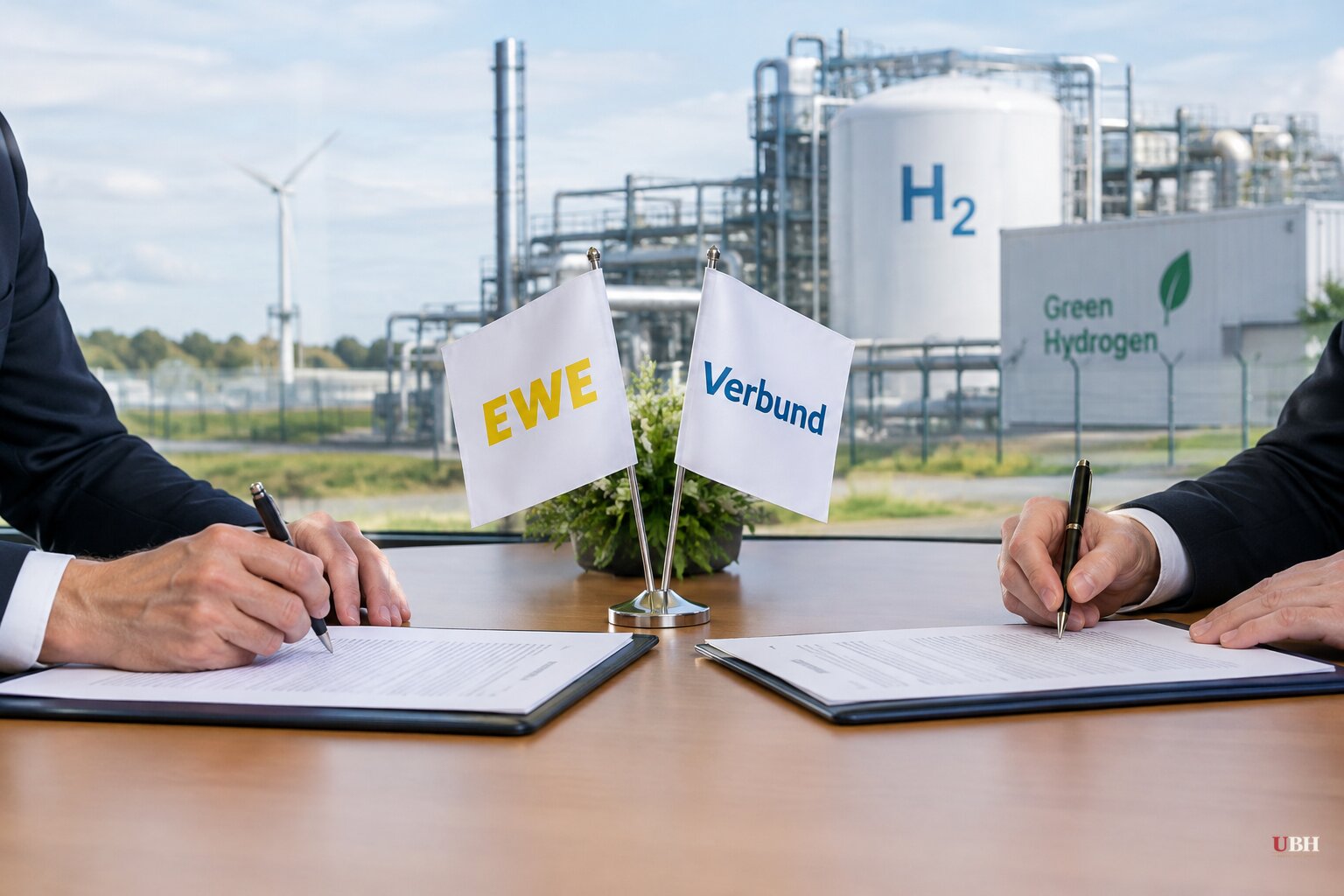
EWE AG and Verbund AG announced on Friday, Oct. 9, that they have formed a joint venture to develop "CHC Elektrolyse JadeWeser," an electrolyzer of up to 500 megawatts in Nordenham, in the Wesermarsch district of Lower Saxony. The target is roughly 50,000 tonnes of green hydrogen a year, with supply starting in 2032 under current expectations.
The vehicle is built from two subsidiaries, EWE Hydrogen GmbH and Verbund Green Hydrogen GmbH. Verbund Green Hydrogen initially holds 50.1%, with the structure meant to reach parity over time. The joint venture received European Commission clearance on July 9, 2026.
The site
The companies are leaning hard on location. Land in southern Nordenham has been secured on a long-term basis. Nearby is a 380-kilovolt grid connection point that the partners say can be expanded into the gigawatt range.
Water supply is secured, and the site sits near industrial port infrastructure and the planned A20 motorway. It is also close to Germany's future hydrogen core network, a roughly 9,000-kilometer pipeline backbone still under development, and to underground cavern storage the partners describe as nearby.
"Next to a former nuclear power plant, an industrial hub for the production of green hydrogen is emerging," said Jost Ahrens, managing director of Verbund Green Hydrogen. He called JadeWeser "one of the most infrastructurally well-positioned hydrogen projects in Europe."
EWE and Verbund say the first years of the hydrogen ramp-up showed that projects succeed when technology is paired with solid infrastructure, secured sites, strong financing partners and concrete sales prospects. Together the two already have about 400 MW of hydrogen projects in operation or under implementation.
What has not been decided
No final investment decision has been taken. Neither company has disclosed what the plant would cost. No specific buyers have been named, only a general intent to serve industry, transport and the energy sector.
The 2032 date is a target, and 500 MW is a ceiling ("up to"), not a commitment.
The cost problem
EWE's own chairman says the economics are not there yet. "Regulatory adjustments, for example to the EU's RFNBO requirements, remain necessary for the market to develop effectively," Stefan Dohler said. RFNBO is the EU framework for renewable fuels of non-biological origin, which sets the rules for what counts as green hydrogen.
The price gap is large. The Oeko-Institut puts the cost of renewable hydrogen made in Germany at more than €7.50 per kilogram, with a 2025 range of €7.50 to €8.50. A European Parliament briefing estimated hydrogen from autothermal reforming with carbon capture at about €3.80 per kilogram in 2023. Those figures come from different years and methods, so they are not a like-for-like comparison.
Verbund CEO Michael Strugl framed the venture as a way to build "a secure and competitive supply of green hydrogen" through European partnerships.
Demand so far
EWE has signed one recent supply deal, but it does not involve JadeWeser. On Oct. 6, adhesive maker tesa agreed to take 500 tonnes of green hydrogen a year from 2028 for its Hamburg plant. That hydrogen is to come from EWE's planned 320 MW plant in Emden, scheduled to start by the end of 2027.
The tesa volume is 1% of JadeWeser's target output. It would replace fossil fuel in steam generation and cut emissions at the Hamburg plant by about 6,000 tonnes a year.
In September, EWE's gas storage subsidiary also awarded Bilfinger a contract for a hydrogen treatment facility at its planned storage site in Huntorf. That project is separate from JadeWeser.
What comes next
Lenders typically want binding offtake contracts before financing a plant of this size. None for JadeWeser have been announced. Whether EWE and Verbund can sign buyers and reach a final investment decision at a time when Dohler is publicly asking Brussels to change the rules is the open question. The partners have not given a date for that decision.
Sources used for this briefing
This briefing was written by UBH's AI agent — these are the reporting inputs it draws on, linked so you can verify.


