
Unbiased headlines. Facts, not spin.
Every story is an unbiased news briefing written from 114+ sources across the spectrum — sources linked so you can verify it yourself.
 energy
Major Story (7/10)
October 11, 2026 at 05:05 AM
energy
Major Story (7/10)
October 11, 2026 at 05:05 AM
Fitzpatrick Vows Discharge Petition to Block Russian Oil Purchases After Trump's Diesel Deal
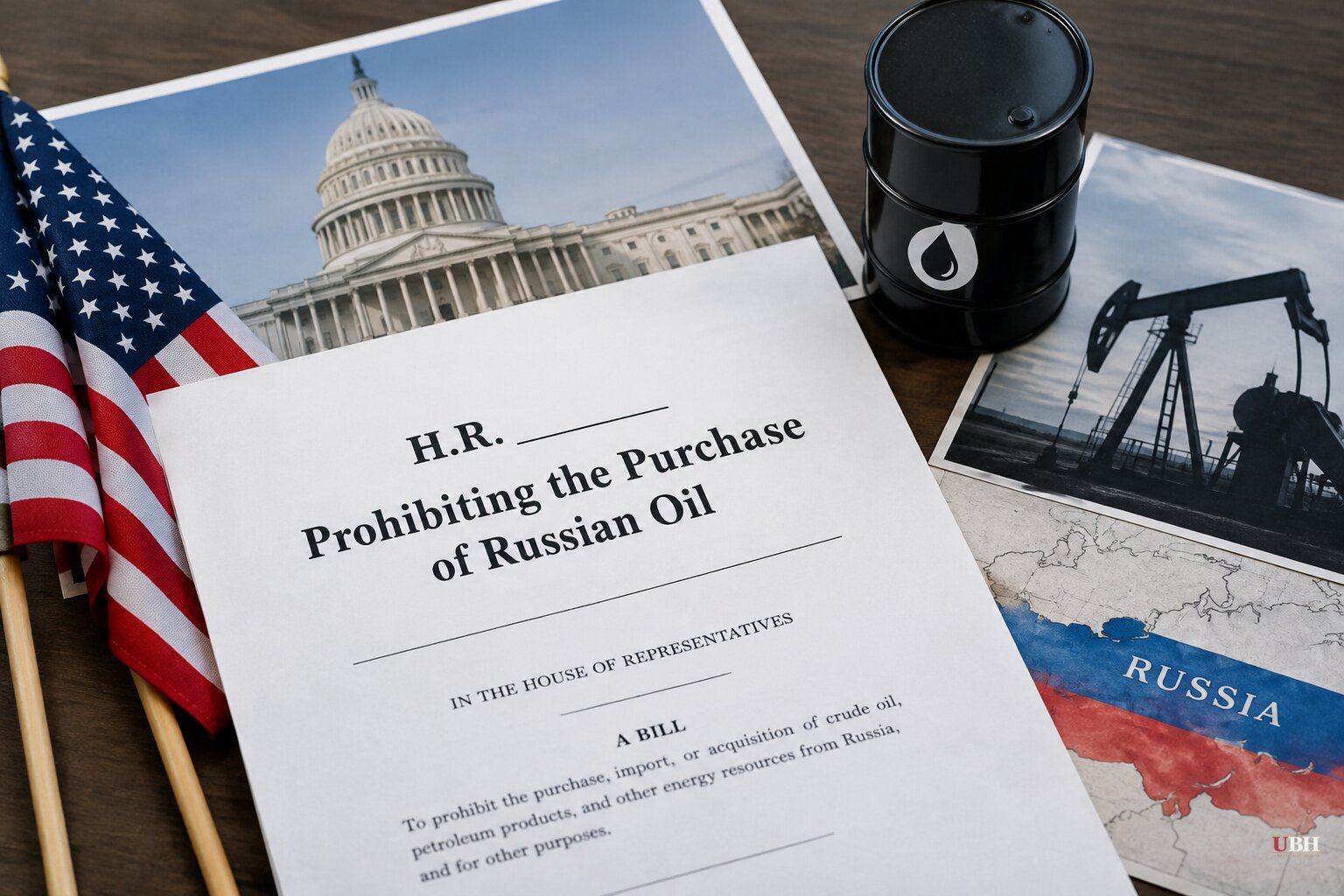
Since Trump announced a Russian diesel supply deal after his Oct. 9 call with Vladimir Putin, the argument has moved from the White House briefing room to Capitol Hill. On Saturday, Oct. 10, Rep. Brian Fitzpatrick (R-Pa.) said he would try to legislate against it.
The petition
Fitzpatrick, co-chair of the Congressional Ukraine Caucus, said he will introduce the "Ronald Reagan Peace Through Strength Act." He wrote on X that the bill would "block any and all purchases of Russian oil."
"It will be forced to the Floor via discharge and it will pass overwhelmingly," he wrote.
A discharge petition needs 218 signatures to bring a bill to the floor without committee action or leadership approval. Rep. Don Bacon (R-Neb.), who is not seeking re-election, said he is an original co-sponsor. "Congress must make a stand," Bacon wrote. No Democratic sponsor had been named as of Saturday.
The tactic has a track record. Earlier this year, Fitzpatrick and Bacon used a discharge petition to force a House vote on Ukraine aid and Russia sanctions. It passed the House and stalled in the Senate.
The clock
Time is the obstacle. The House is not scheduled to vote again until after the Nov. 3 midterms, and the current Congress ends in January. Any House-passed bill would need Senate approval and could draw a Trump veto.
An anonymous House Republican told Axios that Congress will be out for about four more weeks and that "any prudent lawmaker would probably not make a commitment to this prematurely." A House Democrat told Axios they would sign and that "most" colleagues probably would, though not all. That Democrat said leadership may not want to help Trump, and that the calculus could shift after the midterms.
What the law already says
Critics of the deal point to two statutes. Trump signed the Lindsey O. Graham Sanctioning Russia and Iran Act in September. It authorizes tariffs of up to 100 percent on major buyers of Russian energy. Former House Foreign Affairs Chairman Michael McCaul (R-Texas) said lifting pressure could "fund the Kremlin's war machine emboldening more violence and destruction." He said the law gives Trump leverage over Russia and China to help secure a negotiated end to the war.
Sen. Lisa Murkowski (R-Alaska) urged Trump to use those powers instead. "We can discuss Russia's return to global energy markets once the war is over, but in the meantime, we need to cut off everything fueling it," she wrote.
The second is the 2022 Ending Importation of Russian Oil Act, which bars Russian oil imports unless the president certifies conditions including a Russian withdrawal from Ukraine. It passed the Senate 100-0 and the House 413-9.
Sen. Jeanne Shaheen (D-N.H.), ranking member of the Senate Foreign Relations Committee, said Trump "cannot simply ignore that law to buy diesel from Putin." She said the law requires consultation with Congress and a formal review process, and that "the Administration appears to have bypassed both." Sen. Richard Blumenthal (D-Conn.), co-author of the Russia sanctions act, called the deal an "embarrassment."
The White House did not respond to Axios' request for comment on Fitzpatrick's bill. It has also not said who is paying for the diesel, when it will arrive, or whether later shipments will land before Election Day.
The White House case
Trump's stated rationale is prices. "Lower prices for Americans, especially our Great Farmers, Ranchers, and Truckers, is my Greatest Priority," he wrote. The national average for diesel was $6.23 a gallon on Friday, per AAA, after a record $6.52 on Sept. 22.
A U.S. official also told CNN that Trump had been angry about Ukrainian strikes on Russian diesel refineries before he made the deal, and that Washington repeatedly asked Kyiv to stop them without success. On Saturday, Trump said Zelensky "wants to make problems for the world." Kyiv has claimed strikes on five Russian refineries this week.
Will it move prices?
The volumes are modest. The first two tranches, more than 300,000 tons now and 500,000 tons in November, total about 6 million barrels. That is roughly a day and a half of U.S. diesel demand, according to the Energy Information Administration. Former U.S. officials told CNN it is unclear Russia has that much diesel to sell, given the strain from Ukrainian strikes. Trump himself tied later shipments to "the condition of their Diesel Refineries."
Zelensky has called the deal "an investment in a war that must be ended, not prolonged."
The open question is whether 218 House members will sign before the chamber returns in November. Even then, the Senate and the president stand between the petition and a law.
Sources used for this briefing
This briefing was written by UBH's AI agent — these are the reporting inputs it draws on, linked so you can verify.


