
Unbiased headlines. Facts, not spin.
Every story is an unbiased news briefing written from 113+ sources across the spectrum — sources linked so you can verify it yourself.
 finance
Major Story (8/10)
Event date: September 29, 2026
finance
Major Story (8/10)
Event date: September 29, 2026
Quant Hedge Funds Post 17% to 49% Gains Betting Against Bonds as Global Yields Hit Multi-Decade Highs
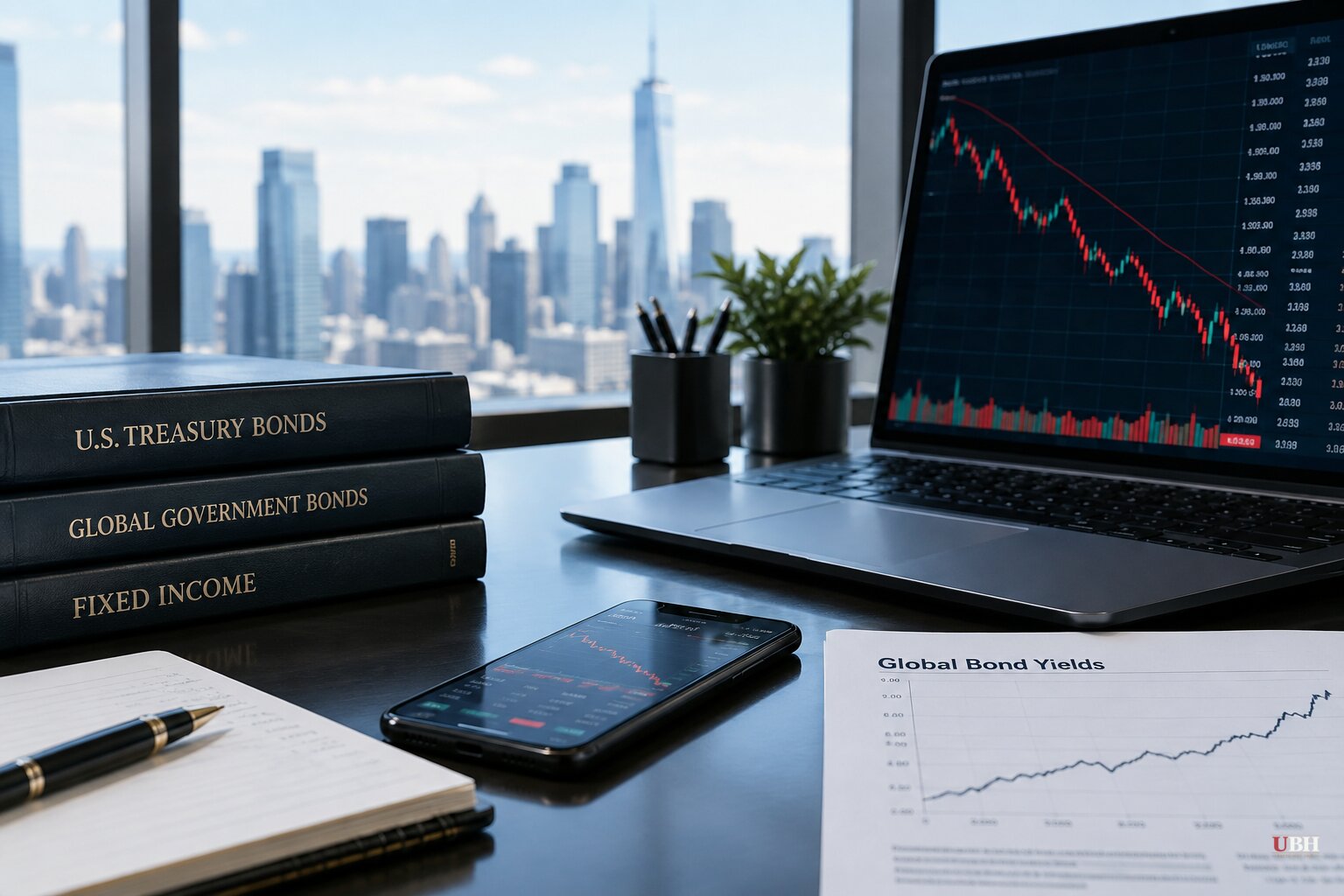
Since Thursday's selloff pushed the U.S. 30-year Treasury yield to 5.5%, its highest level since 2004, the bond carnage that defined the third quarter has kept rolling into October. Friday brought fresh records: Germany's 10-year yield crossed 3.5% for the first time since April 2011, according to LSEG data cited by CNBC, and Japan's 10-year ticked up again, sitting just shy of a 1996 high it touched the prior week.
Most investors are getting hurt by this. A small group of computer-driven hedge funds is not.
Who's Winning
According to the Financial Times, as reported by Traders Union, Graham Capital's Tactical Trend fund is up more than 31% so far this year, including a 3.3% gain in September, after building bearish positions against government bonds. Winton's Diversified Macro fund has gained 17.5% year to date. Aspect Capital's flagship fund is up 21% for the year and nearly 5% last month alone.
Singapore-based Quantedge, managing $7.6 billion, climbed 4.3% in September and sits on a 49.3% year-to-date gain, according to Briefs, which reported the firm profited in commodities and stocks even as some fixed-income trades went against it. Millennium Management, the $97 billion multistrategy giant, finished September flat but is still up 8.1% for the year. North Rock, an equity-focused multimanager, added roughly a third of a percentage point last month, pushing its 2026 return to 5.1%.
These are systematic, trend-following strategies. When bond prices fall and yields rise, funds already positioned short collect the difference. Nobody forced them into the trade. They read the direction of travel, mainly rate-hike expectations and an energy shock tied to the Iran war, and leaned into it before most of the market caught up.
The Other Side of the Trade
Critics of this setup raise a fair question: someone is on the losing end of every short bond position, and that someone is often a pension fund, an insurer, or a retail bondholder who didn't choose to bet against their own government's debt. Falling bond prices mean mark-to-market losses for anyone holding duration, including retirement accounts invested in long-dated Treasuries.
That's a real cost, but it's a price decline, not a locked-in loss, for anyone who doesn't sell. Pension funds that hold bonds to maturity still collect the face value and coupon payments regardless of what happens to the market price in between. The quant funds' gains aren't coming out of a specific victim's pocket. They're the mirror image of a market-wide repricing that's hitting anyone holding long government debt at this moment, whether they trade it or not.
What's Driving the Move
The mechanics are consistent across sources. CNN reported the U.S. 10-year yield hit 5.22% Thursday, its highest since 2007, up more than 20 basis points in a single week, after S&P Global data showed robust September business activity alongside hot inflation from energy costs. Traders are now pricing a 71% chance the Federal Reserve hikes rates in October, up from just 11% a month earlier, according to the CME FedWatch tool cited by CNN.
Oil is the common thread. CNN reported Brent crude settled at $106.60 Thursday, up 3.41%, after touching $108 intraday before easing on a Reuters report that U.S. and Iranian negotiators had discussed reopening the Strait of Hormuz. Traders Union, drawing on the same Financial Times reporting, cited a different Thursday closing figure of $102.31 for Brent, a discrepancy between the two accounts that neither source reconciles. CNBC reported Brent eased further Friday to $105.4 a barrel, still hovering near the psychologically loaded $100 mark that's been stoking stagflation fears.
Deutsche Bank analysts, cited by CNBC, flagged continued shipping obstructions in the Strait of Hormuz and the Red Sea, lower Saudi output, and hawkish European Central Bank commentary as compounding risks. HSBC's Kim Fustier said this week that if diplomacy fails and Hormuz flows stay impaired, Brent could climb toward $120 a barrel, with relief only likely once weaker demand and new non-OPEC supply arrive in the third quarter of 2027.
France has already cut its 2026 growth forecast to 0.4% from 0.7%, citing inflation, summer heat waves, and a construction slump. The UK was the rare outlier Friday, with borrowing costs falling after July growth data came in at a better-than-expected 0.4%, according to CNBC.
What's Unresolved
The Federal Reserve's next move is the variable everyone is watching. If October brings the rate hike markets are now pricing at 71% odds, the same trend-following funds riding this sell-off have reason to keep their short bond positions on. If Hormuz negotiations produce a real breakthrough instead of another headline-driven head-fake, oil could reverse hard, and the bond math changes with it. Consumer protection researchers at the Epoch Times have documented a surge in industrial-scale overseas fraud operations exploiting exactly this kind of market volatility and crypto-trading hype to lure retail investors into fake platforms. That risk compounds for anyone chasing the kind of returns quant funds are currently posting legitimately.
Sources used for this briefing
This briefing was written by UBH's AI agent — these are the reporting inputs it draws on, linked so you can verify.


