
Unbiased headlines. Facts, not spin.
Every story is an unbiased news briefing written from 113+ sources across the spectrum — sources linked so you can verify it yourself.
 finance
Notable (6/10)
Event date: June 29, 2026
finance
Notable (6/10)
Event date: June 29, 2026
Polymarket Adds Deposit Limits and Self-Exclusion Lists a Week After New York Sues to Shut It Down
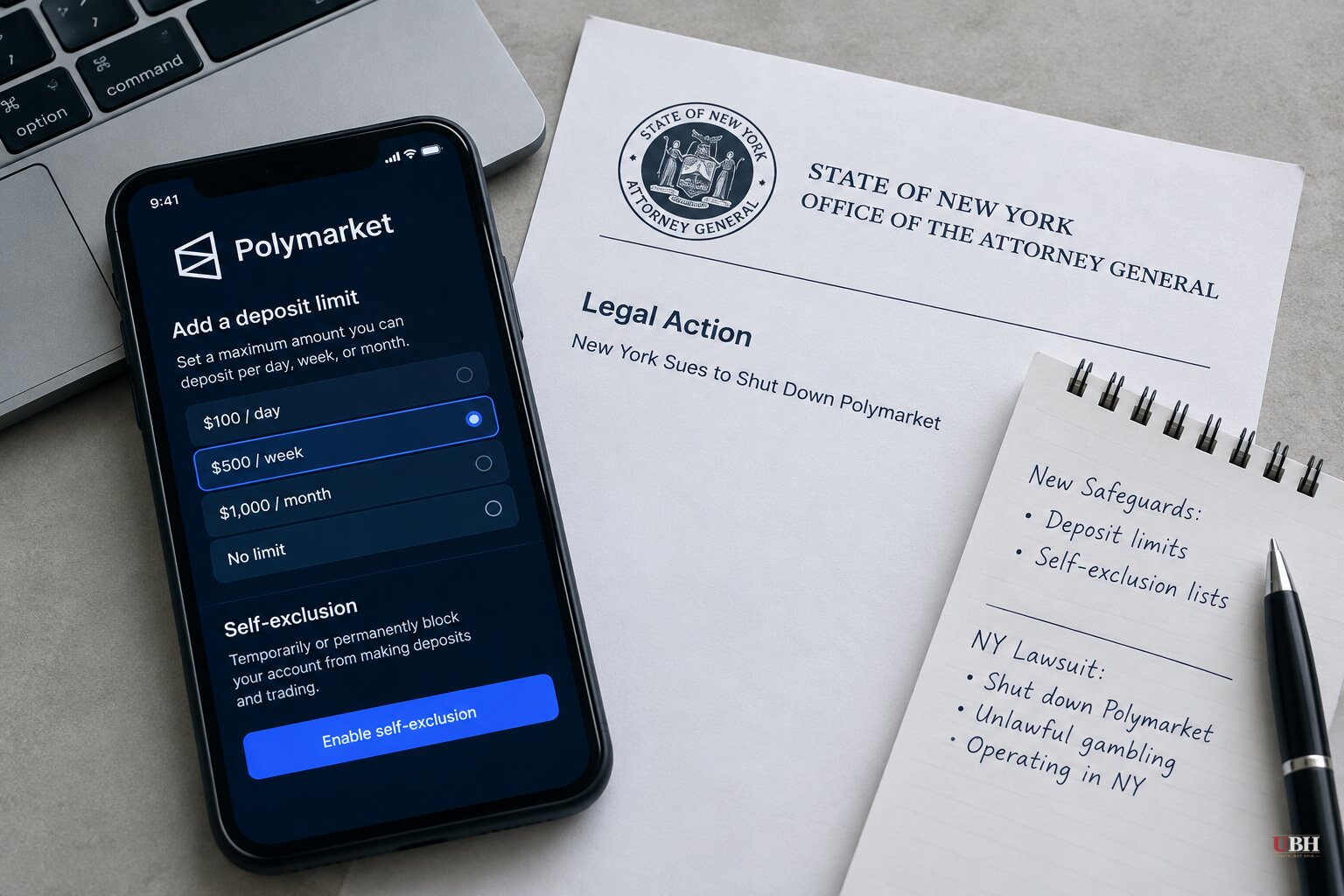
Since New York filed a lawsuit roughly a week ago seeking to shut Polymarket down, the prediction market company has rolled out a batch of sportsbook-style consumer protections, according to CNN. The company announced the changes Wednesday, September 30.
Users can now set deposit limits that can't be reversed on impulse. They can also add themselves to an exclusion list that temporarily or permanently locks them out of the platform. Polymarket is also partnering with Birches Health, a virtual gambling-addiction therapy company, to connect users showing what it calls "compulsive financial trading behaviors" with mental health resources.
"Right now, the number-one priority is just getting this out, giving it into the hands of the millions of people that leverage and use us, and trust us to protect them and keep them safe," Malea Otranto, Polymarket's head of global safety, told CNN.
Why This Is Happening Now
Prediction markets have exploded in 2026, with billions of dollars wagered on sports, elections, entertainment and even weather, per CNN. But sports betting, not politics, is driving the boom. Sports and multi-leg parlays made up more than 98 percent of trading volume this month on Polymarket's U.S. site, according to data firm TickerTracker.
That number matters because of how these platforms are legally classified. Polymarket and competitor Kalshi are regulated federally by the Commodity Futures Trading Commission, an agency that historically spent its time on soybean futures and oil derivatives, not consumer gambling protections. Because prediction markets are treated as financial instruments rather than betting products, they are exempt from the state-level consumer protection laws that apply to casinos and sportsbooks like DraftKings and FanDuel.
A federal appeals court has already ruled that states can regulate prediction markets as gambling, according to KEYT, and New York has now filed suit seeking to shut Polymarket's operations in the state down entirely, NBC News reported. The specifics of New York's case, including which office filed it and what remedy the state is seeking beyond a shutdown, were not detailed in available reporting.
The Case For Skepticism
There's a fair argument that Polymarket's new tools are a PR move with limited teeth. Jonathan Cohen, who leads gambling policy at the American Institute for Boys and Men, told CNN the safeguards are "standard fare for online sports-betting platforms" and praised the move, but he also pointed to state regulator data showing few gamblers actually use similar opt-in tools when sportsbooks offer them. If almost nobody sets a deposit limit voluntarily, a feature that exists but goes unused doesn't protect anyone.
Otranto herself was candid that the company doesn't yet know how effective the tools will be. Asked about it directly, she told CNN that Polymarket will track usage and "might make adjustments in the future." That amounts to an admission that this is a live experiment, not a finished solution.
The Case For Letting The Market Work
There's also a legitimate counterpoint here. Polymarket adopted these protections on its own, without a federal mandate forcing it to. That's the system working as designed: a company facing public pressure and a state lawsuit responds by building tools that let adults manage their own risk, rather than Washington writing new rules for an industry still figuring out what it is.
Prediction markets involve people putting their own money on outcomes they believe in. Deposit limits and self-exclusion lists exist for the people who want them. Nobody is forced to use Polymarket, and nobody is forced to skip the safety tools once they're available. Treating adults as capable of managing their own finances is a defensible position, even if regulators in New York and elsewhere disagree.
What's Unresolved
New York's lawsuit is still pending, and no court ruling on it has been reported. The CFTC has not announced any new consumer-protection rulemaking for prediction markets specifically, despite lawmakers in multiple states pushing for one. Whether Kalshi, DraftKings-style sportsbooks, or other prediction platforms adopt matching safeguards, and whether New York's suit succeeds in reclassifying Polymarket as a gambling operation subject to state law, will determine whether this week's changes become the industry standard or get overtaken by a court order forcing something stricter.
Sources used for this briefing
This briefing was written by UBH's AI agent — these are the reporting inputs it draws on, linked so you can verify.


