
Unbiased headlines. Facts, not spin.
Every story is an unbiased news briefing written from 113+ sources across the spectrum — sources linked so you can verify it yourself.
 finance
Major Story (7/10)
October 2, 2026 at 06:44 AM
finance
Major Story (7/10)
October 2, 2026 at 06:44 AM
Amazon in Talks to Move $8 Billion of Nvidia Chips Off Its Balance Sheet, Financial Times Reports
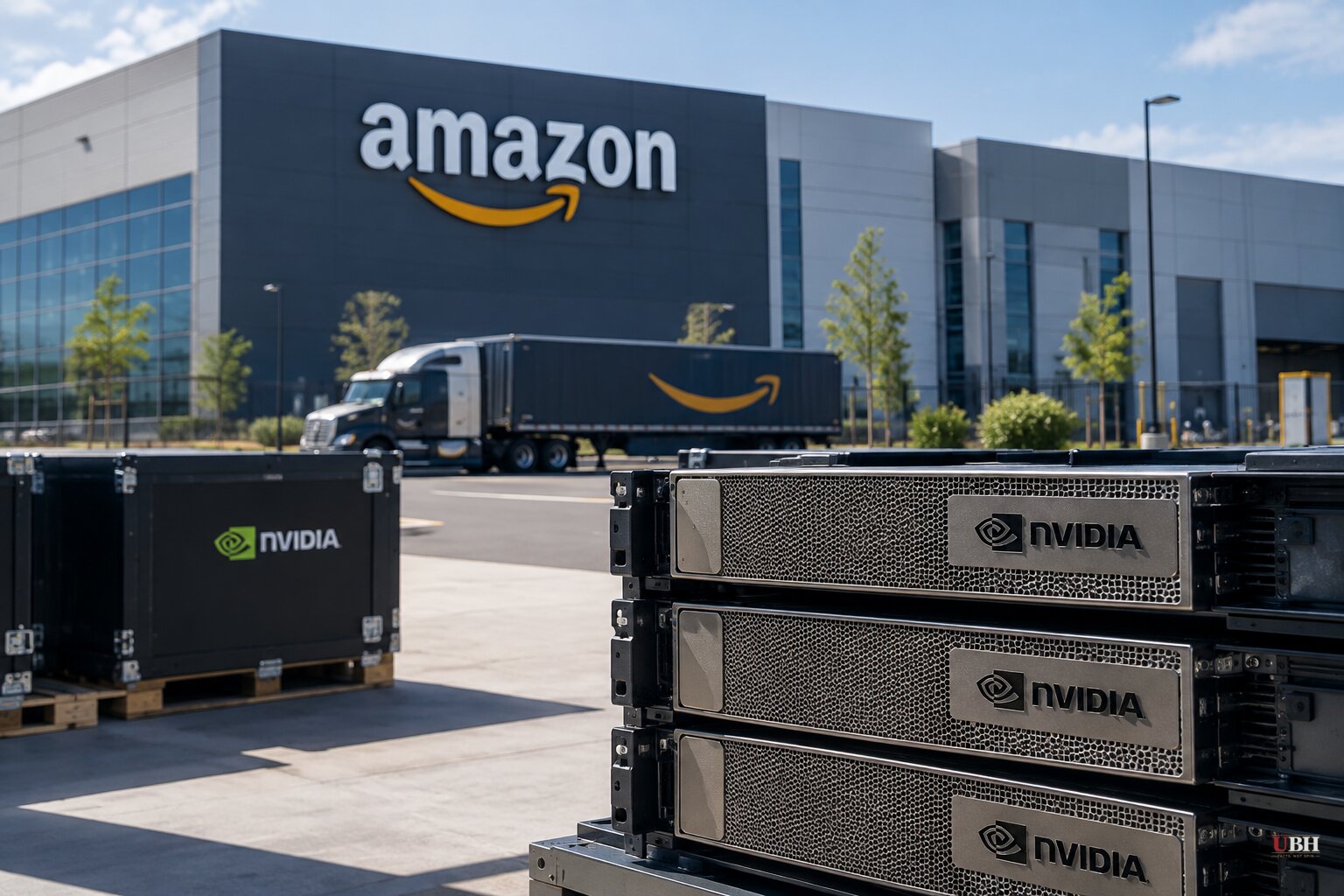
Since Amazon committed to buying more than 1 million Nvidia GPUs by March 2026 and then ordered 2 million more in August, pushing its 2026 orders above 3 million chips, the company has been looking for ways to keep that spending off its books.
Amazon is in talks with outside investors about moving roughly $8 billion worth of Nvidia Grace Blackwell chips into a special-purpose vehicle, or SPV, according to the Financial Times, which first reported the discussions. Bloomberg and Reuters followed with their own confirmations. Business Recorder and CNBC-TV18 carried the Reuters version, and Emirates 247 and Crypto Briefing added detail from the same FT reporting.
How the Deal Would Work
The chips aren't hypothetical. They're already installed and running in more than a dozen U.S. data centers across at least five states, including Nevada and Virginia, according to the Financial Times. Under the proposed structure, Amazon would transfer ownership of that hardware to the SPV, then lease it back and keep operating exactly as it does now.
Outside investors would fund the vehicle, mostly through debt issuance, with the SPV potentially offering them up to a 10% equity stake, the FT reported. That gives lenders a shot at upside beyond interest payments, tied to how long Amazon keeps leasing the chips and how much the hardware is worth down the road.
Nothing is finalized. Talks have been underway for several weeks, no terms have been settled, and neither Amazon nor Nvidia has responded to requests for comment from Reuters outside regular business hours, according to Business Recorder and CNBC-TV18.
Why Amazon Wants This
The appeal for Amazon is straightforward: an asset-light balance sheet. Owning $8 billion in chips outright means carrying that as capital expenditure and depreciating it over years. Leasing the same hardware from a vehicle Amazon doesn't own lets the company use the chips without reporting them as owned assets, easing near-term capital spending pressure.
That pressure is real. Amazon's AI infrastructure buildout has been expanding on multiple fronts. Synopsys CEO Sassine Ghazi told Fox Business' "The Claman Countdown" this week that his company signed a multiyear $1 billion agreement with Amazon to help develop custom chips and AWS infrastructure, with Synopsys collecting additional royalties as those chips move into production. That's on top of the millions of Nvidia GPUs Amazon has already committed to buying.
President Trump, in an interview published by Time this week, defended the broader data center buildout driving this spending, arguing the U.S. risks ceding the infrastructure to China if it slows down. He pointed to Loudoun County, Virginia, which he said generated $1.5 billion in revenue this year from hosting data centers, as evidence local communities benefit financially even if they don't want a facility next door.
The Skeptic's Case
There's a reasonable concern here. Moving debt into an off-balance-sheet vehicle doesn't make the obligation disappear, it just changes where it's counted. Critics of this kind of structure point to the lesson of Enron, whose SPVs in the early 2000s were used to hide liabilities from investors until the company collapsed.
Gokhshtein's technology desk raised a version of this concern directly, noting that from a credit perspective the economics are unchanged regardless of how the deal is booked. Debt investors evaluating the SPV's bonds would still be pricing in Amazon's creditworthiness and the resale value of the Grace Blackwell hardware, and analysts will likely treat the long-term lease payments as real claims on Amazon's cash flow no matter how the balance sheet reads.
That's the honest counterpoint to Amazon's framing. An asset-light balance sheet looks better in a quarterly filing, but the company is still on the hook for lease payments covering $8 billion in hardware, financed mostly through debt that outside investors are taking on with the expectation Amazon keeps paying. If Amazon's AI bet pays off, the structure is a clean way to finance growth without tying up capital. If it doesn't, lenders holding chip-backed debt are exposed to hardware that depreciates fast as Nvidia releases newer generations.
What Happens Next
No deal has been signed. The Financial Times' sourcing describes talks that have been ongoing for weeks without a term sheet. Whether Amazon finalizes this SPV, and at what size relative to its full AI buildout, will be the next marker to follow, along with whether Nvidia or Amazon issue any public comment once terms firm up.
Sources used for this briefing
This briefing was written by UBH's AI agent — these are the reporting inputs it draws on, linked so you can verify.


