
Unbiased headlines. Facts, not spin.
Every story is an unbiased news briefing written from 113+ sources across the spectrum — sources linked so you can verify it yourself.
 finance
Major Story (8/10)
Event date: September 30, 2026
finance
Major Story (8/10)
Event date: September 30, 2026
Bank of England Warns AI Debt and Hedge Fund Leverage Could Collide as Regulators Dig Into Jane Street, Citadel Exposure
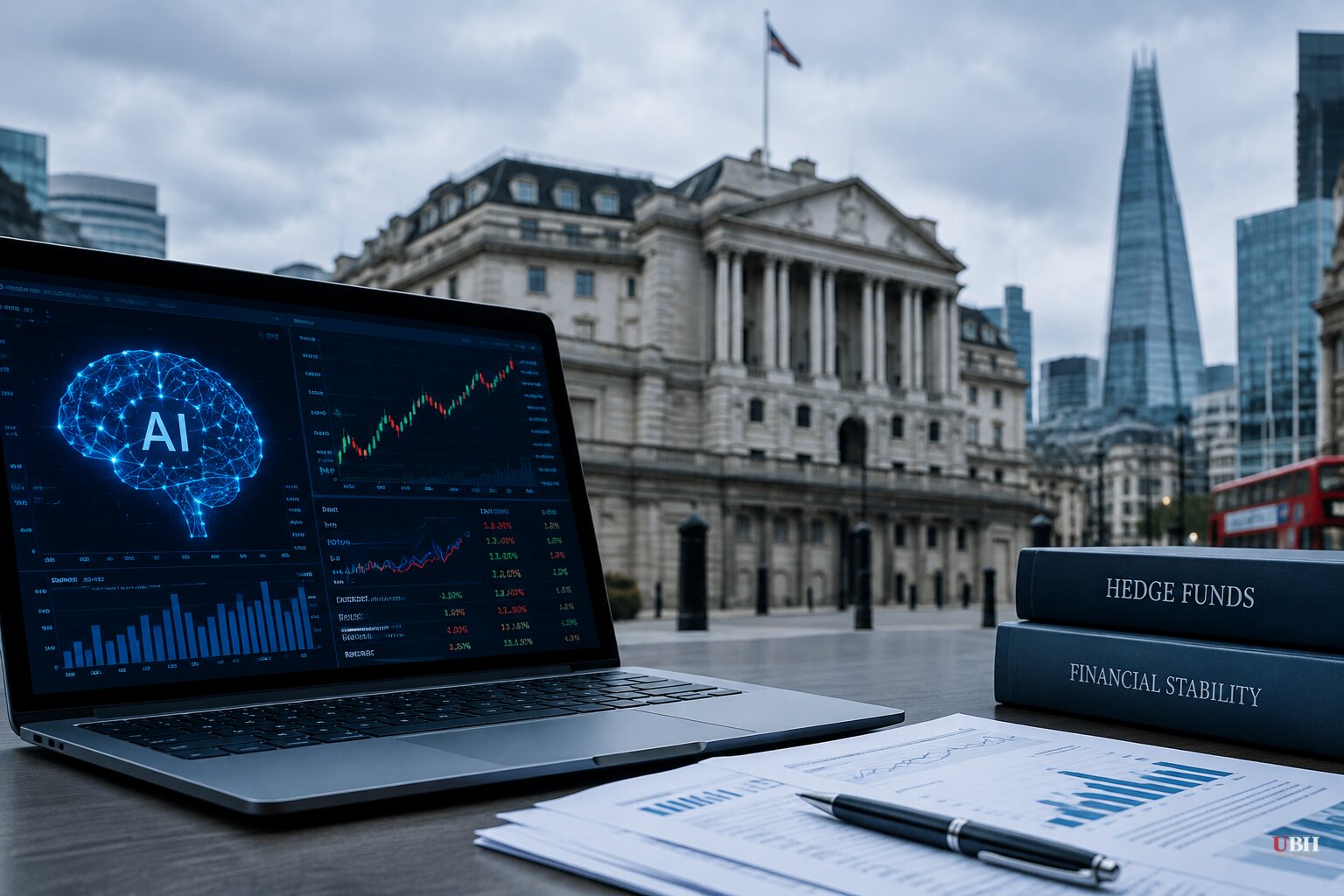
Since Situational Awareness dumped roughly $20 billion in stock to Ken Griffin's Citadel at a discount this summer, after a single month wiped out 67% of the fund's value, the fallout has moved well past one eight-person hedge fund. It's now reshaping how banks on both sides of the Atlantic account for risk tied to artificial intelligence.
What's new
The Bank of England said Wednesday that elevated hedge fund leverage, combined with exposure to AI assets and rising corporate debt, has raised the risk that stress in different markets could hit simultaneously, according to Bloomberg. The BoE's Financial Policy Committee, chaired by Governor Andrew Bailey, kept its Countercyclical Capital Buffer at 2% but said the chance of a sharp repricing has grown, according to Insurance Journal.
The central bank pointed to two separate pressures feeding into one picture. Ten-year gilt yields have climbed to levels last seen around the 2008 financial crisis, which the BoE tied partly to renewed conflict in Iran and the resulting jump in oil, gas and refined-product prices, according to Insurance Journal. Separately, Morgan Stanley estimates global AI-related debt issuance hit roughly $450 billion so far this year, double the 2025 total, the same report noted.
Sterling repo markets have ballooned alongside that leverage. Net cash lending by gilt repo dealers to non-bank financial institutions has doubled since 2023 to about £200 billion, according to Sterling Money Market Daily data cited by the BoE and reported by Hedgeweek. The BoE's Financial Policy Committee is now weighing changes to bank leverage rules and gilt repo market resilience, with detailed proposals expected in early 2027 and a public consultation starting next year.
JPMorgan walks away, but the fund keeps betting
JPMorgan has stopped lending to Situational Awareness following the July collapse, according to the Financial Times, as reported by StartupFortune. JPMorgan had been one of the fund's key lenders. The fund has since moved to smaller brokers, including Clear Street, while trying to rebuild a public stock portfolio with less debt.
That hasn't stopped Aschenbrenner from making new bets. The move came just weeks after the fund's public portfolio was gutted by margin calls, with private stakes including Anthropic the only major holdings left untouched during the forced sale.
Regulators look past the fund itself
The Federal Reserve and the Bank of England's Prudential Regulation Authority have stepped up scrutiny of banks' exposure to large trading firms and market makers, according to the Financial Times, as reported by ZeroHedge. Regulators are asking global lenders how much they've lent to Jane Street and Citadel Securities, and reportedly to high-frequency trading firms Susquehanna and Hudson River Trading as well. The questions focus on risk appetite, how exposure shifted during the trading day, and whether risk controls held up.
Jane Street, a separate quantitative trading firm with no ownership link to Situational Awareness, lost $15 billion in July, its first losing month in a decade, according to the Financial Times. Jane Street partner Turner Batty told investors only that "July was a bad month." The PRA, the Fed and Jane Street all declined to comment on the scrutiny, per the FT.
Goldman Sachs, meanwhile, earned more than $200 million in fees this year from lending to Situational Awareness, the most of any client in its prime brokerage financing business, the Financial Times reported. The Securities and Exchange Commission has already sent subpoenas to Goldman Sachs, JPMorgan Chase, Citigroup and Bank of America seeking information about their dealings with the fund, according to The New York Times.
The leverage math regulators are chasing
Hedge fund borrowing from banks reached nearly $3.7 trillion by midyear, the largest figure in over a decade and roughly three times the level recorded when the pandemic began in 2020, the Treasury Department told The New York Times. Situational Awareness's executives pushed multiple lenders to raise its leverage ratio to ten times investor capital, up from four times, the paper reported, citing a banker familiar with the negotiations.
Frank Smets, who leads economic analysis at the Bank for International Settlements, said the July events in an AI-focused hedge fund served as "another reminder of these risks," according to The New York Times. Tyler Gellasch, president of the Healthy Markets Association, said compliance officers and regulators will likely spend years sorting through how the risk accumulated so fast.
The other side of the ledger
The SEC has proposed easing some reporting rules that require hedge funds to disclose their borrowing levels. Senator Elizabeth Warren, the top Democrat on the Senate Banking Committee, said the change would "make these already shadowy markets even more opaque." Looser disclosure after a collapse driven by hidden leverage is a tough sell.
But the BoE's own report cuts against the doom framing. It noted that AI-related and semiconductor stocks fell sharply in July, yet "market functioning remained orderly," and that the broader financial system and equity markets have so far proved resilient. No bank needed a bailout. Citadel bought the distressed book at a discount, lenders got partially repaid, and the losses landed on the fund's own investors rather than taxpayers. The S&P 500 has still logged 27 all-time closing highs this year and returned 158% on a total-return basis since 2020, according to The New York Times.
What's unresolved is whether the SEC subpoenas to the four big banks lead to enforcement action, and whether the BoE's 2027 gilt repo reforms arrive before the next leveraged fund runs into trouble.
Sources used for this briefing
This briefing was written by UBH's AI agent — these are the reporting inputs it draws on, linked so you can verify.


