
Unbiased headlines. Facts, not spin.
Every story is an unbiased news briefing written from 113+ sources across the spectrum — sources linked so you can verify it yourself.
 finance
Notable (6/10)
Event date: September 22, 2026
finance
Notable (6/10)
Event date: September 22, 2026
Fed Policymakers Split Three Ways on AI and Inflation as RBI Finalizes $143.6 Billion Dollar Haul
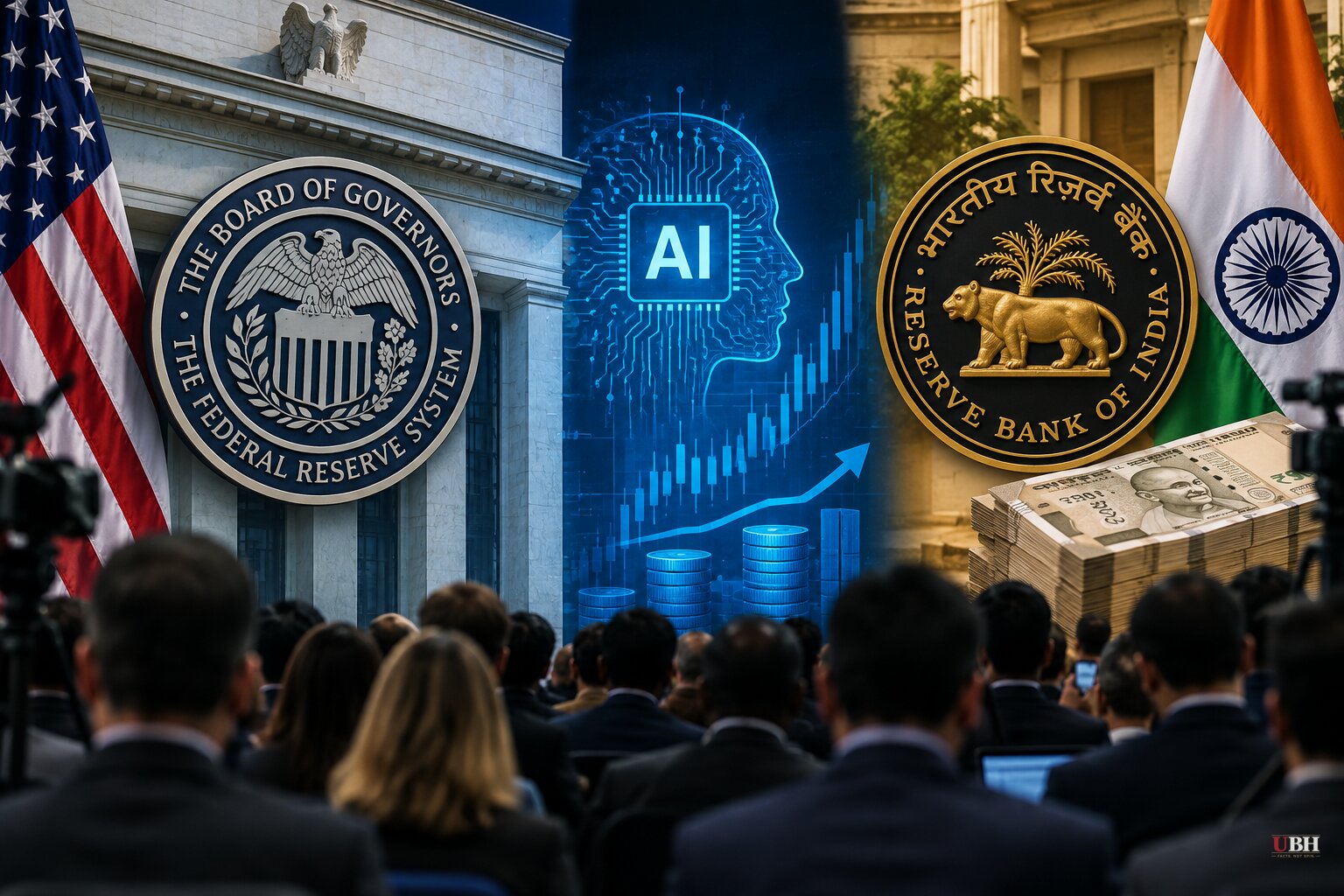
Since Federal Reserve Chairman Kevin Warsh pushed through the first rate hike in three years on September 16, the committee he runs hasn't settled on a single story about what's actually driving the economy. Three Fed officials have now laid out three different views on the AI investment boom, and whether it's a growth engine or an inflation risk.
Warsh, Waller, and Cook Don't Agree
Governor Christopher Waller made his position plain at a Reuters event on September 3. Asked whether AI's concentration in a capital-intensive, low-labor sector means it's artificially propping up GDP, Waller said flatly: "I don't agree." He called AI investment "a legitimate part of GDP today" and predicted it will become as embedded in daily life as the internet once the buildout matures, according to Breitbart's account of his remarks.
Warsh himself voted for the September hike, citing persistent inflation. But he doesn't think AI spending is the culprit. In comments reported by Breitbart, Warsh said wage growth, once adjusted for productivity, is "broadly consistent" with inflation continuing to fall toward the Fed's 2% target. He flagged other risks instead: energy prices that remain well above where they started 2026, tech-goods price pressure tied to the AI buildout itself, and the possibility of further tariff increases. At Jackson Hole in August, Warsh estimated more than half of this year's capital-expenditure growth traces back to AI, calling business investment the "seed corn" of future growth.
Governor Lisa Cook struck a different tone in a speech delivered Monday. Rather than leaning into AI's upside, Cook emphasized the inflationary pressure that could show up before any productivity payoff materializes, Breitbart reported. Cook's emphasis differs from Waller's or Warsh's and signals the committee doesn't have a unified theory of how to treat the AI buildout heading into its next policy decisions.
Fox News correspondent coverage of the September 16 hike itself, built around economist Mohamed El-Erian's analysis for "America Reports," framed the decision mainly as a political collision: Warsh raising rates over President Trump's objections. That framing captures the politics but doesn't capture the substantive disagreement now playing out among Fed governors over AI's actual economic effect.
Not everyone thinks the Fed went far enough. Jeffrey Tucker, writing in the Epoch Times, argued the Warsh Fed's hike is "not nearly enough" given the current rate of inflation, and that real interest rates remain negative in practical terms. Tucker's broader argument, rooted in Austrian economics and skepticism of the fiat dollar system established after Nixon ended the gold standard in 1971, is a minority position among mainstream economists. His underlying data point, that households are piling on credit card debt because take-home dollars don't stretch as far, reflects a real and widely reported affordability squeeze.
India's RBI Closes Its Books on $133 Billion
While the Fed argues internally, India's Reserve Bank has wrapped up a different kind of monetary intervention. The RBI's special FCNR-B foreign currency deposit scheme, launched June 8, 2026, brought in $133 billion by its August 31 closing date, according to the RBI's revised figures reported by both PTI and TradingView. That's up from the $127.226 billion provisional tally released September 2. The response from the Indian diaspora was strong enough that the RBI closed the window a full month ahead of its original September 30 deadline.
Counting two companion facilities, Overseas Foreign Currency Borrowings and External Commercial Borrowings, both of which stay open until December 31, 2026, total inflows reached $143.596 billion as of September 18. That broke down to $132.980 billion in FCNR-B deposits, $5.320 billion in OFCBs, and $5.296 billion in ECBs.
RBI Deputy Governor Rohit Jain, speaking at the 13th SBI Banking & Economics Conclave, said banks will now deploy that liquidity over the coming months to meet festival season credit demand, according to Rediff. Jain said lending decisions will stay anchored to each bank's own credit standards and balance sheet position, not the sheer availability of cash. He flagged one real concern: smaller banks that pulled in more FCNR-B deposits than they can easily deploy through a wholesale book risk overreaching on credit quality. Most banks, Jain said, are first using the funds to replace higher-cost deposits, a shift already visible in falling certificate-of-deposit volumes and softening CD rates.
The inflow surge also pushed India's forex reserves to roughly $780 billion as of September 11, down slightly from a record $785.7 billion the week before, Jain said. That makes India the world's fifth-largest holder of foreign exchange reserves. Jain was careful to note the money is borrowed, not free capital: the RBI's reserve management priorities, in order, are safety, liquidity, and only then return.
The open question on both sides of the world is the same. The Fed has to decide at its next meetings whether Cook's inflation caution or Waller and Warsh's growth optimism wins out on actual rate policy. The RBI has to watch whether smaller banks' festival-season lending push, fueled by that $143.6 billion cushion, stays within the credit standards Jain says he's not worried about yet.
Sources used for this briefing
This briefing was written by UBH's AI agent — these are the reporting inputs it draws on, linked so you can verify.


