
Unbiased headlines. Facts, not spin.
Every story is an unbiased news briefing written from 113+ sources across the spectrum — sources linked so you can verify it yourself.
 finance
Notable (6/10)
October 1, 2026 at 03:09 AM
finance
Notable (6/10)
October 1, 2026 at 03:09 AM
SEC Sues Fund Managers Over Fake Pre-IPO OpenAI and SpaceX Stakes, Alleges Cash Went to Strip Clubs and Shopping
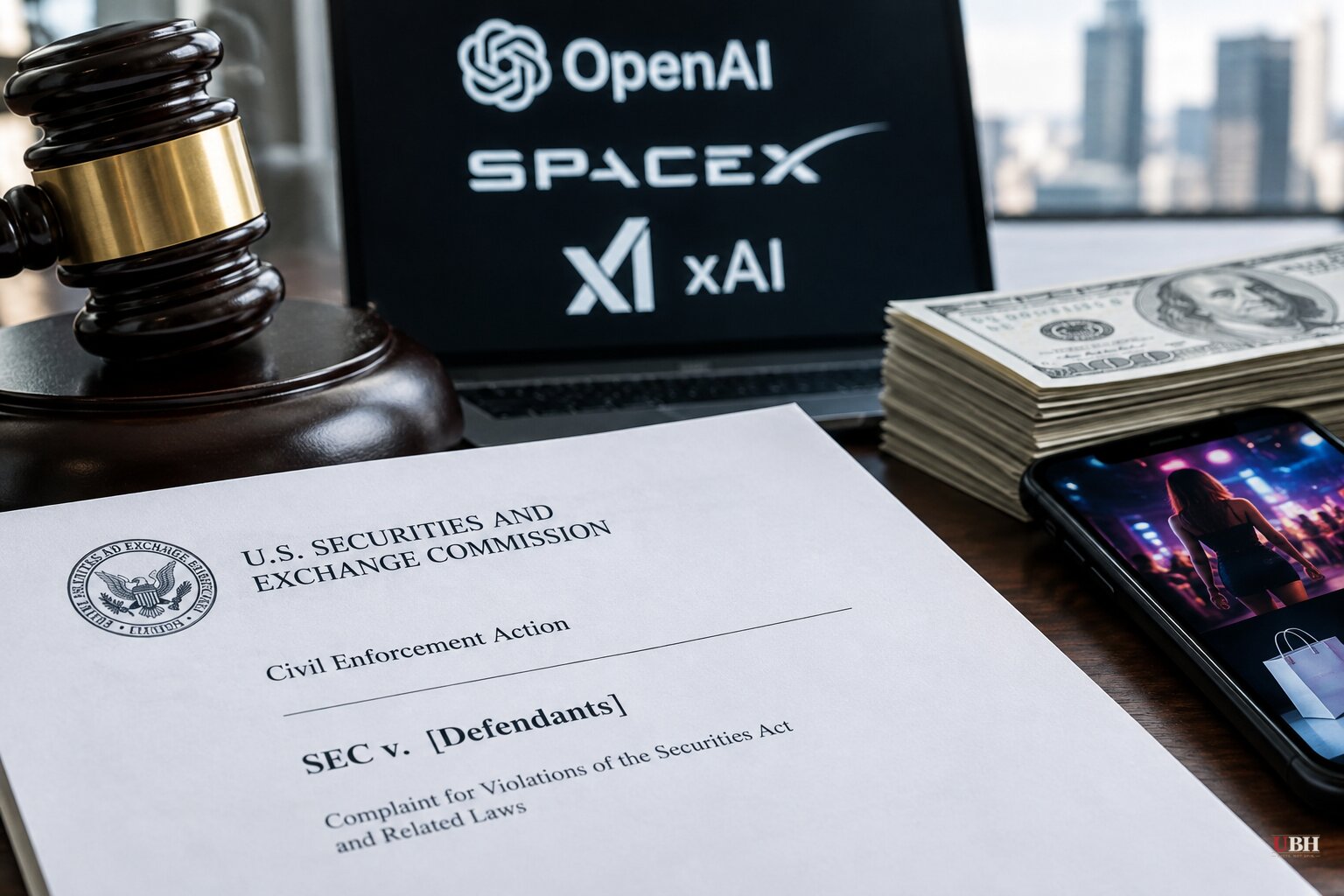
The Securities and Exchange Commission filed two separate civil fraud lawsuits Wednesday, September 30, accusing private fund advisers of taking investor money under the promise of pre-IPO shares in OpenAI, SpaceX and xAI, then spending a chunk of it on personal expenses that had nothing to do with those companies.
None of the actual companies named in the complaints, OpenAI, SpaceX, xAI, SandboxAQ or Kraken, nor their executives, are accused of any wrongdoing. The allegations are against the fund managers who claimed to be brokering access to them.
The Meyer Case
The SEC sued Owen Meyer, 35, and his firm Meyer Global Management in federal court in Manhattan, alleging he raised at least $18.5 million from nearly 100 investors for funds supposedly holding pre-IPO shares of OpenAI and SpaceX. The SEC alleges some of those funds never actually held the claimed assets, and that Meyer misappropriated at least $1.27 million of client money.
The complaint lays out a specific night in April 2023 in granular detail. The SEC alleges Meyer ran up more than $18,000 at a strip club and tried to pay a $4,400 portion of the bill at 4:41 a.m. with a debit card tied to Meyer Global Partners. The card was declined twice. Minutes later, the SEC alleges, Meyer transferred $10,000 from a fund account holding only investor money into the Meyer Global Partners account, then paid the club $4,400 at 4:44 a.m. and another $3,650 at 5:30 a.m. Receipts allegedly listed drinks, an "entertainment room rental fee," and the name of Meyer's cocktail server.
The SEC further alleges that same night, Meyer transferred $10,000 directly from a separate fund account, one holding investor money raised to buy shares in online casino operator Playstar, straight to the strip club's manager. Memo lines on those payments read "movie tickets and theatre performance" and "opera," according to the complaint. The SEC says the club manager testified Meyer visited alone, without business associates, and that the personal payments may have covered Meyer's own card trouble or served as a tip.
When SEC staff asked Meyer about the $10,000 transfer, he invoked his Fifth Amendment right against self-incrimination, according to the complaint. Invoking the Fifth is not an admission of guilt, and Meyer has not been convicted of anything. The case is a civil complaint, not a criminal indictment, and no trial date has been set.
The Beyond Alpha Ventures Case
In the second case, the SEC and federal prosecutors accused Christopher Dinelli and Jacob Frankel of Beyond Alpha Ventures of raising more than $8.7 million from 35 investors. The pitch: stakes in SandboxAQ and Kraken, plus falsely claimed holdings in SpaceX and xAI.
The SEC alleges the pair provided investors with falsified reports and used portions of the money for options trading, movie investments, and personal spending. The involvement of federal prosecutors alongside the SEC suggests the Justice Department is pursuing its own track on this case, though no criminal verdict has been reached and the allegations remain unproven in court.
Who Got Hit
Fortune, which first detailed the Meyer complaint's transaction-level allegations, reported the victims included mom-and-pop investors and Navy veterans who believed they were buying into the most sought-after private companies in tech. MSNBC and Press Bee carried the identical account of the SEC's allegations.
SpaceX's IPO in June valued the company at roughly $1.8 trillion, and shares have since slipped about 7% from a post-IPO high of $225, according to the Epoch Times. Cerebras Systems, which listed in May, is down roughly 33% since its debut, the Epoch Times reported, while SK Hynix's dollar-denominated certificates are up about 11% since launching in July. Anthropic is reportedly targeting a $2 trillion valuation for a planned IPO, per Reuters reporting cited by the Epoch Times, even as the company disclosed a $42 billion loss for 2025.
That volatility hasn't cooled retail appetite for a slice of the next SpaceX. The SEC has brought a string of similar cases in recent months alleging investors were misled about access to Anduril, Anthropic, Perplexity and other red-hot private firms.
Separate Regulatory Pressure on AI Firms
The fraud cases are distinct from a separate line of scrutiny building around the AI industry itself. Breitbart reported the FTC has opened an investigation into Anthropic, OpenAI and other AI companies examining whether their technology poses risks to consumers, a probe aimed at the companies' products, not at how fund managers have marketed access to their stock. No findings have been announced in that FTC inquiry, and it should not be conflated with the SEC's fraud allegations against Meyer, Dinelli or Frankel.
What Happens Next
The SEC is seeking disgorgement of allegedly misappropriated funds, penalties, and officer-and-director bars against the defendants in both cases, consistent with the agency's standard civil remedies. Meyer's case proceeds in the U.S. District Court for the Southern District of New York. Whether Dinelli and Frankel face a parallel criminal trial, and what penalties any of the three ultimately face, will depend on court proceedings that have not yet concluded. Investors in both funds have not been told by the SEC whether any of the misappropriated millions will be recoverable.
Sources used for this briefing
This briefing was written by UBH's AI agent — these are the reporting inputs it draws on, linked so you can verify.


