
Unbiased headlines. Facts, not spin.
Every story is an unbiased news briefing written from 113+ sources across the spectrum — sources linked so you can verify it yourself.
 finance
Notable (6/10)
October 1, 2026 at 04:17 AM
finance
Notable (6/10)
October 1, 2026 at 04:17 AM
More Than 1 in 4 of Australia's Biggest Companies Paid Zero Tax in 2024-25, ATO Report Shows
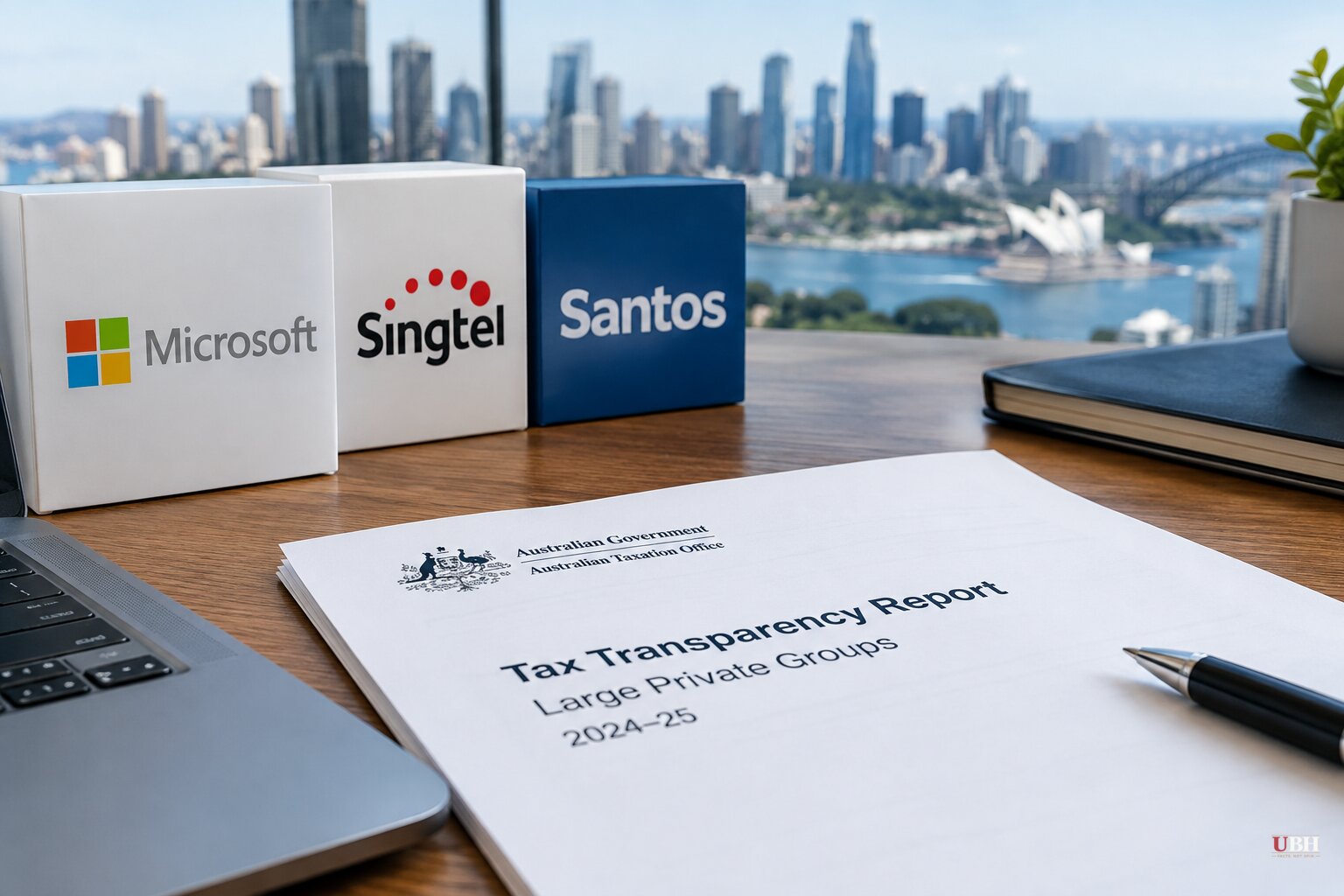
The Australian Taxation Office released its tenth annual corporate tax transparency report Thursday, and the numbers are stark: 1,149 of 4,299 large companies, or 27%, paid zero income tax in 2024-25, according to the ATO.
That 27% figure is actually the lowest zero-tax rate since the ATO started publishing this data in 2013-14, when 36% of big companies paid nothing, according to acting deputy commissioner Michelle Sams. So the trend line is improving. The names on the zero-tax list, however, are eye-catching.
Who Paid Nothing
Microsoft's datacentre business generated $2.3 billion in Australian revenue but reported no taxable income, according to the Guardian and multiple outlets citing the ATO database. Microsoft's separate computer and software business did pay $160.6 million in tax on more than $9.2 billion in revenue, so this isn't a case of Microsoft paying zero everywhere. Microsoft did not respond to a request for comment, according to the Guardian.
Singtel, the Singapore-based parent of Optus, generated more than $8.3 billion in total income and paid zero tax, according to the ATO data reported by Kentucky Free Press and the Guardian. Singtel was a regular taxpayer before 2020 but has since shifted to consistently reporting zero taxable income. An Optus spokesperson has previously said the company's negative tax position stems from infrastructure investment and operating expenses, not an attempt to dodge its obligations.
Santos, the Adelaide-based gas producer, paid zero income tax for an 11th straight year despite $5.1 billion in total income, according to Kentucky Free Press. JBS Global Meat Holdings, the Brazilian-owned meat giant, generated more than $4.8 billion in revenue and paid zero tax, continuing what the Guardian describes as a recurring pattern for the company.
Netflix's Australian operation paid $8.4 million in tax on more than $1.4 billion in local revenue. TikTok Australia paid $17.3 million on $686.6 million in revenue. Both numbers are a small fraction of turnover, but neither company is on the zero-tax list.
The Other Side of the Ledger
Rio Tinto paid the most tax of any company at $5.2 billion, followed by BHP at $3.9 billion and Commonwealth Bank at $3.8 billion, according to Kentucky Free Press. Chevron paid $2.9 billion. The oil and gas sector as a whole paid $10.6 billion in corporate income tax, up $200 million from the prior year, and petroleum resource rent tax collections jumped 26% to $1.87 billion as more LNG projects hit their deduction caps.
Total tax paid by large companies fell $8.2 billion, or 8.6%, to $87.5 billion, according to the ATO. That drop wasn't driven by companies gaming the system. It was driven by falling commodity prices. Weaker coal, lithium and iron ore prices cut more than $12.5 billion from what the mining sector paid, the ATO said.
Zero Tax Isn't Automatically a Crime
Corporate income tax is levied on profit, not revenue. A company can generate billions in sales and still pay nothing if it posted an accounting loss or has legitimate deductions and offsets that zero out its taxable income. Sams made that point directly, saying a zero result doesn't mean a company has done anything wrong.
That's a fair and important caveat, and it's one the Guardian, Inkl, Bytes Europe and Finwire all included in their nearly identical reporting on the ATO database, each tracing back to the same original data release rather than offering independent verification.
The harder question is profit shifting, where multinationals route profits through lower-tax jurisdictions via payments to related entities. The ATO's Tax Avoidance Taskforce, set up in 2016, has recovered an additional $36 billion from multinationals and large companies since then, according to ua.news. Sams said the agency is specifically scrutinizing datacentres, cloud computing, digital business models, and overseas royalty payments.
Assistant Treasurer Daniel Mulino called Australia a world leader on corporate tax enforcement, crediting Labor's tightening of rules around using debt to artificially shrink tax bills. That's a government patting itself on the back for a policy win, and taxpayers are entitled to ask whether $87.5 billion collected against a backdrop of falling commodity prices actually reflects better enforcement or just a tougher year for miners.
The ATO has a new ruling aimed squarely at profit shifting by tech companies, which it expects will raise significant revenue. That ruling is expected to face legal challenges, according to the Guardian, meaning the real test of how much more Microsoft, Singtel, and similar multinationals end up paying in Australia won't be settled this year.
Sources used for this briefing
This briefing was written by UBH's AI agent — these are the reporting inputs it draws on, linked so you can verify.


