
Unbiased headlines. Facts, not spin.
Every story is an unbiased news briefing written from 113+ sources across the spectrum — sources linked so you can verify it yourself.
 finance
Major Story (7/10)
October 1, 2026 at 08:17 AM
finance
Major Story (7/10)
October 1, 2026 at 08:17 AM
European Payment Firms Launch Madrid-Based Venture to Challenge Visa and Mastercard
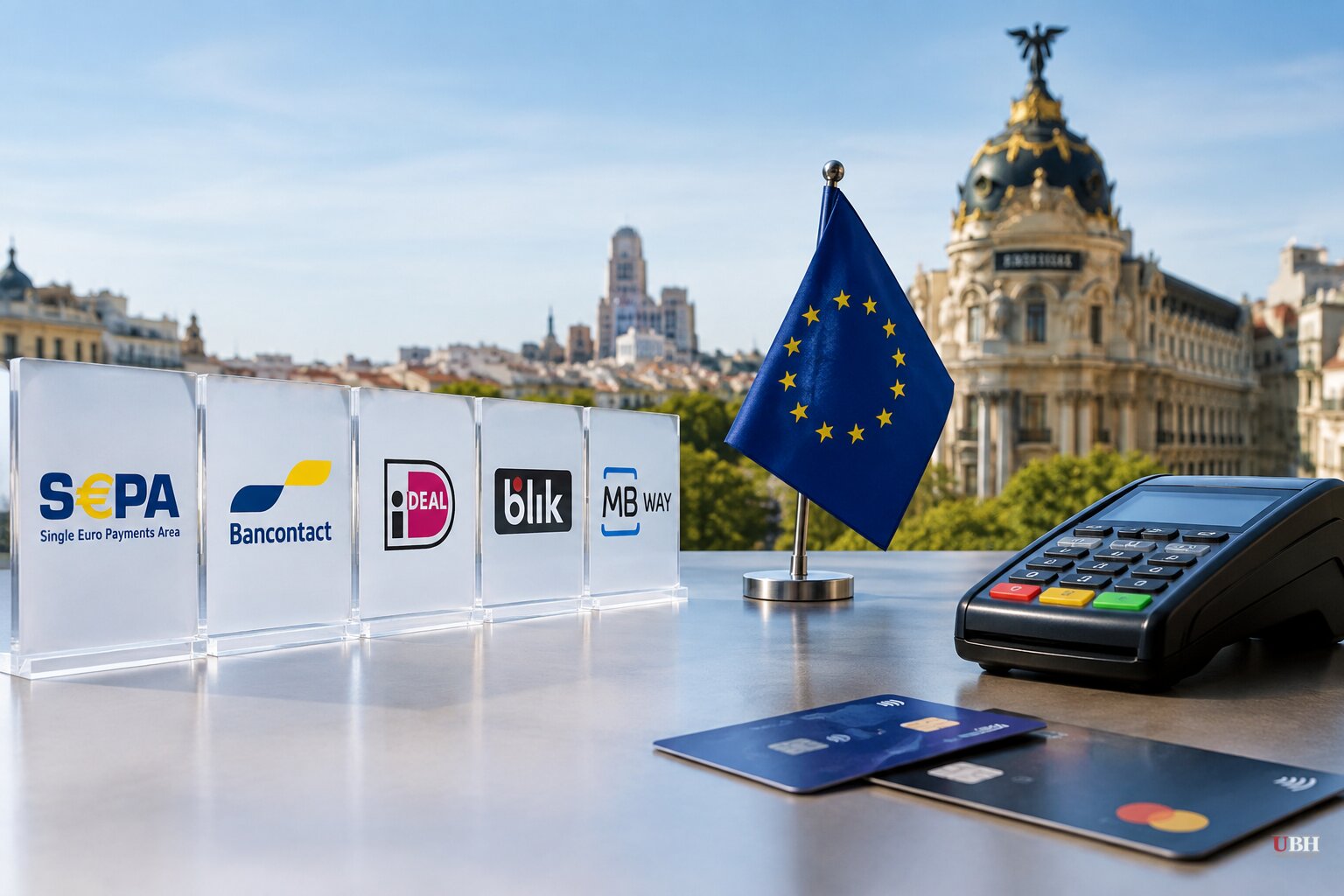
Since the European Parliament's economic affairs committee voted 43 to 14 in June to back the European Central Bank's digital euro project, Brussels has been building out its case for "payments sovereignty." On September 30, that push got a private-sector companion: five national payment networks announced they're forming a joint venture called the European Network for Payments, according to Reuters.
The founders are Spain's Bizum, Italy's Bancomat, Brussels-based Wero (through EPI Company), Portugal's SIBS-MB WAY, and Vipps MobilePay. Together they serve roughly 130 million users across 13 countries, covering more than 70% of the combined population of the EU and Norway, Reuters reported. The new venture will be headquartered in Madrid and has already picked a CEO, according to Fernando Rodriguez, Bizum's deputy general manager for international expansion.
The plan is a phased rollout: cross-border person-to-person payments first, then e-commerce, then point-of-sale. Martina Weimert, CEO of the European Payments Initiative, called fragmentation the "biggest hurdle" European payment schemes have faced, and said shareholders will have to eat the operating costs in the early years before the network generates its own fees.
Why Brussels Wants Out From Under Visa and Mastercard
The numbers explain the urgency. Visa and Mastercard processed 47% of eurozone card payment value in 2025, according to GlobalData figures cited by Fortune. In the U.K., that concentration hits 95%. Fifteen of the euro area's 21 countries still have zero domestic digital payment solution, per the ECB, and no European scheme currently works seamlessly across the whole bloc.
French MEP Gilles Boyer put the political logic bluntly back in June: "Payment systems are not neutral; they are instruments of power. We Europeans have had many wake-up calls about our dependence on the U.S. We are fully awake now." Radi El Haj, CEO of payments firm RS2, framed the fear in practical terms: if Washington ever leaned on Visa or Mastercard the way the Trump administration has leaned on financial sanctions as a foreign-policy tool, Europe would have no fallback ready to go.
A continent that runs nearly half its card volume through two foreign companies is exposed if Washington ever decides to weaponize access. Critics of U.S. sanctions policy have a fair point there.
The Digital Euro Is Still Years Away, and Comes With Its Own Price Tag
ENP is explicitly framed as complementary to, not a replacement for, the ECB's digital euro, which remains on a slow bureaucratic timeline. A 12-month pilot isn't scheduled to start until the second half of 2027, with 36 finance firms including Deutsche Bank, Revolut, Adyen and UniCredit signed up, according to Fortune. Businesses won't be required to accept digital euros until 2029. Estimated ECB development costs run to €1.3 billion, a figure worth remembering every time EU officials talk about "sovereignty" as if it's free.
A government-issued digital currency, run by a central bank, is also exactly the kind of thing that should get scrutiny, not applause, regardless of the sales pitch. Central bank digital currencies raise obvious questions about transaction tracking and government visibility into private spending that cash never did. The ECB insists the digital euro will be privacy-protective, but a currency the state can trace by design is a different animal than cash, and European taxpayers are being asked to fund it years before it's operational.
Wero's Real Problem: No Credit, No Edge in Security
The private-sector alternative has its own holes. Analysts at RBC, cited by Payments Dive, found that Wero — one of ENP's five founding members — lacks embedded security strengths compared to the card networks, a real liability as AI-driven fraud scales up. More fundamentally, Wero is a debit-only instrument. It offers no way for consumers to borrow at the point of sale the way a credit card does.
"We believe Visa and Mastercard retain advantages in interoperability, security, and value-added services, and the absence of a credit offering suggests Wero primarily threatens debit, not credit," the RBC analysts concluded. Mastercard Europe president Kelly Devine has pushed back on the broader "dependence" framing too, telling Fortune the company has been "part of Europe's economic fabric" for decades.
Visa shares have recently underperformed the broader market amid what MarketBeat described as investor attention to competitive and regulatory risk, though Visa is also pursuing stablecoin, iGaming, and AI-security initiatives of its own. Whether a Madrid-based consortium with no credit product and an admitted security gap can actually dent Visa and Mastercard's European market share before the digital euro even finishes its pilot in 2027 is the open question nobody in Brussels has answered yet.
Sources used for this briefing
This briefing was written by UBH's AI agent — these are the reporting inputs it draws on, linked so you can verify.


