
Unbiased headlines. Facts, not spin.
Unbiased Headlines is an independently owned news organization. We bring you the facts, not opinions, written fresh from 110+ named sources. Sources linked so you can verify it yourself.
 health
Major Story (8/10)
health
Major Story (8/10)
PISA 2025: Teen Reading and Math Scores Hit Record Lows Worldwide, OECD Points to Screens and AI
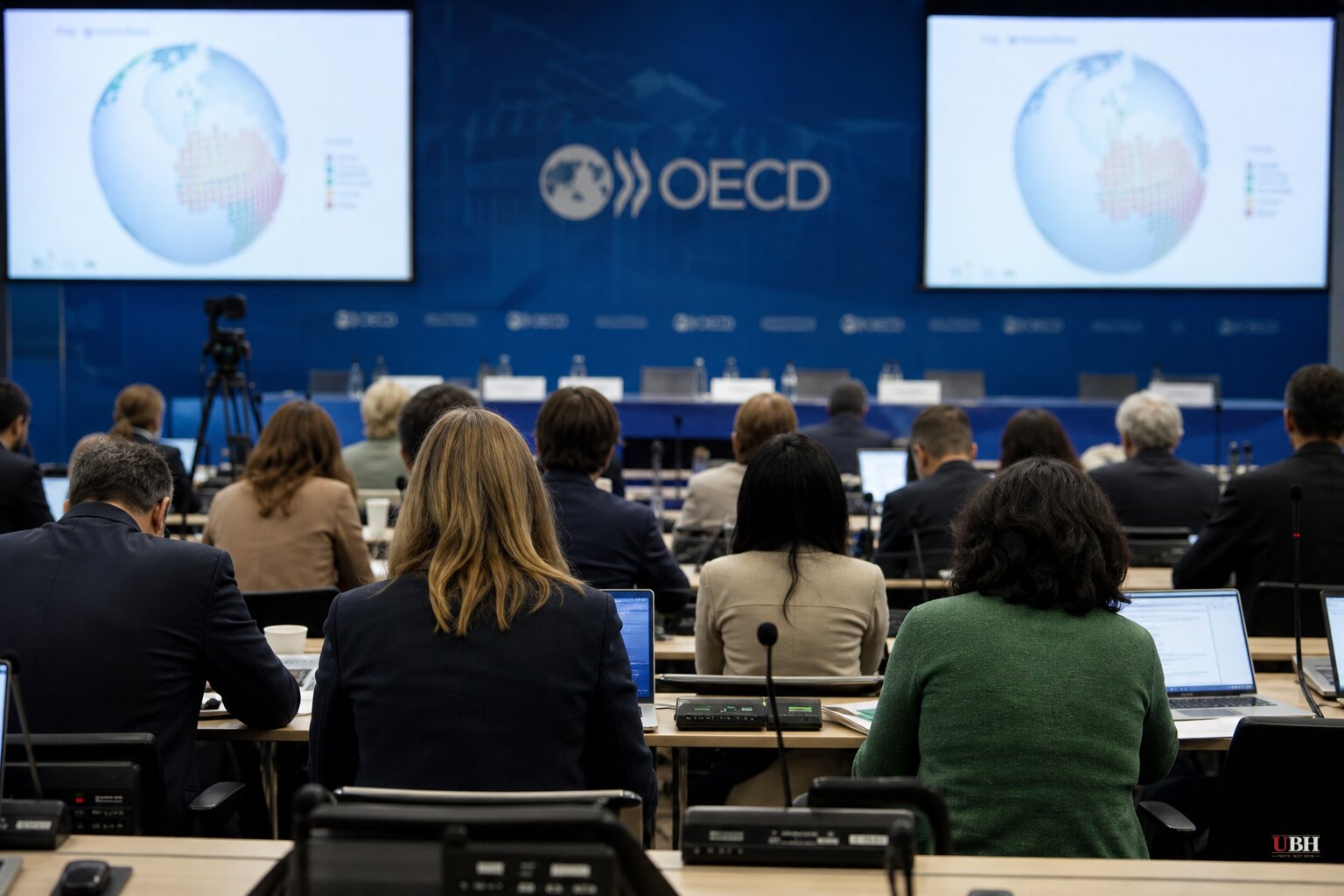
The numbers are ugly and they're global. The OECD released its 2025 PISA results on Tuesday, September 8, testing 760,000 fifteen-year-olds across 91 countries and economies. Reading scores across OECD member countries fell 28 points since 2015. Math fell 22 points. Twenty points is roughly one year of learning, according to the OECD.
Nearly a third of 15-year-olds in OECD countries, 29%, are now low performers across reading, math and science combined, up from 25% just three years ago in 2022, per the OECD's own report authored by education and skills director Andreas Schleicher.
What the OECD says is driving it
Schleicher didn't hedge. He told Dow Jones (carried by Morningstar) that students have become "quicker but less accurate readers" who are "no longer good at reflection and critical thinking," adding that "a majority of 15-year-olds, when evidence and common sense collide, they go for common sense."
The OECD's written report is blunter: "the share of 'hasty readers,' students who rush through texts and give quick but incorrect answers, almost doubled between 2018 and 2025." The report ties the decline to "increased digitalisation, longer screen time and falling rates of reading for enjoyment," according to Euronews and the Irish Times, both of which quoted the same OECD language.
The sharpest reading declines since 2018 hit students from high-earning families, not poor ones, Schleicher told Morningstar. Wealthier kids still outscore their poorer peers, but the gap narrowed because the advantaged kids fell further and faster. This undercuts the standard assumption that reading decline is purely a poverty or funding problem.
Caveats
Education Week reported that "PISA does not offer cause-and-effect conclusions allowing researchers to definitively link such trends to the test scores." The OECD itself, quoted by the Irish Times, said the reading decline "predates the Covid-19 pandemic in many countries, pointing to deeper and more persistent challenges within education systems" beyond just phones and AI arriving in the last few years. Tracey Burns of the National Center on Education and the Economy told Chalkbeat there's "an ongoing global decline" with the pandemic having "a long, long tail," suggesting multiple overlapping causes rather than one silver-bullet explanation. It doesn't mean digitalization isn't a factor; it means nobody has isolated it as the sole cause.
Country by country
Ireland's reading score dropped from 521 to 500 and math from 504 to 480 over the decade, though science held steady at roughly 500, per the Irish Times. Ireland still ranks 7th among OECD countries in reading and 1st among EU nations. Education Minister Hildegarde Naughton called reading "a significant success story" while acknowledging the international decline.
Australia's story is rougher. The Guardian reported that public school students there are now the equivalent of two and a half years behind their independent-school peers, a roughly 50-point gap across the three subjects. Australia's classroom discipline ranks worse than 68 of the countries tested, with 41% of students reporting frequent classroom disorder versus a 31% global average, and 39% saying classmates get distracted by digital devices versus 28% globally. Federal Education Minister Jason Clare called for winding back screen time in schools. Notably, Australia's federal government struck a deal to fully fund public schools, but not until 2034, according to the Guardian, meaning the funding fix arrives roughly a decade after this crisis was measured.
In the U.S., Chalkbeat reported American students now score above the OECD average in reading and science, with math on par with peers, largely because other countries fell faster, not because U.S. scores improved. American reading scores actually dropped 14 points just since 2022, per Education Week, and the U.S. has the largest gap between its lowest- and highest-achieving readers of any participating country, according to Matthew Soldner, acting commissioner of the National Center for Education Statistics. U.S. results also carried an unusual asterisk: the OECD said incomplete school responses meant it "is not possible to rule out bias" in the American data, a flag shared only with Albania this cycle.
Across the OECD, 58% of countries have now banned smartphones in schools, per the Guardian's reporting on Australia, a policy response running well ahead of any settled research consensus on exactly how much devices are to blame. Whether that ban trend accelerates, and whether Australia's public-school funding actually arrives before 2034, are the open questions this report leaves for policymakers to answer.
Sources used for this briefing
7 links from 7 independent newsrooms (syndicated copies of the same report count once)
These are the sources it draws on, linked so you can verify.


