
Unbiased headlines. Facts, not spin.
Unbiased Headlines is an independently owned news organization. We bring you the facts, not opinions, written fresh from 110+ named sources. Sources linked so you can verify it yourself.
 health
Notable (5/10)
Kennedy Announces Voluntary 'U.S. Caught Seafood' Label at Trump Rally in Fort Myers
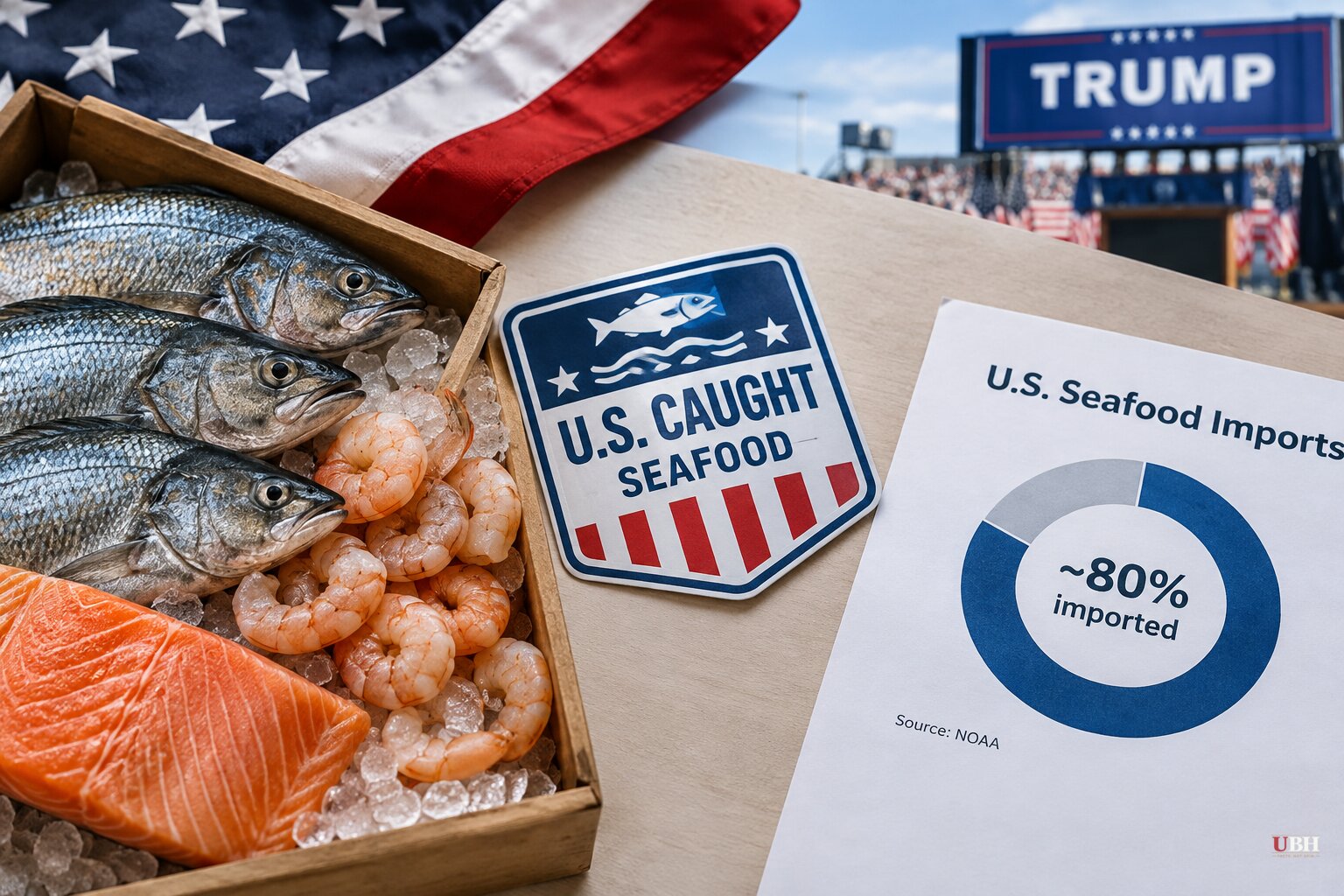
Health and Human Services Secretary Robert F. Kennedy Jr. announced a new "U.S. Caught Seafood" label on Friday, Oct. 23, at a rally in Fort Myers, Florida, where he appeared with President Donald Trump.
The label is voluntary. The Department of Agriculture said on X that it designates seafood caught by American commercial fishermen on U.S.-flagged vessels operating under U.S. fisheries management.
The White House also said the administration has launched Seafood.gov, a website for fishermen and consumers on federal seafood initiatives.
The numbers behind the push
NOAA data shows that in 2023 an estimated 80 percent of the seafood bought in the U.S. was imported. Domestic catch values run around $5.1 billion a year, against nearly $25 billion in imports.
Shrimp is the sharper example. Christine Gala, a Fort Myers Beach shrimper whose family has worked the industry for generations, told WINK that only 3% to 5% of shrimp sold in the U.S. is domestic. That figure is hers, not a government number.
Gala said imports have pushed local prices down to levels last seen in the 1990s, while fuel and supply costs keep climbing. She also said Hurricane Ian wiped out Southwest Florida shrimping and the area has not recovered its place in the market.
What Kennedy said
Trump opened the segment by calling it "historic action to support an important industry here on the shores of the Gulf of America," then handed it to Kennedy.
Kennedy said American commercial fishermen "have the strongest environmental regulations. They have the greatest sustainability regulations but it puts them at a disadvantage to all the other fishermen in the world."
He singled out shrimp farming in Vietnam and Cambodia. His claim: operators fence off mangrove swamps, poison the fish inside, raise shrimp for about five seasons until the mangroves are dead, and the shrimp end up "so loaded with antibiotics and disinfectants that no European country will take them."
Kennedy offered no data or documentation for those claims at the rally. They are his allegations, and no regulator or study was cited alongside them.
He also said he has worked for 40 years to help New England fishermen with the restrictions that hamper their output, and that Trump is "reopening the markets for our commercial fishermen."
Industry reaction
The New England Fishermen's Stewardship Association called the label a "major win." Jason Joyce, the group's director of advocacy, said it gives consumers "a simple, recognizable way to identify American-caught seafood while supporting our domestic fishing, processing, and retail industries."
Gala's main ask is truth in labeling, and she has been pushing for it at the state level. She said the Southern Shrimp Alliance spans eight states from Texas to North Carolina, and that all of them have shrimp labeling laws except Florida and North Carolina.
Her position goes beyond the federal label. "We want them to have to do the same thing we do, abide by the same rules, and that isn't happening," she said of foreign producers. A voluntary label tells shoppers where fish came from. It does not change the rules imported seafood is produced under.
The trade backdrop
The announcement lands after months of friction between the seafood industry and the administration's trade policy. In August, the Maine Lobstermen's Association said it feared becoming "collateral damage" in Trump's trade fight with Canada, which buys large quantities of Maine lobster, according to The Hill.
That is a different problem from the one the label addresses. A "U.S. Caught" mark helps at the domestic seafood counter, but it does nothing for an exporter who loses a foreign buyer.
What is still open
The label has no mandate behind it, so its reach depends on how many fishermen, processors and retailers choose to use it. Imports are not restricted by the label.
The administration has not published a launch date, a certification process for vessels, or a cost estimate for running the program. One account of the announcement attributes the label to the Food and Drug Administration, while the Agriculture Department is the agency that posted its details. The administration has not spelled out which agency will administer it.
Florida still has no state shrimp labeling law, according to Gala. Whether the federal label fills that gap, or whether Florida lawmakers act on their own, is the next test for the shrimpers at the center of Friday's announcement.
Sources used for this briefing
7 links from 7 independent newsrooms (syndicated copies of the same report count once)
These are the sources it draws on, linked so you can verify.


