
Unbiased headlines. Facts, not spin.
Unbiased Headlines is an independently owned news organization. We bring you the facts, not opinions, written fresh from 110+ named sources. Sources linked so you can verify it yourself.
 health
Notable (6/10)
Over 100 Experts Press OMB to Release Federal Ultraprocessed Food Definition a Day After Calley Means Resigns
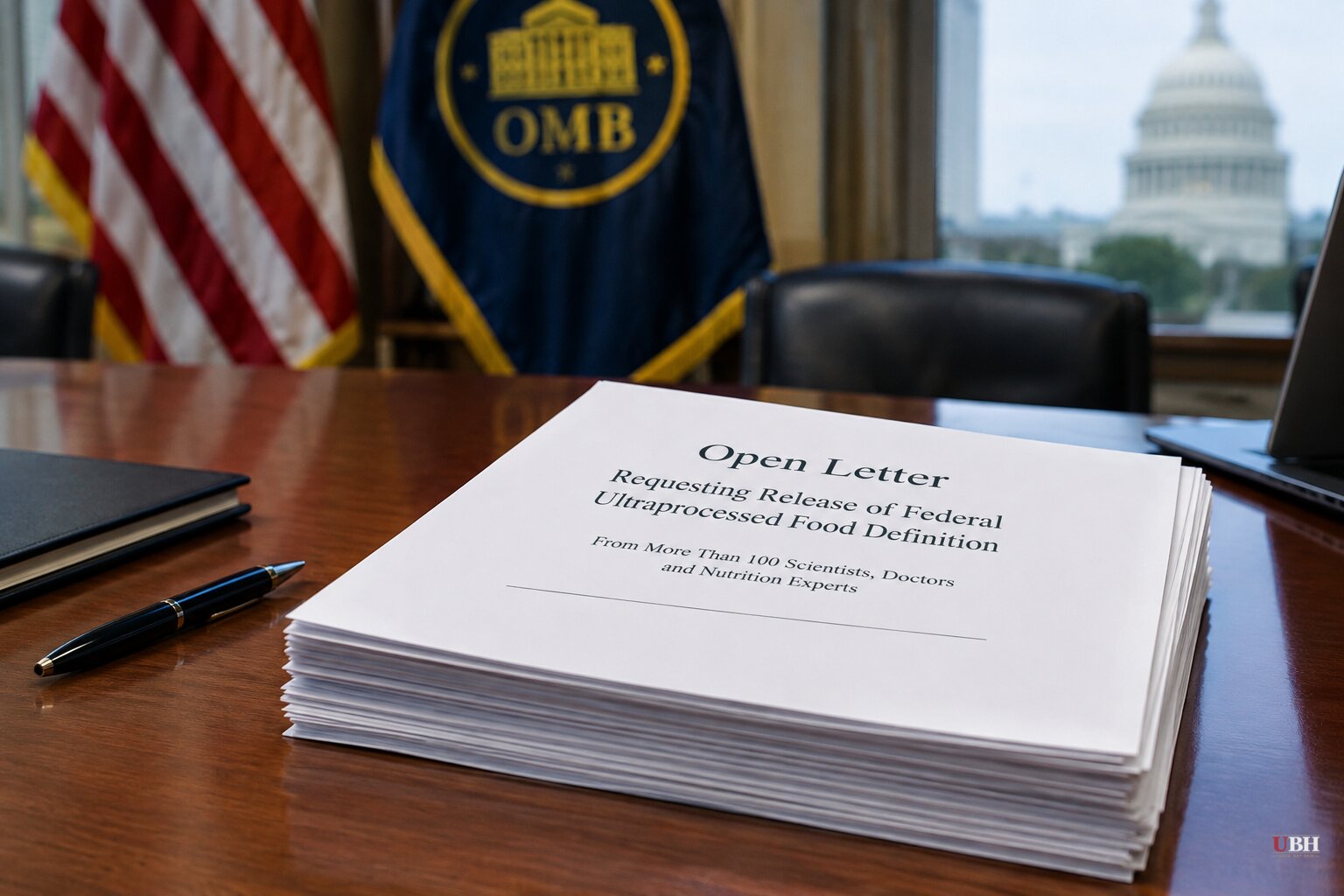
A definition Health Secretary Robert F. Kennedy Jr. promised in April is still sitting at the Office of Management and Budget. On Friday, Oct. 23, more than 100 science, medical and nutrition experts sent OMB an open letter asking it to let the document out.
"It is critical that special interests not hold up this process," the letter said.
The timing is notable. One day earlier, Calley Means, a senior adviser to Kennedy and one of the loudest MAHA voices inside the administration, resigned.
What is stuck at OMB
The FDA and USDA submitted the proposed definition to OMB for review on Aug. 3. It would be the first formal federal definition of ultraprocessed food (UPF).
The FDA first signaled it would go through formal rulemaking with a public comment period. It chose instead to submit the definition as a white paper. That limits its legal force, though a white paper could still shape voluntary reformulation, future federal food policy, labeling and litigation.
Kennedy has indicated he wants to use the definition to build a label claim, a symbol or a "stoplight" system to steer shoppers toward "healthier" food. The FDA has described the white paper as not "economically significant," meaning it expects an impact below OMB's $100 million threshold.
Kennedy's own timeline has slipped. MedPage Today reported he had promised the definition in April, and that FDA acting commissioner Kyle Diamantas addressed the matter at a conference that month.
The letter and the pressure claim
Dariush Mozaffarian, director of Tufts University's Food is Medicine Institute, told Newsweek the signers expected to top 100 by Friday and planned to meet OMB officials that day. He called the definition "one of the most consequential food actions FDA can take in decades."
The letter says UPF makes up nearly 60% of calories for U.S. adults and 70% for children. It argues a national definition would help consumers, support consistent policy across states and cut compliance costs for businesses facing a patchwork of state standards.
The signers also say publishing a definition would not by itself restrict food sales, impose new requirements on manufacturers or retailers, or raise prices.
Mozaffarian blames "intense industry pressure on the White House." In an email to Newsweek he said he and others had "heard" that major trade associations and multinational food companies were lobbying against release. He said HHS "really wants the rule released before the election."
That is an allegation. It has not been independently established, and no company or trade group has been named as having asked the White House to hold the document.
Bloomberg Law and the Wall Street Journal have reported that the plan met pushback from the food industry and the White House over the legal ramifications of a definition.
HHS rejects the stalling narrative. A spokesperson told Newsweek on Thursday: "This work never stalled."
The Means resignation
Means, who spent more than two years at HHS, did not give a reason for leaving. In a statement he said he leaves "with tremendous respect" for President Trump and Kennedy and called the movement "in the first inning and just getting started."
White House spokeswoman Allison Schuster said the administration is "grateful" and that "he has done a fantastic job for the MAHA movement." Politico reported that the stalled UPF definition was a "breaking point." Means has not confirmed that.
MedPage Today reported that Means often clashed with senior White House officials worried about alienating the food industry. Other MAHA figures, it said, wanted Kennedy to focus on "medical freedom" issues such as rolling back vaccine recommendations. His sister, Casey Means, was not confirmed as surgeon general earlier this year.
Activist Kelly Ryerson of American Regeneration said she was "impressed that he completed over 2 years at HHS fighting the food battle, despite all of the obstacles presented by corporate interests."
The cost argument
Industry has a different case, and it comes with numbers. A University of Chicago analysis published Oct. 17 estimated that a hypothetical mandatory UPF labeling policy could affect nearly three-quarters of packaged foods and cost at least $14.2 billion a year. The authors call that a lower bound.
It excludes supplier effects the researchers estimate at about $1 billion a year in lost revenue for domestic agriculture and $7.7 billion to $8.7 billion a year in higher food import costs.
A spokeswoman for the Consumer Brands Association said the estimate may be understated because it leaves out litigation costs. She said mandatory labeling may not improve public health. The litigation risks she pointed to include false-advertising claims against products marketed as "healthy" or "natural" that also meet the federal UPF definition, and public-nuisance suits modeled on tobacco and opioid cases.
The analysis itself notes those scenarios are hypothetical, and early legal attempts along these lines have hit hurdles in court. It also models a mandatory labeling policy, not the voluntary white paper now before OMB.
The science is not settled
The health concern is real and well documented. Studies link UPF to cardiovascular disease, obesity, type 2 diabetes and worse mental health outcomes. The CDC says UPF makes up about 55% of the average American's daily calories, and one study put it above 70% of the packaged food supply.
But Scientific American reports it is unclear whether the harm comes from the ingredients, the nutritional profile or the processing itself. Lindsey Smith Taillie, a nutrition professor at the University of North Carolina at Chapel Hill, said the lack of a clear definition leaves "ambiguity" in enforcement and "can leave manufacturers and retailers confused." The American Heart Association supports a federal definition.
The wording of the definition is therefore decisive. Where it draws the line decides which products land inside it, and so who carries the cost and the legal exposure.
What comes next
No release date has been announced. The result of the signers' Friday meeting with OMB officials has not been made public. Whether OMB clears the document before the November midterms is the open question, and it will show whether the White House or Kennedy's HHS controls the timing.
Mozaffarian described "increasing disappointment among swing voters with MAHA." The administration can answer that by publishing the definition. Or it can keep it at OMB.
Sources used for this briefing
7 links from 6 independent newsrooms (syndicated copies of the same report count once)
These are the sources it draws on, linked so you can verify.


