
Unbiased headlines. Facts, not spin.
Unbiased Headlines is an independently owned news organization. We bring you the facts, not opinions, written fresh from 110+ named sources. Sources linked so you can verify it yourself.
 health
Notable (6/10)
Event date: October 20, 2026 ·
FTC Chairman Warns 24 Large Healthcare Companies That Posting Prices Does Not Shield Them From Deception Charges
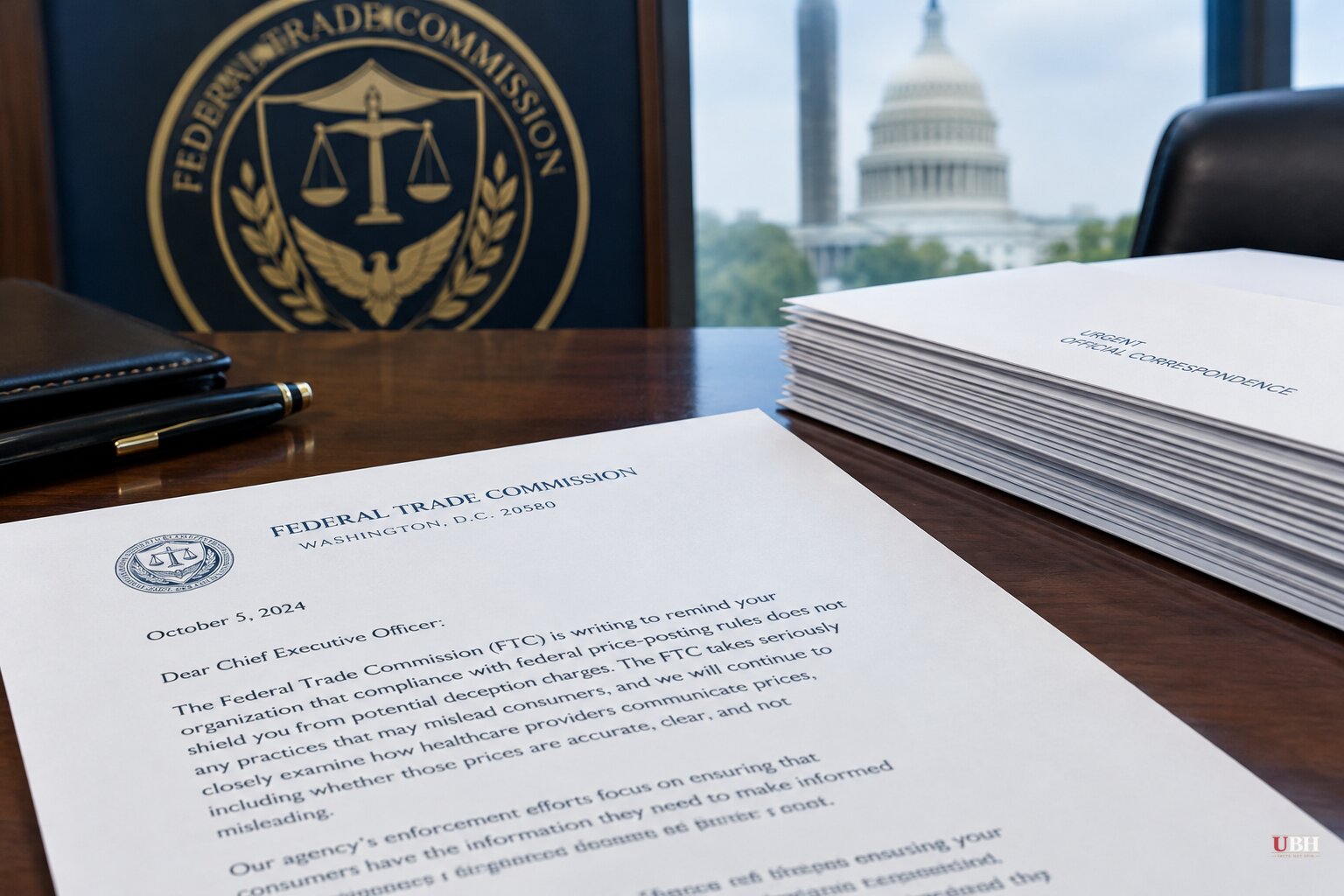
Andrew Ferguson, chairman of the Federal Trade Commission, put the country's biggest healthcare operators on notice on Oct. 5: give patients full, accurate prices before they schedule care, or expect to deal with the FTC.
Ferguson announced the move at a healthcare transparency forum. He said he had written to the CEOs of 24 of the nation's largest healthcare companies. The FTC also published an anonymized version of the letter.
"Let me be clear: these letters are a warning," Ferguson told attendees. "Healthcare providers must disclose their prices to consumers and must do so starting today."
What the letter says
The core message is that following the rules of the Centers for Medicare and Medicaid Services (CMS) is not enough. The letter says CMS price transparency compliance does not "provide a safe harbor from liability" under Section 5 of the FTC Act, which bars unfair and deceptive practices.
The FTC treats the CMS rules as a "regulatory floor." The letter states that "the price of healthcare services is a material term" and that "clear and conspicuous disclosures" are needed to keep consumers from being misled.
It names specific problems. A price can be deceptive if it leaves out physician fees or facility fees, or covers only part of the expense of a patient's care. The letter also says incomplete or inaccurate pricing can be unfair when it causes, or is likely to cause, substantial injury, including when patients cannot compare prices between providers.
The focus is non-emergency services scheduled in advance. The letter ends by urging every healthcare organization to "conduct a comprehensive review" of its pricing practices.
It also points to the FTC's Healthcare Task Force, which the agency set up earlier in 2026.
A rule that exists on paper
Federal rules have required hospitals to publish prices for years. Compliance is another matter. A recent report found only about half of hospitals fully comply.
A September report from the group Patient Rights Advocate found that just 18 percent of hospitals posting fees online list dollars-and-cents prices for at least half of their services. Cynthia Fisher, the group's founder and chair, said in a statement: "Too many patients are still being denied the real, upfront prices they need to shop for affordable care and protect themselves from overcharges."
Even hospitals that post data often bury it. Many of the online files are extremely large and hard for ordinary consumers to navigate. Ferguson said that lack of clarity "will no longer be tolerated."
Trent England, executive director of the conservative policy group Save Our States, praised the announcement. "Healthcare price transparency is one of the most obvious policies in American politics," he said. "That it has taken this long to guarantee patients and employers actual prices is absurd."
A warning, not a case
No one has been charged. Ferguson said the letters were not based on a specific assessment of each of the 24 companies' practices. They were meant to push the industry toward compliance.
That matters for the companies on the list. They received a general warning, not an accusation of wrongdoing.
The legal theory is aggressive, though. The FTC is saying a hospital can satisfy CMS and still violate federal consumer protection law. Attorneys at Robinson+Cole's Health Law Group wrote that, based on past enforcement activity, it "would not be surprising" if the coordinated warning precedes tougher FTC scrutiny of pricing and good faith estimate practices. They advised organizations to audit their own price transparency processes.
The cost backdrop
Pricing is one front in a larger fight over hospital spending. Citing a KFF analysis, Tom Stephens wrote in an Oct. 20 commentary that hospital care accounted for $277 billion, or 40 percent, of national health spending growth between 2022 and 2024.
Stephens also pointed to billing practices that raise costs, including "upcoding," where a visit or stay is billed as more complicated than the medical record shows. He cited an analysis by Blue Health Intelligence, a Blue Cross Blue Shield licensee. It found that at the 10 percent of hospitals with the biggest increases in coding intensity, nearly 60 percent of eligible admissions were classified as complex by March 2025, up from about 47 percent in 2022.
That analysis comes from an insurer-affiliated group. Insurers have their own financial stake in disputes over hospital billing. The FTC letter itself addresses price disclosure, not coding.
What comes next
The letter puts the 24 recipients on record as having been warned. If the FTC later sues one of them over incomplete pricing, the warning would be part of that case.
The unresolved question is whether the agency will test its "no safe harbor" position in federal court. The FTC has not announced any enforcement action tied to the letters.
Sources used for this briefing
3 links from 3 independent newsrooms (syndicated copies of the same report count once)
These are the sources it draws on, linked so you can verify.


