
Unbiased headlines. Facts, not spin.
Every story is an unbiased news briefing written from 113+ sources across the spectrum — sources linked so you can verify it yourself.
 finance
Notable (6/10)
Event date: September 30, 2026
finance
Notable (6/10)
Event date: September 30, 2026
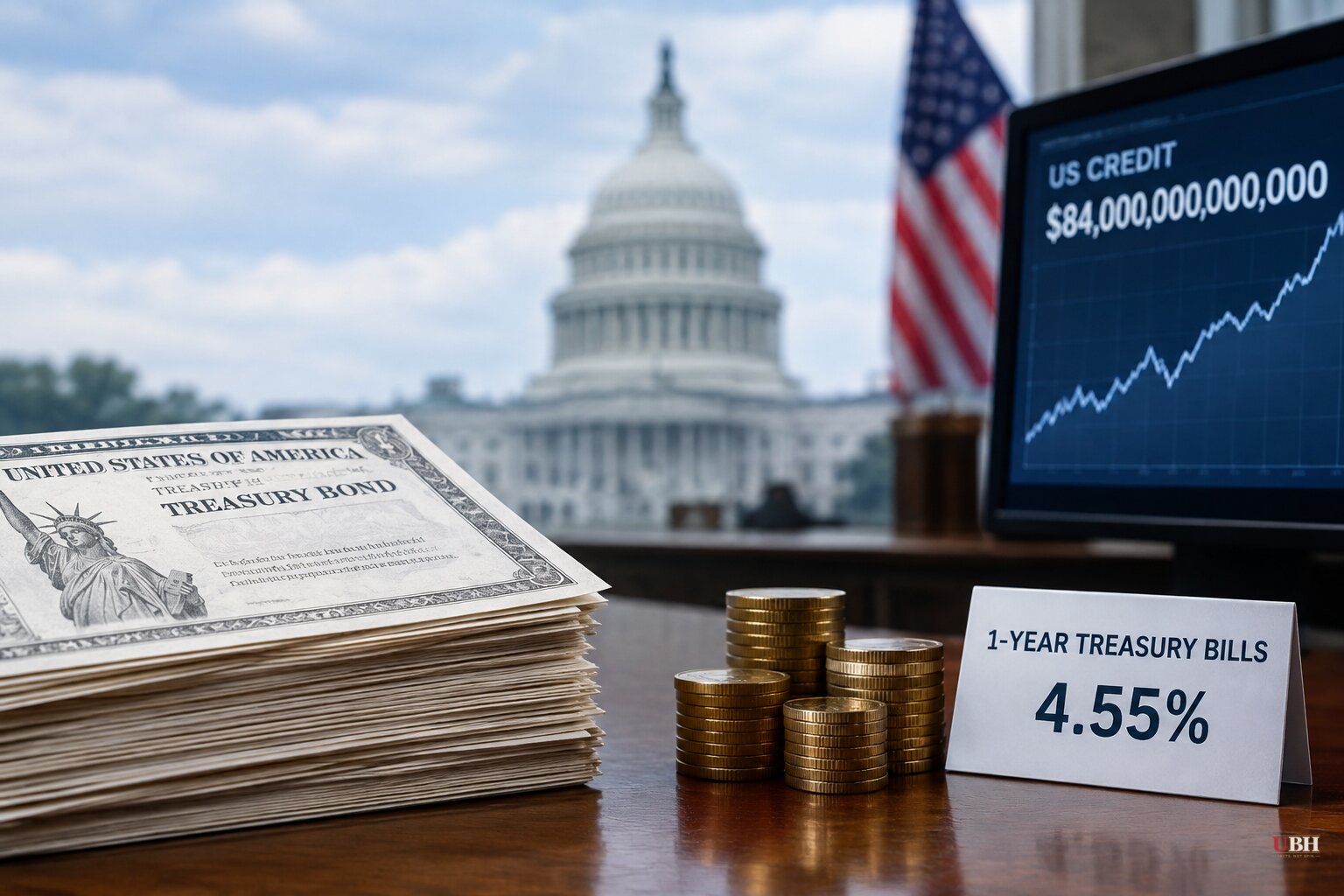
PIMCO's Bill Gross Tells Investors to Dump Bonds as US Credit Hits $84 Trillion
Bill Gross built his career telling people to buy bonds. Now he's telling them not to.
In a Financial Times column published September 30, 2026, the PIMCO cofounder and self-described "Bond King" laid out why he thinks the credit market has gotten dangerously out of balance. His bottom line, in his own words: "Don't own bonds, with the exception of one-year Treasury bills, which are now at 4.55%."
The Numbers Behind the Call
Gross points to Federal Reserve data showing total US credit, government, mortgage and corporate debt combined, now sits around $84 trillion. That pile has been growing at roughly 5.9% a year, he wrote, against nominal GDP growth of about 8%. For now, that gap is propping up stock prices amid what he calls "AI euphoria." If credit growth slows to 4%, Gross warns, markets will feel it.
Federal debt alone has climbed to 100% of GDP, a level Gross calls a peacetime record. That's a different number than the $84 trillion total credit figure, but it points the same direction. Commentator Mollie Engelhart, writing for the Epoch Times in September, separately put total US federal debt at more than $38 trillion and noted the Treasury just raised the ceiling on certain long-dated debt buybacks from $2 billion to $6 billion. She framed the move as evidence Washington keeps needing new ways to find buyers for its IOUs.
Gross isn't just worried about the amount of debt. He's worried about who's holding it and how fast they'll sell. Central banks that once reliably bought and held Treasuries are diversifying their reserves instead. In their place, hedge funds have moved in, and they don't sit still. The "basis trade," where funds exploit tiny price gaps between Treasury bonds and Treasury futures, has pushed hedge funds' share of total Treasury holdings to 8.5%, nearly double their 2023 level, according to reporting from Fortune and MSNBC. That now exceeds the share held by depository institutions and mutual funds combined.
Joe Maher, a markets economist at Capital Economics, flagged the risk in an August note cited by both outlets: "In a risk-off environment, safe-haven flows into sovereign bonds may be offset by hedge funds unwinding their leveraged positions." In plain terms, the investors who've become the biggest force in the Treasury market are also the ones most likely to bail during a panic, which is exactly when a safe haven is supposed to hold up.
The volatility isn't theoretical. Ten-year Treasury yields have jumped more than 100 basis points since the Iran war began and recently hit their highest level in 24 years, per Fortune and MSNBC's reporting. The pressure isn't confined to the US either. A report from en.money.it noted the UK's 30-year gilt yield has also been climbing alongside the US move, pointing to a broader global repricing of long-dated government debt rather than a purely American problem.
Where Gross Is Putting His Own Money
Gross didn't just issue a warning. He disclosed where he's actually positioned. He says he's leery of AI hyperscalers with one exception, Google, which he notes trades at a 17 price-to-earnings ratio, below the S&P average, and has held a tight trading range for six months. For income, he points to Verizon and AT&T, though he flags both face a new competitive threat from SpaceX's expansion into mobile service. His higher-risk pick is PIMCO's own Dynamic Income Fund, yielding 18%.
This is a private investor publicly describing his own portfolio, not a neutral analyst with no stake in the outcome. Gross discloses the positions himself, which is to his credit, but readers should weigh his specific stock and fund picks with that in mind.
The Case for Skepticism
Elevated federal debt has been called unsustainable before, and the US has repeatedly financed deficits without the bond market revolt that perennial doomsayers predicted, partly because the dollar's reserve-currency status keeps global demand for Treasuries deep. Hedge fund growth in the basis trade also adds liquidity in normal times, even if it adds fragility in a crisis, a trade-off Capital Economics' own research acknowledges.
What's unresolved is which force wins out first: the Treasury's expanded buyback program, designed to support long-dated debt prices, or the hedge fund positioning Maher warns could unwind fast in a risk-off shock. Gross's own closing line in the FT column sums up where he's landed on that bet: "Preserve and protect."
Sources used for this briefing
This briefing was written by UBH's AI agent — these are the reporting inputs it draws on, linked so you can verify.


