
Unbiased headlines. Facts, not spin.
Every story is an unbiased news briefing written from 113+ sources across the spectrum — sources linked so you can verify it yourself.
 finance
Major Story (7/10)
October 5, 2026 at 02:05 AM
finance
Major Story (7/10)
October 5, 2026 at 02:05 AM
RBI Set to Deliver First Rate Hike Since 2023 as India's Inflation Runs Hot
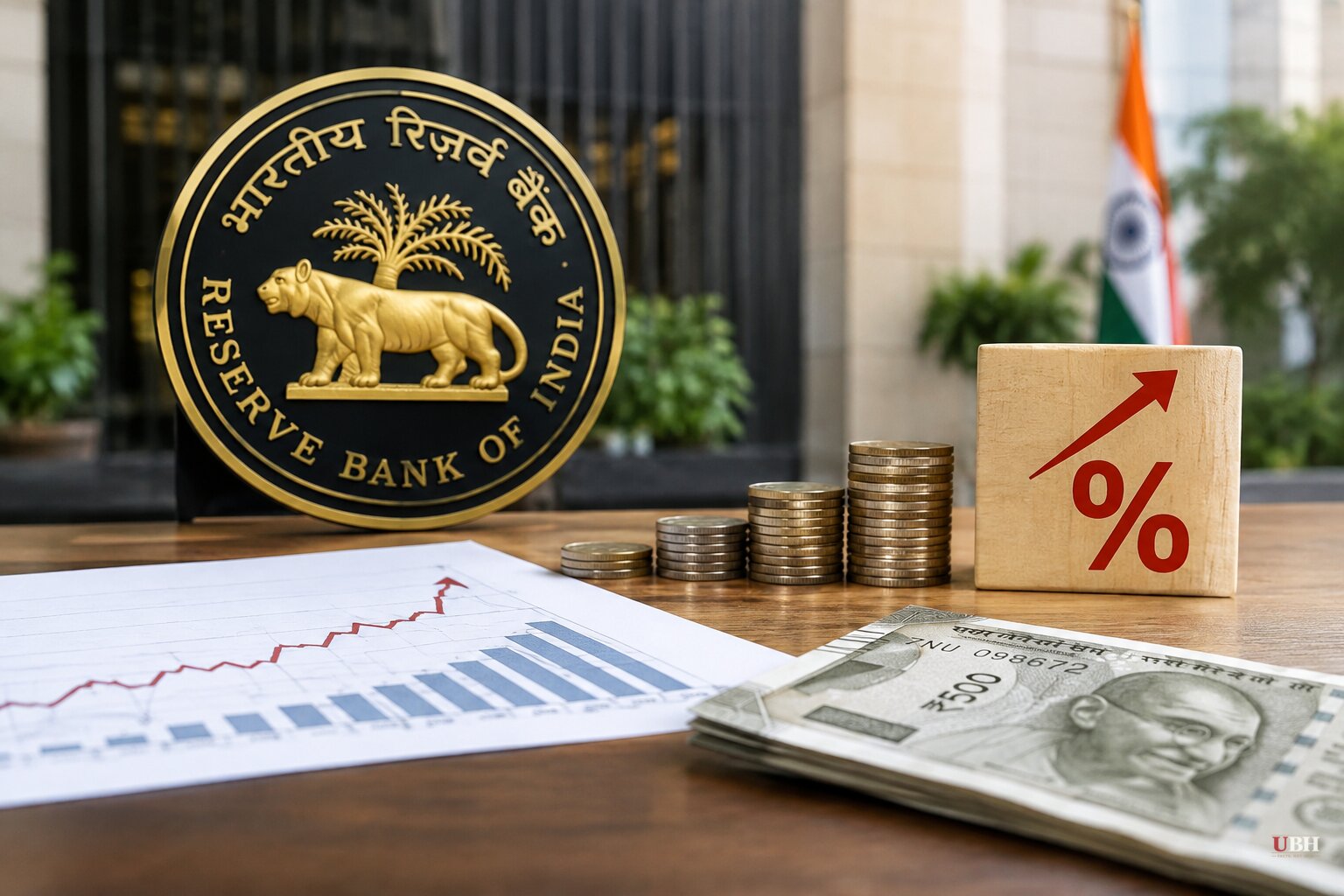
India's central bank is about to end an 18-month rate-cutting run, and almost nobody polled expects otherwise.
The Reserve Bank of India's six-member Monetary Policy Committee meets Monday through Wednesday, October 5-7, with its decision due Wednesday. A Reuters poll conducted September 18-28 found 35 of 61 economists, roughly 60%, expect a 25-basis-point hike to 5.50%. Swap markets are even more certain, fully pricing in the increase, according to Reuters. A separate Business Standard poll of 10 economists found eight expecting a hike.
If it happens, it would be the RBI's first rate increase since February 2023, when the repo rate rose to 6.5% in the aftermath of Russia's invasion of Ukraine, according to the Times of India. The RBI then cut rates by a cumulative 125 basis points through 2025, taking the rate down to 5.25%, and has held there for four straight policy meetings since.
The inflation numbers don't lie
Retail inflation hit 4.82% in August, up from 4.45% in July, the third straight month above the RBI's 4% target, according to Business Standard and RSM US LLP. Food inflation climbed to 5.95%. Core inflation, which strips out volatile food and fuel, rose to 4.2% from 3.86% in July. Wholesale price inflation jumped to 9.92% from 9.78%, RSM reported.
"Price pressures have also broadened, with inflation rising across a larger part of the consumer basket," Reuters reported, and RSM's analysis found prices across nearly half the CPI basket now running at or above target.
Growth isn't the problem. India's economy grew 7.8% year-on-year in the April-June quarter, beating the RBI's own 7.0% projection, according to RSM. Industrial production accelerated to 8.0% in August from 6.7% in July, and manufacturing PMI hit 55.1, a seven-month high.
Strong growth plus rising inflation is exactly when a central bank is supposed to tighten. Letting price pressures entrench because growth looks good is how inflation gets out of control.
Global central banks already moved
India isn't acting in a vacuum. The U.S. Federal Reserve raised its benchmark rate for the first time since 2023 in recent weeks, and the Bank of Japan has also tightened, according to Reuters. That narrows the interest-rate gap between India and the rest of the world, and the rupee has already weakened past 96 to the dollar, sitting about 1% off the record lows it hit in May.
"A hold will not be taken positively by the currency market and even the long end of the bond market may face some pressure," Vivek Rajpal, Asia macro strategist at JB Drax Honore, told Reuters.
Rahul Bajoria, India and ASEAN economist at BofA Global Research, goes further, telling Reuters he expects the RBI to kick off a 100-basis-point tightening cycle starting this month. "This essentially is no longer just about reversing the incremental cut that the RBI had delivered last December but actually taking away the monetary punchbowl before inflation risks become entrenched," Bajoria said.
Notably, the Fed's own hike came over direct political pressure from President Trump, who posted on Truth Social that U.S. rates "should be 1%, or less," and demanded the Fed act "FAST," according to CNN. Fed Chairman Kevin Warsh, whom Trump had installed, refused to discuss the president's pressure campaign at his press conference, saying "I am not a Wall Street newsletter." The RBI faces no comparable public pressure campaign from New Delhi in these reports, but the episode is a reminder of why central bank independence from the executive branch matters. A bank that bends to political demands for cheap money is a bank that eventually can't fight inflation when it shows up.
The case for caution
Not every analyst thinks a hike is guaranteed. Rajeev Sharan, head of research at Brickwork Ratings, told TradingView that inflation "remains within the RBI's target range and price pressures have yet to become broad-based, which could prompt the MPC to hold rates once again while adopting a firmly hawkish stance." A rate hike raises borrowing costs for homebuyers and businesses in an economy that's already performing well, and tightening into strong growth risks choking off momentum the RBI itself didn't forecast. Sharan still concluded a hike is more likely than not, and that a cut is off the table either way.
SBI chairman CS Setty told the Times of India he expects a hike but doesn't think it will "materially impact credit growth," pointing to $127 billion in FCNR(B) deposit inflows that have left banks flush with liquidity. He noted corporates can now shift more easily between bank loans and bond markets depending on which is cheaper, a cushion that didn't exist in past tightening cycles.
The RBI's decision lands Wednesday, October 7. A Reuters poll found most economists also expect a second hike in December, which would make October the opening move in a longer tightening cycle rather than a one-off adjustment.
Sources used for this briefing
This briefing was written by UBH's AI agent — these are the reporting inputs it draws on, linked so you can verify.


