
Unbiased headlines. Facts, not spin.
Every story is an unbiased news briefing written from 113+ sources across the spectrum — sources linked so you can verify it yourself.
 finance
Major Story (7/10)
Event date: September 30, 2026
finance
Major Story (7/10)
Event date: September 30, 2026
Peso Becomes World's Worst Currency as Carry Trade Unwind Spreads, $2.3 Trillion Yen Position Still Looms
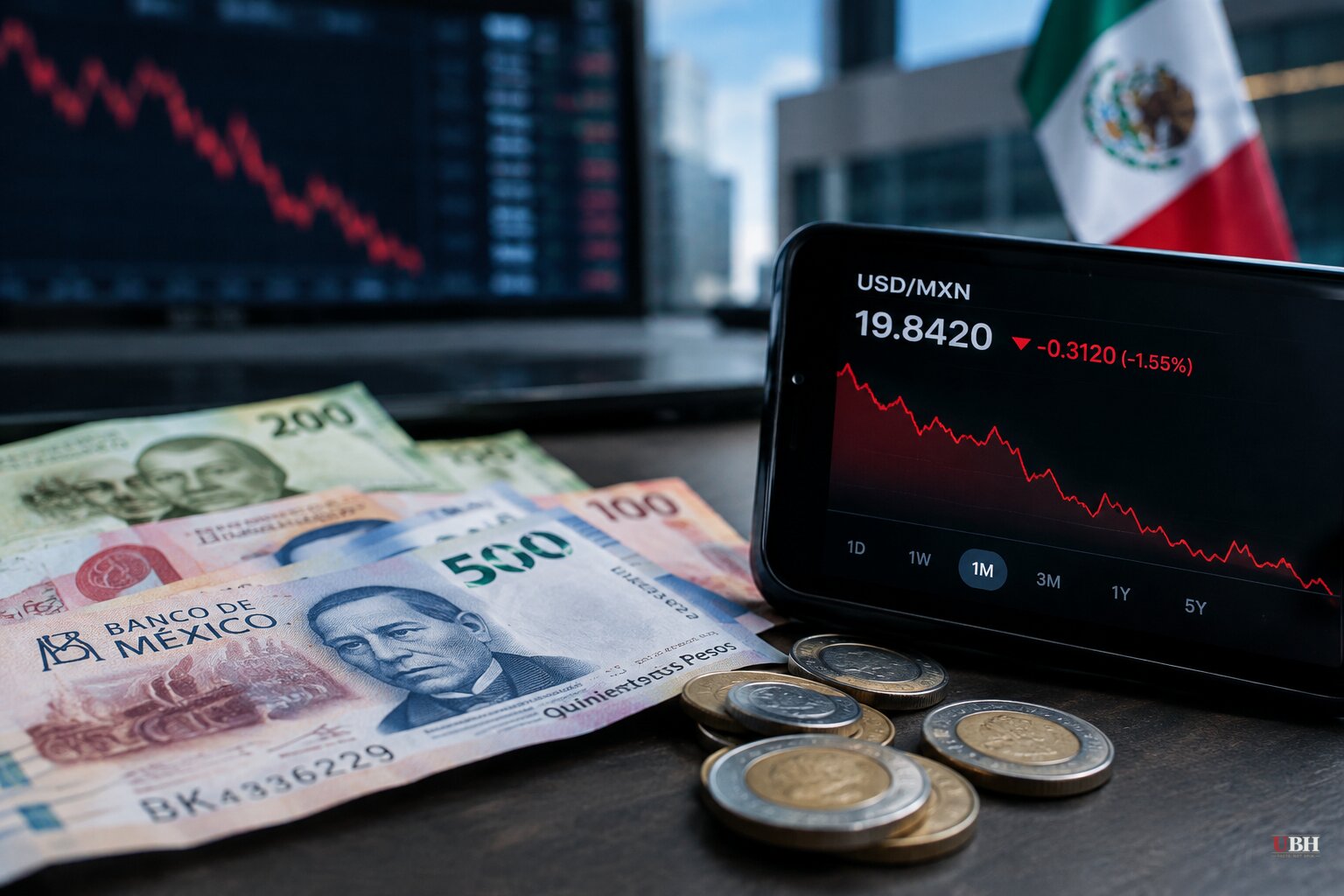
The Mexican peso just had its worst month against every major currency tracked by Bloomberg, falling almost 6% in September after hitting a two-year high in early September. The culprit isn't a Mexican crisis. It's math.
Carry trades work on a simple principle: borrow cheap, lend expensive, pocket the spread. Investors borrowed dollars (or yen) at low rates and parked the money in Mexican bonds paying far more. That trade worked beautifully while the Federal Reserve held rates steady and Mexico's central bank, Banxico, kept its own rates high.
Then the gap closed. The Fed hiked rates to a 3.75%-4% range and, according to FXStreet, is positioned for another increase toward 4%-4.25%. Banxico, meanwhile, held its benchmark rate near 6.50% at its September 24 meeting instead of cutting further. That sounds like it should widen the spread, but the real move was in US Treasury yields, which FXStreet reports are running 5.23%-5.61%, levels that make parking money in American government debt look a lot safer than chasing yield in Mexican MBONOS.
The interest-rate differential between the US and Mexico narrowed to its lowest point since at least 2008, according to Bloomberg data cited by LiveMint, cut in half over the past year alone. Brendan McKenna, an emerging-markets strategist at Societe Generale, said the peso was a vulnerable currency leading into this selloff. Once Banxico confirmed its willingness to decouple from the Fed and allow for a thinner rate gap, those vulnerabilities were realized and the peso reacted appropriately.
Wall Street is rewriting its forecasts. Societe Generale moved its year-end peso target to 18 per dollar from 17.25. Morgan Stanley revised its fourth-quarter call to 18.25, a full 6% weaker than its prior estimate. Banco Base shifted to 18.20 from 17.80. Deutsche Bank strategist Carlos Munoz-Carcamo wrote that the peso's "carry story is losing appeal," calling the currency expensive relative to its peers with positioning "seeming stretched." Gabriela Siller, head of economic analysis at Banco Base, said the carry trade party is over.
FXStreet reported USD/MXN broke above 18.00 for the first time since April 2026, trading near 18.05, with the Relative Strength Index at 82.80, deep into overbought territory that signals the move may be overdone in the near term. One analyst cited by Reuters called it "a correction and reduction in long Peso positions, rather than a structural shift."
The Bigger Trade Nobody's Watching
The peso selloff is a tremor. The yen carry trade is the fault line. According to a Financial Times report covered by Hedgeweek, cross-border yen borrowing has expanded 67% since December 2021, reaching roughly ¥360 trillion ($2.3 trillion) by March 2026. Shrikant Kale, a quantitative analyst at Jefferies, calls it the largest carry-trade buildup in three decades.
That trade blows up when the yen strengthens or the Bank of Japan raises rates, forcing leveraged investors to unwind positions fast, sell the assets they bought with borrowed yen, and scramble to buy back yen to repay the loan. Hedgeweek notes this already happened once: in 2024, a strengthening yen triggered a sharp one-day decline in Japanese equities that spilled into tech stocks, crypto and emerging-market currencies. The Bank for International Settlements later concluded markets had become unusually sensitive to shifts in growth and monetary-policy expectations.
CFTC data shows speculative short positions against the yen were rebuilt through 2026 after unwinding in late 2024 and early 2025, and Hedgeweek reports that positioning has only begun to reverse in recent weeks. How much got rebuilt, and how fast it could unwind again, is not something regulators can fully measure. Much of the activity runs through derivatives and structures outside direct regulatory view, which means the true size of the exposure is an estimate, not a hard number.
Investors Aren't Backing Off
Despite the peso's worst month in recent memory, Bloomberg reports that money managers including Ninety One, Generali Asset Management and William Blair are treating the quarterly loss, the first in two years for dollar-based emerging-market carry trades, as a blip rather than a turning point. Their bet: the dollar's recent strength won't hold, and once it fades, the carry trade math works again.
That's a reasonable argument if you think the Fed is closer to done hiking than Fed officials themselves are signaling. The sources suggest otherwise. FXStreet reports a split among Fed officials: New York Fed President John Williams says there's no "urgency" to tighten further, while St. Louis Fed President Alberto Musalem argues policy is still accommodative. Chicago Fed President Austan Goolsbee said the Fed has been "5-1/2 years above inflation target" and that's "playing with fire." Fed Governor Michael Barr said further policy adjustments are likely needed.
All of this sits against a US stock market that, according to U.S. Bank, hit an all-time high in mid-August and stood roughly 22% above its March 30 low as of September 28, before easing 1.5% off that peak. U.S. Bank's research notes second-quarter S&P 500 earnings grew more than 53% year-over-year, more than double what analysts originally forecast, while third-quarter estimates sit at a more modest 28% earnings growth, an estimate, not a reported result yet. Rising Treasury yields, the same yields pulling money out of the peso, are also the thing U.S. Bank flags as leaving less room for disappointment in US equities.
The open question is which snaps first: Banxico caving to currency pressure with a rate hike it doesn't want to make, the Fed signaling it's actually done tightening, or the yen trade unwinding again the way it did in 2024. None of the six sources here say which, and none claim to know when.
Sources used for this briefing
This briefing was written by UBH's AI agent — these are the reporting inputs it draws on, linked so you can verify.


