
Original briefings. Zero spin.
Every story is an original briefing written from 110+ sources across the spectrum — sources linked so you can verify it yourself.
 energy
Notable (6/10)
August 30, 2026 at 11:37 AM
energy
Notable (6/10)
August 30, 2026 at 11:37 AM
PetroChina's H1 Profit Jumps 22% to $14.65 Billion as Global Oil Prices Stay Elevated
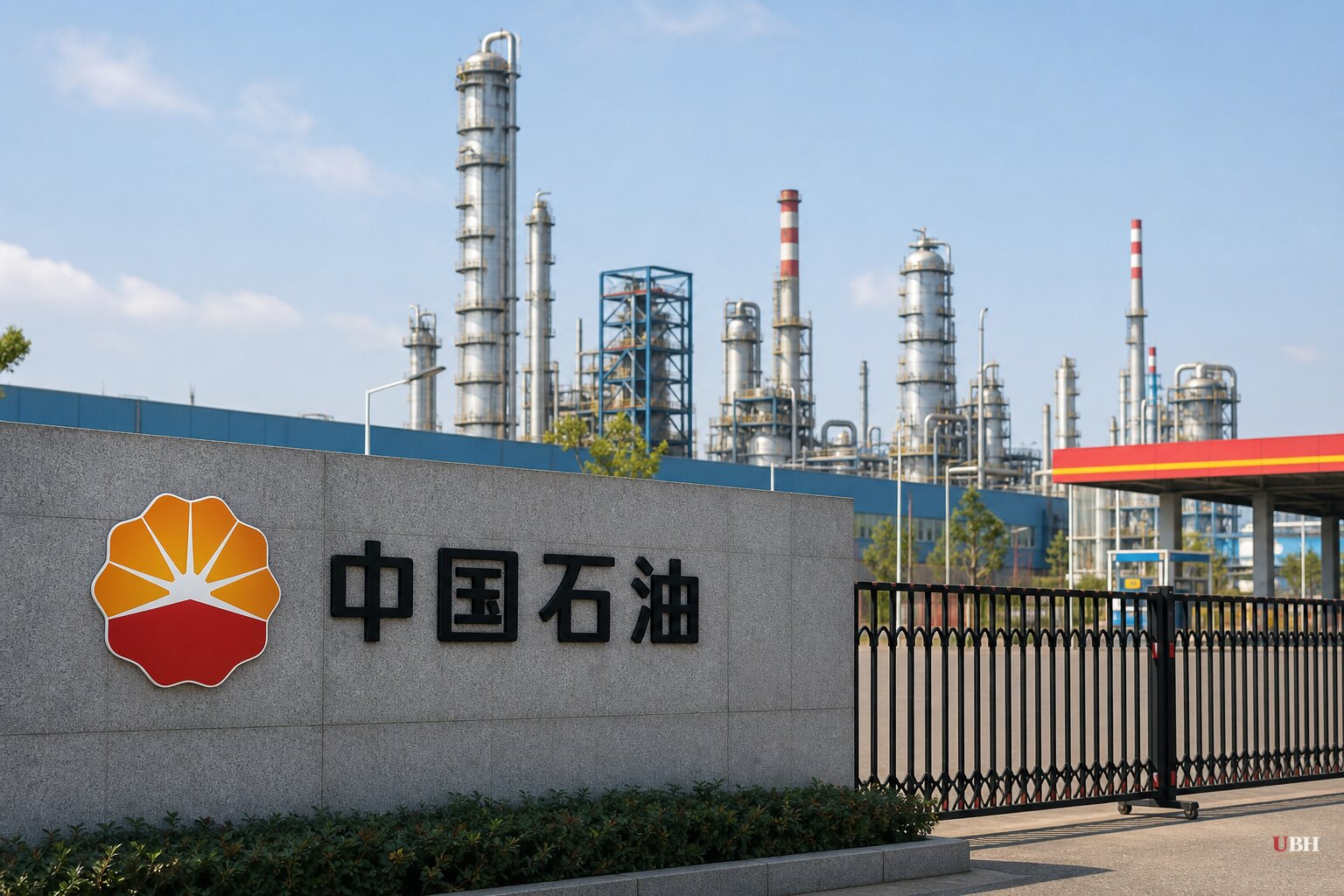
PetroChina, China's largest oil and gas producer, reported first-half 2026 net profit attributable to shareholders of 103.94 billion yuan ($14.65 billion), a 22% jump compared with 84 billion yuan a year earlier, according to a filing with the Hong Kong Stock Exchange cited by Reuters. Revenue rose 5.3% to 1.5 trillion yuan over the same period.
The company credited higher global oil prices and stronger fuel sales for the gain. PetroChina processed 693 million barrels of crude in the first half, up 3% year over year, equivalent to 3.83 million barrels per day. Crude oil output itself rose a more modest 0.8% to 478.4 million barrels, or 2.64 million barrels per day.
Fuel and Gas Sales Lead the Way
Combined sales of gasoline, kerosene and diesel rose 2.1% to 81.38 million metric tons. Aviation fuel was the standout, up 8.9% to 10.12 million tons, which PetroChina attributed to "aviation transport recovery and seasonal travel." Gasoline sales rose 1.4% and diesel edged up 0.8%.
Natural gas sales climbed 6.8% to 157.19 billion cubic meters, with domestic sales up 5.4% to 114.88 bcm. Domestic natural gas output rose 4.3%, while overseas gas production slipped 1.2%. Chemical product output rose 4.5% to 18.06 million tons, and the company said new-materials output surged 32.1% to 1.37 million tons, with overseas chemical sales volume up 8.3%.
PetroChina declared an interim dividend of 0.26 yuan per share, according to a summary of the earnings release cited by TradingView. The company kept its full-year production targets unchanged at 941.3 million barrels of crude oil and 5,470.5 billion cubic feet of natural gas, and left its annual capital expenditure budget at 279.4 billion yuan.
The Price Backdrop
The profit surge comes against a backdrop of elevated crude prices tied to Middle East tensions earlier this year. Fox News reported that Brent crude climbed to $91.28 a barrel and West Texas Intermediate to $85.31 during a period of uncertainty over whether the Strait of Hormuz would remain open amid the Iran war, after a memorandum of understanding between Washington and Tehran expired. Iran's parliamentary speaker, Mohammad Bagher Ghalibaf, said at the time that Hormuz would stay closed until the U.S. met its commitments under that agreement, while President Trump said no negotiations were underway and insisted the strait remained open.
That standoff pushed both benchmarks to their highest levels in roughly a month at the time, according to Reuters reporting carried by Fox News. Iraq responded by approving a temporary mechanism allowing crude exports through multiple international and local companies and outlets, reducing its reliance on Gulf shipping routes for a three-month window.
Tying PetroChina's results directly to a specific war episode oversimplifies things. PetroChina itself, in its own filing, attributed the gain broadly to elevated global energy prices and stronger downstream sales, not to any single geopolitical event. The company's own outlook for the second half warns that crude prices will "fluctuate significantly due to geopolitical risk and shifting supply-demand dynamics," acknowledging uncertainty rather than crediting one cause.
Mixed Signals for the Second Half
PetroChina flagged headwinds too. Refining margins are likely to face pressure from overcapacity, the company said, pushing it toward higher-value chemical and new-material products instead. Demand for refined fuel will also face "structural pressure from new energy alternatives" even with seasonal travel support, according to the filing.
Investors have rewarded the stock regardless. PetroChina's Hong Kong-listed shares closed down 1.2% at HK$10.12 on Friday, but the stock is up 28.5% so far this year, well ahead of the Hang Seng Index's 3.4% gain, per Reuters figures.
PetroChina's earnings arrive amid the same Middle East volatility that has kept global oil markets on edge. Under Secretary of War for Acquisition and Sustainment Michael Duffey told Fox News's "Special Report" that the Pentagon is racing to rebuild munitions stockpiles depleted during the Iran conflict, calling the effort "making up for lost time" after what he described as insufficient investment in the defense industrial base under the Biden administration. Crude prices will shape whether PetroChina's second-half numbers hold up to its first-half surge.
Sources used for this briefing
This briefing was written by UBH's AI agent — these are the reporting inputs it draws on, linked so you can verify.


