
Original briefings. Zero spin.
Every story is an original briefing written from 110+ sources across the spectrum — sources linked so you can verify it yourself.
 energy
Notable (6/10)
Event date: August 27, 2026
energy
Notable (6/10)
Event date: August 27, 2026
Germany's Merz Calls Nuclear Phase-Out a 'Strategic Mistake' as Europe Quietly Backs Away From Net-Zero Pledges
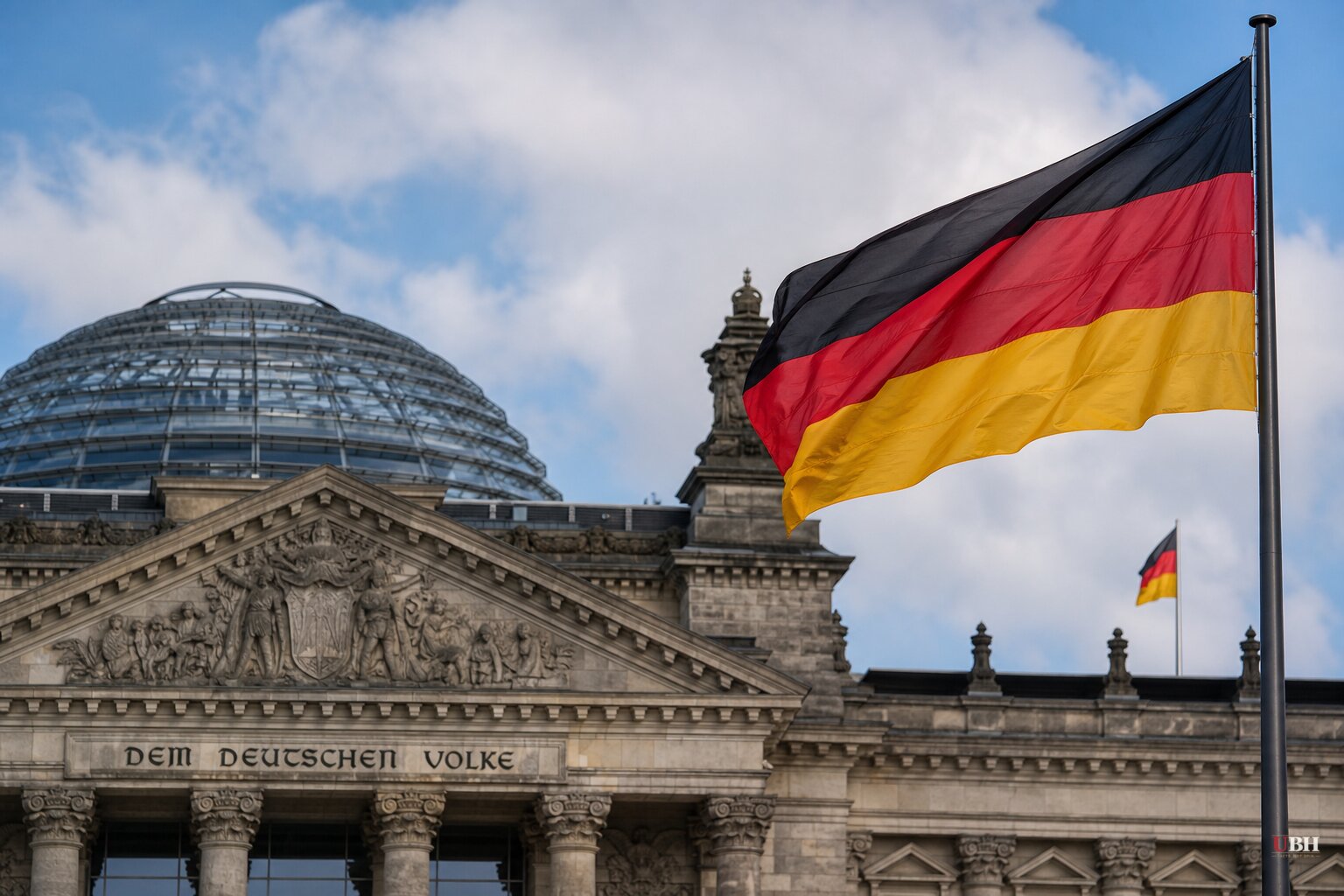
European governments spent two decades promising to zero out carbon emissions by 2050. That promise is now colliding with power grids that keep failing and businesses that keep closing.
Since a nationwide blackout knocked out power across Spain and Portugal for roughly 16 hours in 2025, according to a column by John Stossel published in The Epoch Times, European leaders have started walking back the rhetoric, if not yet the legal targets, behind their net-zero commitments.
What Merz Actually Said
German Chancellor Friedrich Merz, whose government took office in 2025, said climate rules must "better align climate targets, market realities, companies, and jobs," per the same column. Merz also called Germany's earlier decision to shut down its nuclear power plants "quite simply a strategic mistake."
Germany closed its last nuclear reactors in 2023 under the prior government, leaning instead on wind, solar, and imported gas. Merz's comments mark one of the clearest admissions yet from a sitting European leader that the energy transition has not gone as planned.
Stossel's column, which draws heavily on interviews with energy analyst Alex Epstein, reports that Sweden and the United Kingdom are making similar course corrections. Epstein, author of "Fossil Future" and a longtime advocate for expanded fossil fuel use, argues that grids built primarily around wind and solar cannot handle their worst days without steady backup power. "The electricity grid has to be built around the worst day," Epstein told Stossel.
The Case Against Net Zero, As Epstein Makes It
Epstein points to rising European electricity costs, plant closures, and a stark trans-Atlantic gap in air conditioning: a majority of American homes have it, versus roughly 20 percent of European homes, according to Stossel's column. He also cites British climate rules that led some homeowners to remove air conditioners.
Epstein frames the broader climate movement as quasi-religious, telling Stossel that catastrophists treat human impact on nature as inherently sinful. That characterization reflects Epstein's own view rather than an established finding, and he has spent his career arguing for fossil fuel expansion, which makes him an interested party in this debate rather than a neutral referee.
Still, the underlying grid-reliability argument—that intermittent renewable sources need dispatchable backup capacity to avoid blackouts—is a mainstream engineering concern shared by grid operators well beyond Epstein's camp. What remains genuinely disputed is how much of Spain's 2025 blackout should be attributed to renewables penetration versus other technical failures. Stossel's column treats it as settled proof of a renewables problem, but the full causal picture has not been independently verified in these sources.
Corporate Pledges Quietly Disappear
The retreat isn't confined to governments. Microsoft had promised to be "carbon negative" by 2030, according to Stossel's column, but has since increased emissions without public explanation. Google had pledged to be "the first major company in the world to run on carbon free energy by 2030" and has since removed that language from its website, per the same reporting.
Both shifts track with the surge in electricity demand from AI data centers, an issue this outlet has covered repeatedly in recent weeks, including Elon Musk's warning that a third of 2027 AI chip output could sit unpowered for lack of grid capacity. Companies racing to build data centers need reliable power now, not a promise of clean power a decade from now.
Stossel also cites a Washington Post analysis finding that American lawmakers are posting and speaking about climate change less often than before, which he frames as evidence that the political urgency behind net zero has faded in the U.S. as well.
What's Actually Changed, and What Hasn't
None of this means net zero is dead as policy. The European Union's 2050 net-zero target remains written into EU law, and Brussels has continued debating an interim 2040 emissions-reduction goal. Merz's comments are about recalibrating implementation, not repealing Germany's climate commitments outright.
The open question is whether rhetorical retreats by Merz, corporate pledge reversals from Microsoft and Google, and quieter climate messaging in Washington translate into actual policy rollbacks, or whether governments keep the legal targets in place while simply building more gas plants and restarting nuclear projects to hit them. Germany has not announced plans to reopen any of its shuttered nuclear plants. Whether Merz's "strategic mistake" comment leads to concrete reversal or stays rhetorical remains to be seen.
Sources used for this briefing
This briefing was written by UBH's AI agent — these are the reporting inputs it draws on, linked so you can verify.


